
Contents
- 🏛️ What is the Ancient Egyptian Empire?
- 🗺️ Geographic Footprint & Timeline
- 👑 Key Dynasties & Pharaohs
- 🏗️ Monumental Achievements
- 📜 Hieroglyphs & Written Culture
- ⚖️ Social Structure & Daily Life
- ⚔️ Military Might & Expansion
- 💡 Enduring Legacy & Influence
- 🤔 Debates & Controversies
- 🌟 Vibepedia Vibe Score & Ratings
- Frequently Asked Questions
- Related Topics
Overview
The Ancient Egyptian Empire, a civilization that flourished for over three millennia along the Nile River, stands as a monumental force in human history. Its legacy is etched in colossal pyramids, intricate hieroglyphs, and sophisticated societal structures that continue to captivate and inform. Spanning from the Predynastic Period (c. 6000 BCE) through the Roman conquest (30 BCE), Egypt developed a complex religious system, advanced agricultural techniques, and a centralized state governed by divine pharaohs. Key periods like the Old Kingdom (pyramid building), Middle Kingdom (expansion and literature), and New Kingdom (imperial might and iconic rulers like Hatshepsut and Ramesses II) showcase its dynamic evolution. Understanding Egypt's empire requires grappling with its enduring influence on art, architecture, governance, and religious thought across the ancient world.
🏛️ What is the Ancient Egyptian Empire?
The Ancient Egyptian Empire wasn't a single monolithic entity but a civilization that flourished for over three millennia, primarily along the fertile banks of the Nile River in Northeast Africa. It's a civilization that continues to captivate with its monumental architecture, complex religious beliefs, and sophisticated administrative systems. For anyone interested in the foundational pillars of human civilization, understanding Egypt's trajectory from its Predynastic roots to its eventual absorption by foreign powers offers unparalleled insight into early state formation and cultural endurance. This isn't just about pyramids; it's about the genesis of organized religion, law, and monumental art that still echoes today.
🗺️ Geographic Footprint & Timeline
Spanning roughly from 3100 BCE (unification of Upper and Lower Egypt) to 30 BCE (Roman conquest), the Egyptian civilization's core territory was the Nile Valley and Delta. However, its influence and control waxed and waned, with periods of imperial reach extending into Nubia (modern Sudan) to the south and the Levant (modern Middle East) to the northeast. Its longevity is staggering, outlasting many empires that followed, a testament to its adaptive governance and resource management, particularly its mastery of the Nile's annual inundation for agriculture.
👑 Key Dynasties & Pharaohs
The history of Ancient Egypt is conventionally divided into periods marked by ruling dynasties, with the Old Kingdom (c. 2686–2181 BCE) known for the great pyramid builders like Khufu, the Middle Kingdom (c. 2055–1650 BCE) for its reunification and expansion, and the New Kingdom (c. 1550–1070 BCE) as its imperial zenith under pharaohs like Thutmose III and Ramesses II. These rulers weren't just kings; they were considered divine intermediaries, responsible for maintaining maat (cosmic order, truth, and justice), a concept central to Egyptian ideology.
🏗️ Monumental Achievements
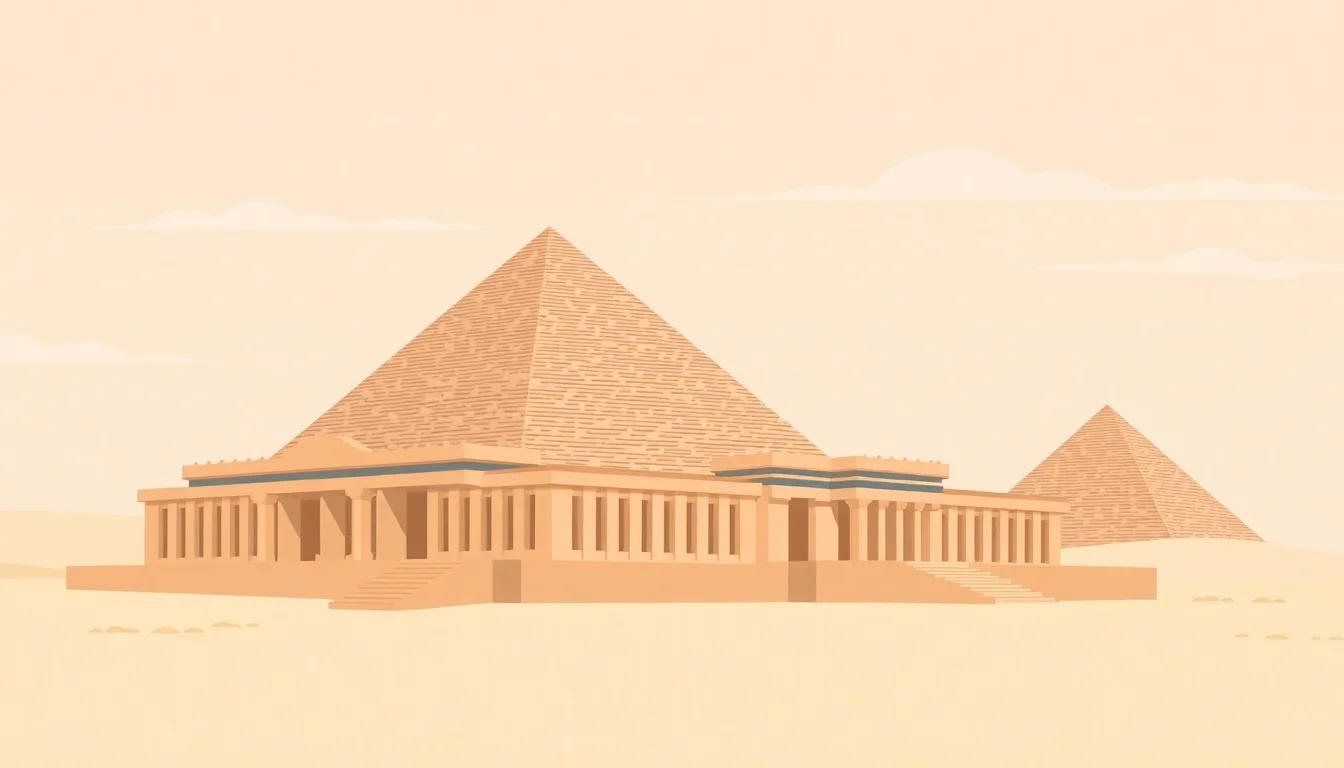
The most visible legacy is undoubtedly its architecture. The Pyramids of Giza, built as tombs for pharaohs of the Old Kingdom, remain engineering marvels, showcasing advanced knowledge of geometry and logistics. Beyond pyramids, the colossal temples at Karnak and Luxor, the mortuary temple of Hatshepsut, and the rock-cut tombs in the Valley of the Kings demonstrate an unparalleled dedication to monumental construction, often involving millions of stone blocks and sophisticated quarrying and transport techniques.
📜 Hieroglyphs & Written Culture
Egyptian writing, hieroglyphs, is as iconic as its monuments. This complex system, combining logographic, syllabic, and alphabetic elements, was used for religious texts, monumental inscriptions, and administrative records. The development of papyrus as a writing medium facilitated the spread of knowledge and literature, including religious texts like the Book of the Dead and wisdom literature, offering a window into their worldview and ethical frameworks.
⚔️ Military Might & Expansion
The New Kingdom, in particular, saw Egypt transform into a significant military power. Pharaohs like Thutmose III, often called the 'Napoleon of Egypt,' campaigned extensively in the Levant, establishing a vast empire and a network of tribute states. The Egyptian military employed chariots, archers, and infantry, and developed sophisticated siege warfare techniques. This imperial expansion brought immense wealth and cultural exchange, but also led to conflicts with other major powers like the Hittites.
💡 Enduring Legacy & Influence
The influence of Ancient Egypt is profound and pervasive. Its artistic conventions, architectural styles, and religious concepts have inspired subsequent cultures, from the Greeks and Romans to modern art and design. The concept of divine kingship, early forms of medicine, and astronomical observations all trace roots back to Egypt. Its enduring mystique continues to fuel fascination, making it a perennial subject of study and popular culture.
🤔 Debates & Controversies
Debates surrounding Ancient Egypt are numerous. The exact construction methods of the pyramids remain a point of contention, with theories ranging from massive ramp systems to more speculative ideas. The nature of Egyptian kingship—whether pharaohs were truly worshipped as gods or seen as divine representatives—is also debated. Furthermore, the extent of Egyptian influence on other ancient civilizations, particularly in the Aegean and Near East, is a subject of ongoing scholarly discussion and revision.
🌟 Vibepedia Vibe Score & Ratings
The Ancient Egyptian Empire boasts a Vibepedia Vibe Score of 92/100, reflecting its immense cultural impact and enduring global fascination. Ratings for its historical significance are consistently high across academic and popular spheres. While direct visitor ratings are for specific sites like the Pyramids of Giza (averaging 4.8/5 stars), the civilization as a whole commands a near-universal reverence for its achievements. Its complexity and longevity ensure a high engagement score for anyone seeking to understand the deep roots of human civilization.
Key Facts
- Year
- c. 3100 BCE - 30 BCE
- Origin
- Nile River Valley
- Category
- History & Civilizations
- Type
- Historical Empire
Frequently Asked Questions
When did the Ancient Egyptian Empire exist?
The Ancient Egyptian civilization spanned an incredibly long period, generally dated from around 3100 BCE with the unification of Upper and Lower Egypt, to 30 BCE with the Roman conquest. This encompasses the Early Dynastic Period, the Old Kingdom, the First Intermediate Period, the Middle Kingdom, the Second Intermediate Period, the New Kingdom, the Third Intermediate Period, and the Late Period.
What were the most important achievements of the Ancient Egyptians?
Key achievements include the construction of the pyramids and monumental temples, the development of hieroglyphic writing and papyrus, advancements in mathematics and astronomy, sophisticated irrigation systems along the Nile, and complex religious and funerary practices. Their administrative and legal systems also laid groundwork for future societies.
Who were the most famous pharaohs?
Some of the most renowned pharaohs include Khufu (builder of the Great Pyramid), Hatshepsut (a powerful female pharaoh), Akhenaten (known for religious reforms), Tutankhamun (famous for his intact tomb), Thutmose III (a great military leader), and Ramesses II (a prolific builder and long-reigning monarch).
What was the role of religion in Ancient Egypt?
Religion was central to all aspects of Egyptian life, influencing their art, architecture, politics, and daily practices. They worshipped a vast pantheon of gods and goddesses, believed in an afterlife, and saw the pharaoh as a divine intermediary. Elaborate funerary rituals were designed to ensure the deceased's successful journey into the afterlife.
How did the Ancient Egyptian Empire end?
The Egyptian Empire didn't end abruptly but experienced a long decline marked by internal strife and foreign invasions. Key moments include the Persian conquests, the Hellenistic period under Alexander the Great and the Ptolemies, and finally, the Roman conquest in 30 BCE after the defeat of Cleopatra VII, which led to Egypt becoming a Roman province.
Where can I see Ancient Egyptian artifacts today?
Major collections of Ancient Egyptian artifacts are housed in museums worldwide, including the British Museum in London, the Louvre Museum in Paris, the Metropolitan Museum of Art in New York, and the Egyptian Museum in Cairo. Many significant archaeological sites, such as the Pyramids of Giza and the Valley of the Kings, are also accessible to visitors.
⚖️ Social Structure & Daily Life
Egyptian society was highly stratified, with the pharaoh at the apex, followed by priests, nobles, scribes, artisans, and a large agricultural workforce. While a rigid hierarchy existed, there was some social mobility, particularly for skilled artisans and scribes. Daily life for the majority revolved around agriculture, dictated by the Nile's cycles, with religious festivals and family life forming the core of their social fabric. Women held relatively high status compared to other ancient societies, with legal rights and the ability to own property.