
Contents
Overview
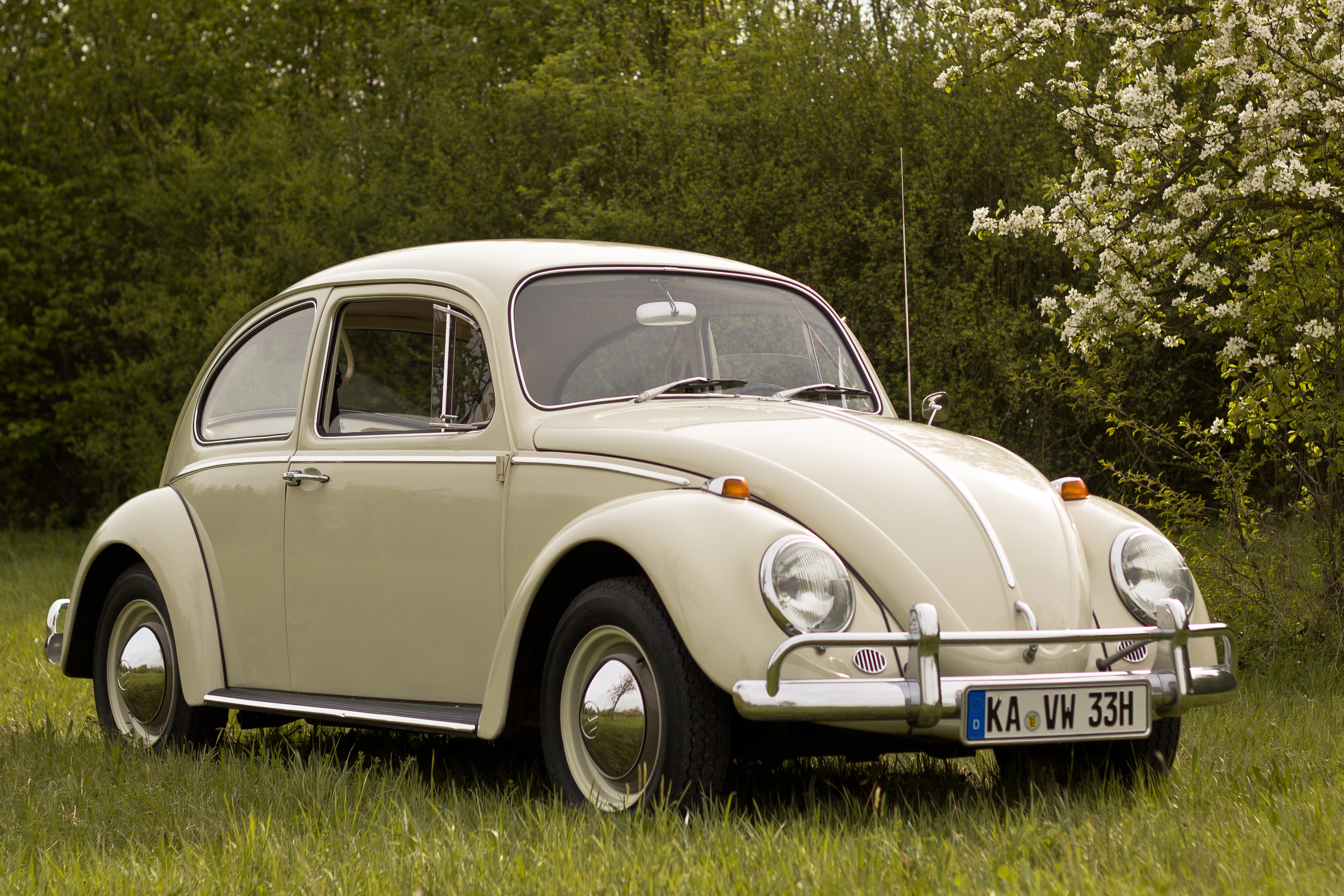
The genesis of the Volkswagen Beetle lies in the early 1930s, a period when Adolf Hitler envisioned a simple, affordable, mass-produced automobile for the German populace, intended to utilize the burgeoning Reichsautobahn network. Ferdinand Porsche and his design team were tasked with this monumental project, though the fundamental aerodynamic principles can be traced back to Béla Barényi's 1925 sketches. The first prototypes, known as the KdF-Wagen, emerged in 1938, but mass production was significantly hampered by the onset of World War II. Post-war, under British oversight led by Major Ivan Hirst, production resumed in earnest at the Wolfsburg plant, transforming the Beetle from a wartime necessity into a symbol of German economic recovery and global automotive accessibility. The car's distinctive shape, rear-engine, air-cooled configuration, and robust simplicity quickly made it a favorite.
⚙️ How It Works
At its mechanical heart, the Beetle is a testament to elegant, albeit dated, engineering. It features a rear-mounted, air-cooled, horizontally opposed four-cylinder engine, which eliminated the need for a radiator and complex cooling system, a significant advantage in its early production years. Power is delivered to the rear wheels via a four-speed manual transaxle. The chassis is a robust steel unibody construction, providing a solid foundation for the distinctive rounded body. Suspension relies on a torsion bar system at the front and a swing-axle setup at the rear, contributing to its unique, often described as 'lively,' handling characteristics. The 'frunk' – the front trunk – offers limited but functional storage space, while the engine compartment at the rear houses the powertrain and spare tire.
📊 Key Facts & Numbers
The Volkswagen Beetle's statistical footprint is staggering. Over its production run, it became the best-selling single-platform car in history. By the time production ceased in Mexico in 2003, the Beetle had been produced in over 20 countries, including significant manufacturing hubs in Germany, Brazil, and Mexico. Its global reach is underscored by its presence in nearly every market, with millions still on the road today, a testament to its durability and the availability of spare parts from Bosch and other suppliers.
👥 Key People & Organizations
The Beetle's story is intrinsically linked to several key figures and organizations. Ferdinand Porsche was the chief engineer tasked with bringing the 'people's car' to life, laying the groundwork for its enduring design. Adolf Hitler commissioned the project, envisioning it as a tool for national mobility and propaganda. Post-war, Major Ivan Hirst of the British Army played a pivotal role in reviving Volkswagen's production in Wolfsburg, ensuring the Beetle's survival. The Volkswagen Group itself, founded in 1937, became synonymous with the Beetle, growing from a single model to a global automotive giant. Later, figures like Ferdinand Piëch, grandson of Ferdinand Porsche, would oversee the brand's strategic direction and the eventual discontinuation of the original model.
🌍 Cultural Impact & Influence
The Beetle transcended its automotive function to become a potent cultural symbol. In the 1960s, its unconventional design and affordability made it a darling of the counterculture movement, famously featured in films like Disney's 'The Love Bug' and embraced by musicians and artists. This cultural resonance ensured the Beetle's place not just in garages, but in the collective consciousness, influencing fashion, art, and social movements globally.
⚡ Current State & Latest Developments
While the original Beetle ceased production in 2003, its legacy continues to evolve. The spirit of the Beetle was revived with the introduction of the Volkswagen New Beetle in 1997, a retro-styled successor that captured some of the original's charm. This was followed by the Volkswagen Beetle (A5) in 2011, which offered a more modern interpretation. Although Volkswagen announced the discontinuation of the A5 Beetle in 2019, citing declining sales and a shift towards SUVs and electric vehicles like the Volkswagen ID. Buzz, the original air-cooled models remain highly sought after by collectors and enthusiasts, with a thriving aftermarket parts industry and numerous owner clubs worldwide.
🤔 Controversies & Debates
The Beetle has not been without its controversies. The original Beetle's origins are inextricably linked to the Nazi Party and the KdF-Stadt (now Wolfsburg), a factory town built to support its production, raising ethical questions about its initial purpose and labor during the war. Post-war, its distinctive rear-engine, air-cooled design, while simple and reliable, was criticized by some for its handling characteristics, particularly the swing-axle's tendency to oversteer, which contributed to its 'widowmaker' nickname in certain circles. Furthermore, the decision by Volkswagen to discontinue the New Beetle and its successor, the A5 Beetle, in 2019, was met with disappointment by many fans who felt the brand was abandoning a significant part of its heritage in favor of more mainstream vehicle types.
🔮 Future Outlook & Predictions
The future of the Beetle nameplate remains uncertain, though its spirit is likely to persist. While Volkswagen AG has shifted its focus towards electrification and SUVs, the enduring appeal of the original Beetle suggests potential for future reinterpretations. Some speculate about an all-electric successor that could blend retro styling with modern zero-emission technology, perhaps drawing inspiration from the success of the Volkswagen ID. Buzz. However, without official confirmation from Volkswagen, any electric Beetle remains in the realm of hopeful speculation. The continued popularity of air-cooled Beetles in the classic car market, however, guarantees their presence on roads and at car shows for decades to come.
💡 Practical Applications
The Volkswagen Beetle's practical applications extend far beyond personal transportation. Its robust and simple mechanics made it an ideal platform for various modifications and specialized uses. For decades, it served as a reliable and affordable vehicle for tradespeople, delivery services, and as a police car in some regions. Its compact size and maneuverability were advantageous in crowded urban environments. Furthermore, the Beetle's iconic status has led to its use in promotional events, as movie props, and even as a canvas for artistic expression, demonstrating its versatility as more than just a car but a cultural artifact.
Key Facts
- Category
- culture
- Type
- product