
Contents
Overview
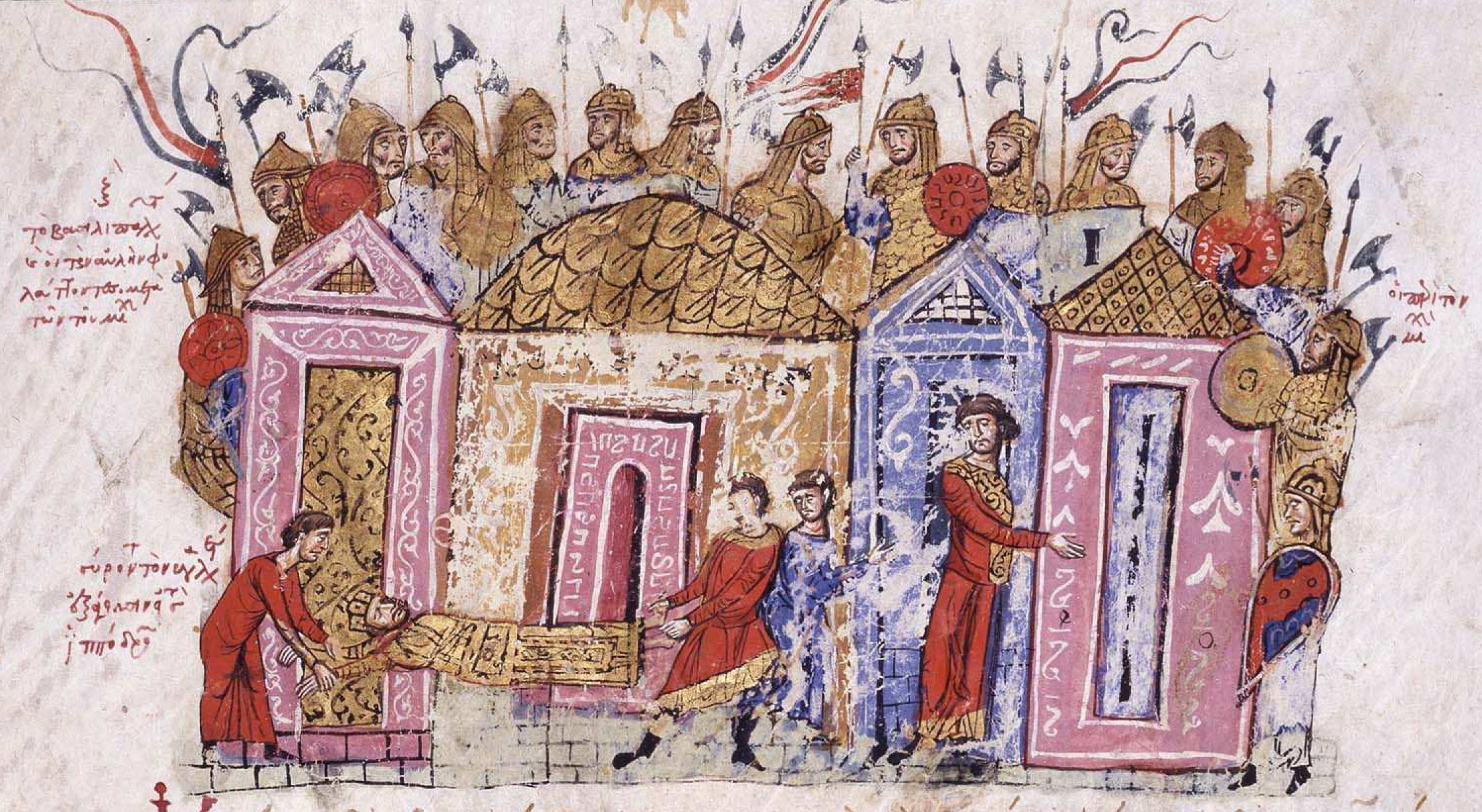
The genesis of the Varangian Guard lies in the Byzantine Empire's long-standing practice of employing foreign mercenaries, particularly from the north. Norsemen, often referred to as Rus', were present in Byzantine service as early as 874, forming the backbone of early mercenary contingents. The formal establishment of the Guard, however, is attributed to Emperor Basil II in 988. This pivotal moment followed the Christianization of Kievan Rus' by Vladimir I, who, after securing his power with Varangian warriors, sent a contingent of 6,000 men to Constantinople. This influx of seasoned warriors, loyal only to the emperor and their pay, was a strategic masterstroke to counterbalance internal political factions and ensure the emperor's security. The recruitment policy deliberately sought individuals from distant lands, ensuring they had no vested interest in Byzantine dynastic struggles or regional power plays.
⚙️ How It Works
The Varangian Guard operated as the emperor's personal bodyguard and a shock troop unit, deployed in critical moments of battle. Their primary role was to protect the emperor, both in the palace and on the battlefield, a task they performed with legendary ferocity. Recruits were typically seasoned warriors, often veterans of Viking raids and campaigns, bringing with them a wealth of combat experience. Their distinctive weapon of choice was the Danish axe, a large, two-handed weapon capable of cleaving through armor and shields, which became synonymous with the Guard's fearsome reputation. Beyond direct combat, they also served as an internal security force, capable of quelling riots and suppressing rebellions, a testament to their unwavering loyalty to the imperial office rather than any specific emperor. Their presence was a constant reminder of the emperor's power and his ability to call upon the most formidable warriors from across the known world.
📊 Key Facts & Numbers
The Varangian Guard saw its peak strength in the 11th century, with estimates suggesting numbers ranging from 3,000 to as many as 6,000 men during periods of high recruitment. The initial contingent sent by Vladimir I in 988 numbered 6,000 warriors. By the time of the Battle of Manzikert in 1071, the Guard was a significant force, though exact numbers are debated, with some sources suggesting around 3,000 men. The Guard's pay was substantial, often including gold, land grants, and other privileges, attracting warriors from across Northern Europe. For instance, after the Norman Conquest of England in 1066, a significant number of Anglo-Saxon warriors, estimated to be in the thousands, sought refuge and service in Byzantium, swelling the Guard's ranks. The Guard's operational lifespan spanned over three centuries, from its formal inception in 988 until its effective dissolution around the mid-14th century, a testament to its enduring importance.
👥 Key People & Organizations
The most crucial figure in the Guard's establishment was Emperor Basil II (reigned 976–1025), who formally created the unit in 988. His predecessor, John I Tzimiskes, also utilized Norse mercenaries, laying some groundwork. On the recruitment side, Vladimir I of Kievan Rus' played a key role by sending the initial 6,000 warriors. Later, prominent figures like Harald Hardrada, who would become King of Norway, served as a captain in the Guard before his return to Scandinavia and subsequent death at the Battle of Stamford Bridge in 1066. The Byzantine emperors themselves, as the ultimate employers, were central to the Guard's existence, with figures like Alexios I Komnenos relying heavily on the Guard during his reign (1081–1118) amidst numerous military challenges. The Byzantine Empire as an institution provided the framework and funding for this unique military organization.
🌍 Cultural Impact & Influence
The Varangian Guard left an indelible mark on both Byzantine and Norse culture, solidifying its status as an iconic historical phenomenon. Their presence in Constantinople, the heart of the Byzantine world, created a vibrant cultural exchange. Norse sagas, such as the Heimskringla, frequently recount the exploits of warriors who served in the 'Miklagard' (Constantinople), often embellishing their adventures and solidifying their legendary status in Scandinavian folklore. The Guard's distinctive use of the Danish axe influenced military equipment and tactics in the region. Furthermore, the very concept of an elite, foreign bodyguard unit loyal only to the sovereign became a recurring theme in military history, influencing later formations. The Guard's story is a powerful example of how distant peoples could integrate into a powerful empire, leaving a legacy that resonates through medieval history and popular imagination.
⚡ Current State & Latest Developments
The Varangian Guard, as a distinct military unit, effectively ceased to exist by the mid-14th century, a victim of the Byzantine Empire's gradual decline and the shifting geopolitical landscape. The Sack of Constantinople by the Fourth Crusade in 1204 and the subsequent fragmentation of the empire severely disrupted the traditional recruitment and funding mechanisms. While elements of foreign guards persisted, the unique Norse and Anglo-Saxon character of the Varangian Guard faded. The last documented mention of the Guard in its traditional form is often associated with the final defense of Constantinople in 1453, though by then, its numbers and prominence were greatly diminished. The legacy, however, continues to be explored through historical research and popular culture, with ongoing academic interest in Byzantine military history and the Viking diaspora.
🤔 Controversies & Debates
The primary controversy surrounding the Varangian Guard revolves around the precise nature of their loyalty and the extent of their involvement in Byzantine political intrigue. While lauded for their loyalty to the imperial office, historical accounts, particularly from Byzantine chroniclers like Niketas Choniates, sometimes depict them as ruthless enforcers, capable of both extreme devotion and brutal suppression of dissent, even against popular sentiment. Another debate concerns the exact composition and ethnic makeup of the Guard over time; while Norse and Anglo-Saxons were dominant, the inclusion of other groups, particularly Georgians and Armenians, in later periods is a subject of ongoing scholarly discussion. The romanticized portrayal in sagas versus the more pragmatic historical reality also presents a point of contention for historians seeking to separate myth from fact.
🔮 Future Outlook & Predictions
The future of the Varangian Guard as a historical entity is one of continued academic exploration and cultural reinterpretation. Researchers are increasingly employing interdisciplinary approaches, combining textual analysis of Byzantine chronicles and Norse sagas with archaeological findings from both Scandinavia and the Byzantine Empire to gain a more nuanced understanding of the Guard's daily life, combat effectiveness, and cultural integration. Advances in digital humanities are enabling new ways to visualize and analyze historical data related to the Guard, potentially uncovering new patterns in recruitment and deployment. Furthermore, the enduring appeal of the Varangian Guard in popular culture, from video games like Crusader Kings III to historical fiction, suggests a sustained interest that will likely fuel further research and public engagement with this fascinating military unit.
💡 Practical Applications
While the Varangian Guard itself is a historical entity with no direct modern application, its operational principles and historical significance offer insights relevant to contemporary security and military strategy. The concept of employing loyal, foreign-born elite units as personal bodyguards, as pioneered by the Byzantines, demonstrates a long-standing approach to mitigating internal political risks. This strategy is echoed in modern presidential guards and special forces units, which often prioritize rigorous vetting and specialized training to ensure unwavering loyalty and operational effectiveness. The Guard's role as a shock troop also highlights the enduring value of highly trained, specialized military formations i
Key Facts
- Category
- history
- Type
- topic