
Contents
Overview
The quest to understand and create empty space, or vacuum, stretches back to ancient Greek philosophers like Aristotle, who famously argued against the possibility of a vacuum, believing nature abhorred a void. This philosophical stance held sway for centuries until the 17th century, when scientists like Evangelista Torricelli and Otto von Guericke began empirical investigations. Torricelli's invention of the mercury barometer, demonstrating atmospheric pressure by supporting a column of mercury, provided the first tangible evidence of vacuum's existence. Otto von Guericke’s dramatic demonstration in 1654 with his Magdeburg hemispheres—two copper hemispheres from which air was pumped out, creating a vacuum so strong that two teams of horses couldn't pull them apart—viscerally illustrated the power of atmospheric pressure acting on a vacuum. These early experiments laid the groundwork for the scientific and engineering discipline of vacuum technology, which truly began to flourish with the development of reliable vacuum pumps in the 19th and 20th centuries.
⚙️ How It Works
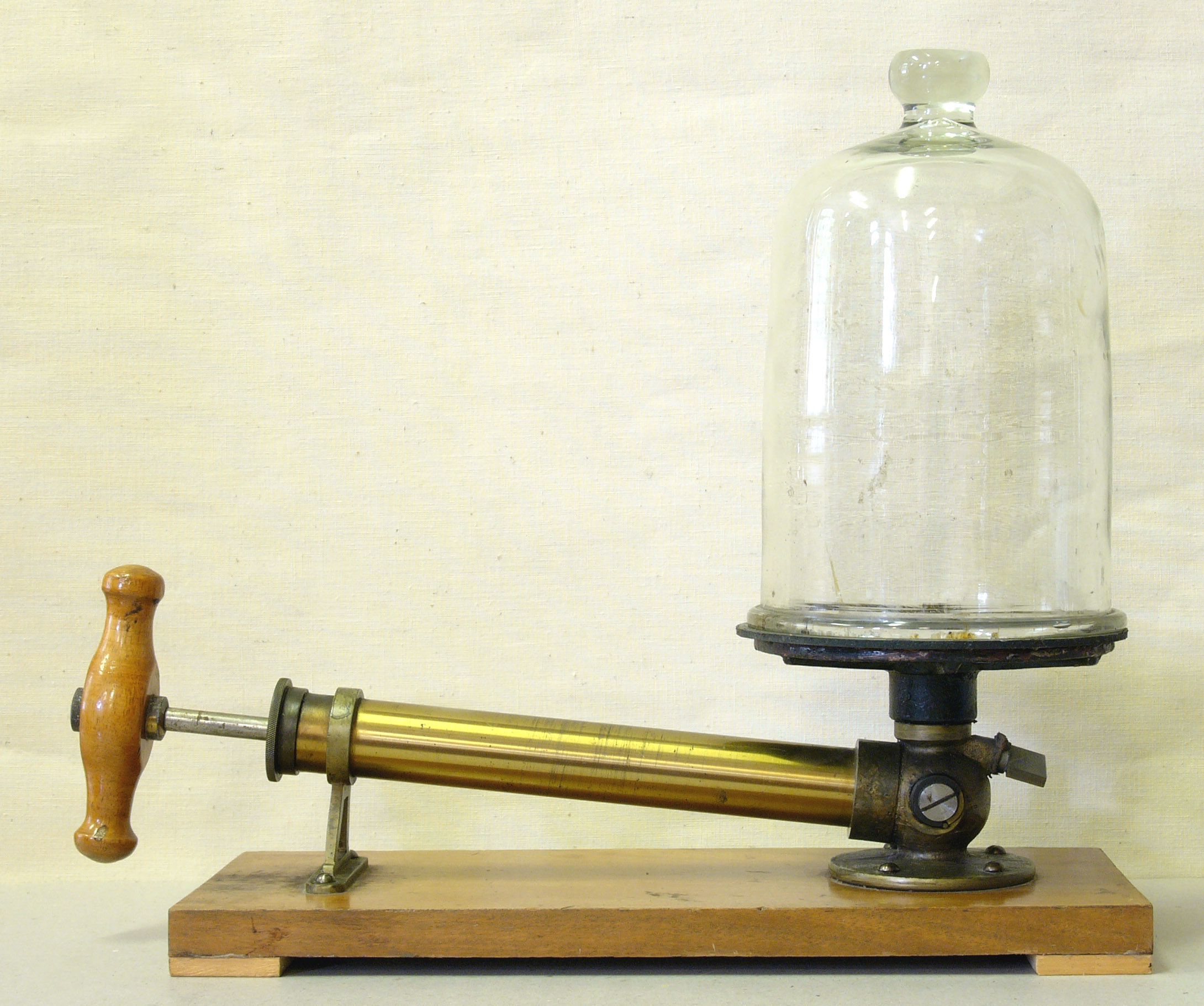
At its core, a vacuum system operates by removing gas molecules from a sealed chamber, thereby reducing the internal pressure. This is primarily achieved through vacuum pumps, which are categorized by the pressure range they operate in. Rough vacuum pumps, such as rotary vane pumps and diaphragm pumps, are used for initial evacuation or less demanding applications. For higher vacuum levels, diffusion pumps or turbomolecular pumps are employed, which physically transfer gas molecules out of the chamber. Maintaining a vacuum also requires meticulously designed chambers, often made of stainless steel, with specialized seals (like O-rings or metal gaskets) to prevent leaks. Pressure gauges, such as Pirani gauges and ion gauges, are essential for monitoring the vacuum quality. The entire process is a delicate balance of gas removal, leak prevention, and precise measurement.
📊 Key Facts & Numbers
Ultra-high vacuum (UHV) systems are crucial for experiments in fields like surface science and particle physics. A single Large Hadron Collider experiment can involve vacuum chambers with a volume of several thousand cubic meters, maintained at UHV levels.
👥 Key People & Organizations
Pioneers like Evangelista Torricelli and Otto von Guericke are foundational figures in vacuum science. In the 20th century, William Edward Boote contributed significantly to the development of diffusion pumps. Major organizations driving vacuum technology include Edwards Vacuum (now part of Atlas Copco), Leybold GmbH, and Agilent Technologies, all leading manufacturers of vacuum pumps and systems. Research institutions like CERN and SLAC National Accelerator Laboratory push the boundaries of UHV applications in fundamental physics research, while industry consortia like the European Vacuum Association (EVP) promote standards and knowledge sharing.
🌍 Cultural Impact & Influence
The influence of vacuum systems extends far beyond specialized laboratories. The development of the incandescent light bulb in the late 19th century, pioneered by figures like Thomas Edison, relied heavily on creating a vacuum within the glass bulb to prevent the filament from burning out. Similarly, the invention of the cathode ray tube (CRT) for early televisions and computer monitors, a technology dominant for decades, required a high vacuum to allow electrons to travel unimpeded. In medicine, vacuum technology is critical for sterilization processes, such as autoclaving, and in the operation of medical imaging equipment like electron microscopes. The widespread adoption of vacuum packaging in the food industry, initiated in the mid-20th century, has fundamentally altered global food distribution and preservation.
⚡ Current State & Latest Developments
Current developments in vacuum systems are focused on achieving even lower pressures, increasing energy efficiency, and miniaturizing components. The pursuit of absolute zero temperatures in quantum computing and Bose-Einstein condensate research necessitates ultra-high vacuum environments. Advances in materials science are leading to new chamber designs and sealants that reduce outgassing and improve vacuum integrity. Furthermore, the integration of AI and machine learning is optimizing pump control and predictive maintenance for complex vacuum systems, reducing downtime and operational costs. The development of portable, high-performance vacuum systems for field applications, such as in aerospace testing, is also a growing trend, exemplified by innovations from companies like ULVAC, Inc..
🤔 Controversies & Debates
One persistent debate in vacuum technology revolves around the definition and measurement of 'perfect' vacuum. While an ideal vacuum is a theoretical construct, the practical pursuit of ever-lower pressures raises questions about the fundamental limits imposed by quantum mechanics and the residual gas molecules that can never be fully eliminated. Another area of contention is the energy consumption of vacuum systems, particularly large-scale industrial ones, prompting ongoing research into more energy-efficient pump designs and operational strategies. The cost of achieving and maintaining high and ultra-high vacuums also remains a significant barrier for some research and industrial applications, leading to discussions about the economic viability versus scientific or manufacturing necessity.
🔮 Future Outlook & Predictions
The future of vacuum systems points towards increasingly specialized and integrated solutions. The burgeoning fields of quantum computing and advanced materials science will demand vacuums with unprecedented levels of purity and stability, potentially pushing towards 'quantum vacuum' regimes. Miniaturization will continue, with micro- and nano-scale vacuum systems finding applications in novel sensors, drug delivery devices, and micro-robotics. The integration of vacuum technology with additive manufacturing (3D printing) could enable the creation of complex, vacuum-compatible components in situ. Furthermore, advancements in predictive analytics and remote monitoring will make vacuum system operation more autonomous and efficient, reducing the need for constant human oversight in critical industrial processes.
💡 Practical Applications
Vacuum systems are indispensable in numerous practical applications. In semiconductor fabrication, they are essential for processes like chemical vapor deposition (CVD) and physical vapor deposition (PVD), enabling the creation of microchips. The aerospace industry relies on vacuum chambers for testing spacecraft components under simulated space conditions. Scientific instruments like mass spectrometers and scanning electron microscopes require high vacuum to function correctly. Food and pharmaceutical industries use vacuum drying and freeze-drying to preserve products and extend shelf life. Even everyday items like fluorescent lamps and vacuum cleaners utilize vacuum principles, albeit at much lower levels than scientific application
Key Facts
- Category
- technology
- Type
- topic