
Contents
- 🗺️ What is Urban Planning in the U.S.?
- 🏛️ Historical Roots & Evolution
- 🏗️ Key Concepts & Tools
- ⚖️ Who Makes the Plans?
- 🚦 Zoning & Land Use: The Rules of the Game
- 🚗 Transportation: Moving People and Goods
- 🌳 Green Spaces & Sustainability
- 🏠 Housing: Affordability and Access
- 💡 Emerging Trends & Future Challenges
- ⭐ Vibe Score & Controversy Spectrum
- Frequently Asked Questions
- Related Topics
Overview
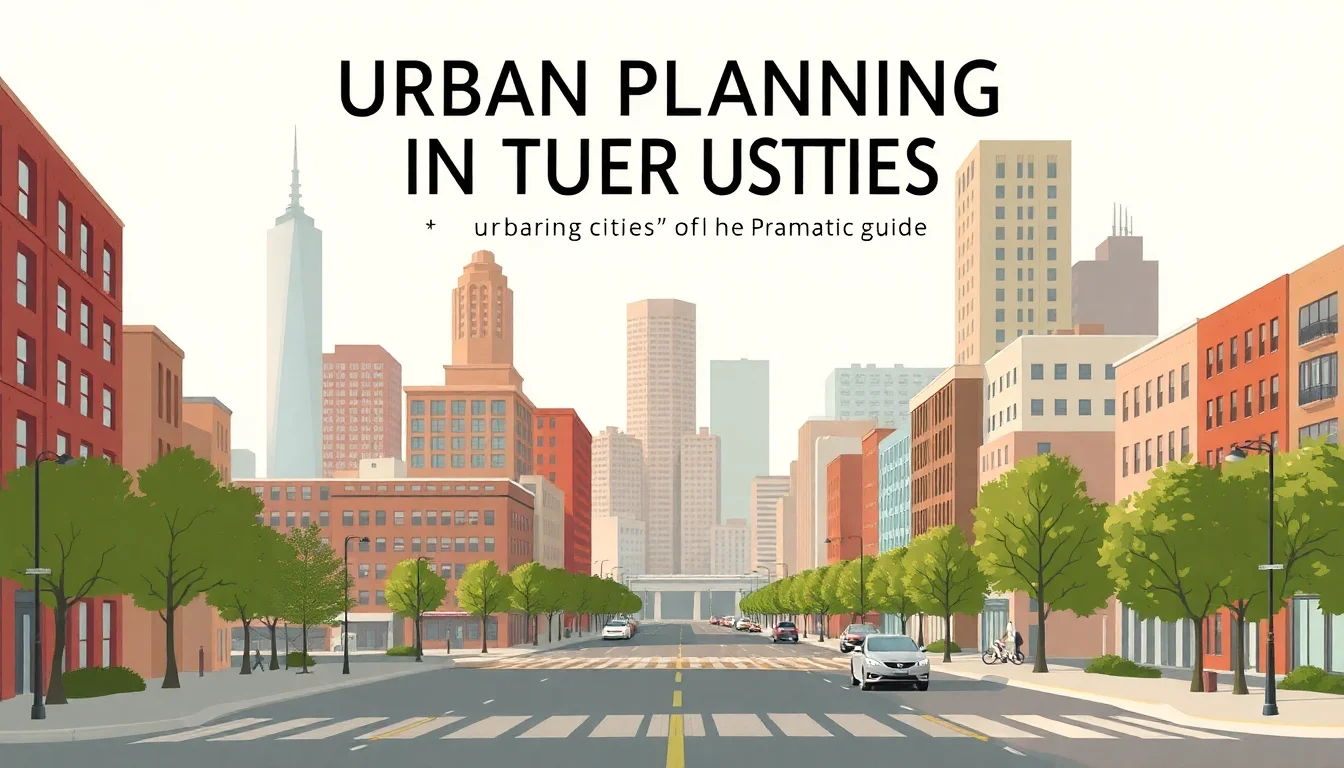
Urban planning in the United States is the systematic process of guiding the development and management of cities and towns. It's not just about drawing lines on a map; it's about shaping the physical, social, and economic environments where millions live, work, and play. This field grapples with everything from where to build a new park to how to manage traffic congestion and ensure equitable access to resources. It's a dynamic discipline, constantly adapting to new technologies, demographic shifts, and evolving societal values. Think of it as the blueprint for a functioning, livable community, a complex negotiation between competing interests and future aspirations.
🏛️ Historical Roots & Evolution
The origins of U.S. urban planning are deeply rooted in responses to rapid industrialization and its attendant problems. Early efforts, like the City Beautiful Movement of the late 19th and early 20th centuries, focused on aesthetics and civic grandeur, aiming to instill order and beauty in burgeoning metropolises. The Standard State Zoning Enabling Act of 1926 formalized zoning as a primary tool, a direct response to the chaotic mixing of industrial and residential uses. Post-World War II, the rise of the automobile and federal highway programs dramatically reshaped urban form, leading to suburbanization and a renewed focus on traffic management and infrastructure. The environmental movement of the 1970s and subsequent concerns about social equity have further broadened the scope of planning, pushing for more inclusive and sustainable approaches.
🏗️ Key Concepts & Tools
At its core, urban planning employs a range of analytical tools and frameworks. Comprehensive plans (or master plans) serve as long-range visions, outlining goals for land use, transportation, housing, and public facilities. Zoning ordinances are the legal tools that implement these visions, dictating what can be built where. Subdivision regulations govern how land is divided into parcels for development. Urban design guidelines focus on the physical form and character of the built environment, influencing streetscapes, building massing, and public spaces. Increasingly, geographic information systems (GIS) are indispensable for data analysis, visualization, and scenario planning, allowing planners to model complex urban systems.
⚖️ Who Makes the Plans?
The actual practice of urban planning involves a multi-layered governance structure. At the local level, city planning departments and commissions are typically responsible for developing and recommending plans and zoning changes. Planning commissions, often citizen boards, review proposals and advise elected officials. City councils or county boards of supervisors hold the ultimate authority to adopt plans and enact zoning ordinances. State and federal agencies also play significant roles, particularly in areas like transportation, environmental protection, and housing finance, often setting mandates or providing funding that shapes local planning decisions. Regional planning organizations also coordinate efforts across multiple municipalities.
🚦 Zoning & Land Use: The Rules of the Game
Zoning is arguably the most pervasive and debated tool in the U.S. urban planning toolkit. Introduced to separate incompatible land uses, it dictates everything from building height and density to setbacks and parking requirements. While intended to promote public health, safety, and welfare, zoning has also been criticized for contributing to urban sprawl, housing segregation, and economic inequality. Debates rage over exclusionary zoning practices, the effectiveness of inclusionary zoning policies, and the potential for form-based codes to create more predictable and aesthetically pleasing development outcomes. The tension between property rights and community planning goals remains a constant undercurrent.
🚗 Transportation: Moving People and Goods
Transportation planning is inextricably linked to urban form. For decades, the U.S. prioritized automobile-centric infrastructure, leading to the sprawling development patterns seen today. Current planning efforts often focus on creating more multimodal transportation networks, integrating public transit, cycling infrastructure, and pedestrian-friendly design with traditional road systems. Transit-oriented development (TOD) aims to concentrate housing and commercial activity around transit hubs, reducing reliance on cars. However, the legacy of car dependency is immense, and achieving a truly balanced transportation system requires significant investment and a fundamental shift in public perception and behavior.
🌳 Green Spaces & Sustainability
The integration of green spaces and sustainability principles is a growing imperative in U.S. urban planning. Planners are increasingly tasked with addressing climate change impacts, promoting resilience, and enhancing biodiversity within urban environments. This includes strategies like developing green infrastructure (e.g., rain gardens, permeable pavements), preserving and expanding parks and urban forests, and promoting energy-efficient building design. The concept of the 15-minute city, where daily necessities are accessible within a short walk or bike ride, is gaining traction as a model for more sustainable and livable urbanism. However, implementing these strategies often faces financial hurdles and requires careful consideration of equity to ensure benefits are shared by all residents.
🏠 Housing: Affordability and Access
Housing affordability and access remain central, and often contentious, issues in U.S. urban planning. Decades of restrictive zoning, rising construction costs, and market forces have contributed to significant housing shortages and escalating prices in many metropolitan areas. Planners are exploring a range of solutions, including increasing housing density, streamlining approval processes for new development, and implementing affordable housing mandates. The debate over the role of single-family zoning, the potential of accessory dwelling units (ADUs), and the impact of short-term rentals on housing supply are all critical components of this ongoing challenge. Ensuring that all residents have access to safe, decent, and affordable housing is a fundamental goal that remains elusive for many.
💡 Emerging Trends & Future Challenges
The future of U.S. urban planning is being shaped by several powerful forces. The ongoing digital transformation is introducing new possibilities for smart city technologies, data-driven decision-making, and remote work, which could alter commuting patterns and urban density. The increasing impacts of climate change necessitate a greater focus on adaptation and mitigation strategies. Furthermore, a growing demand for social equity and racial justice is pushing planners to critically examine the historical inequities embedded in urban development and to actively pursue more inclusive planning processes and outcomes. The challenge lies in translating these aspirations into concrete, implementable policies that create truly equitable and sustainable cities for all.
⭐ Vibe Score & Controversy Spectrum
Urban planning in the U.S. carries a Vibe Score of 75/100, reflecting its critical role in shaping daily life and its ongoing cultural relevance, though often marked by significant public debate. The Controversy Spectrum for urban planning is high, with debates frequently flaring over zoning regulations, housing development, and transportation priorities. Key tensions exist between developers seeking profit, residents prioritizing neighborhood character, and planners striving for long-term public good. The influence flows are complex, with federal policies, state mandates, and local advocacy groups all vying for impact on the final plans that govern our cities. Understanding these dynamics is crucial for anyone seeking to influence or navigate the urban development process.
Key Facts
- Year
- Ongoing (Roots in 19th Century)
- Origin
- United States
- Category
- Urbanism & Infrastructure
- Type
- Topic
Frequently Asked Questions
What is the difference between a comprehensive plan and a zoning ordinance?
A comprehensive plan is a broad, long-range vision for a community's future development, outlining goals for land use, transportation, housing, and public services. A zoning ordinance is a legal tool that implements the comprehensive plan by dividing land into districts and specifying permitted uses, building heights, densities, and other development regulations. Think of the comprehensive plan as the 'what' and 'why,' and zoning as the 'how' and 'where' for development.
How can I get involved in the urban planning process in my city?
You can get involved by attending public hearings and workshops hosted by your local planning department, joining neighborhood associations or community advocacy groups focused on planning issues, contacting your city council representatives, and staying informed through local news and official city websites. Many planning commissions also have citizen members, offering a direct way to participate in decision-making.
What is 'exclusionary zoning' and why is it controversial?
Exclusionary zoning refers to zoning regulations that, intentionally or unintentionally, restrict housing options and make it difficult or impossible to build affordable housing in certain areas. Common examples include large minimum lot sizes, prohibitions on multi-family housing, and strict parking requirements. It's controversial because critics argue it perpetuates economic and racial segregation, limits housing supply, and drives up housing costs, while proponents may argue it protects neighborhood character and property values.
What is transit-oriented development (TOD)?
Transit-oriented development (TOD) is a planning and design strategy that concentrates mixed-use development (housing, retail, offices) within walking distance of public transit stations. The goal is to reduce reliance on cars, encourage transit use, create vibrant, walkable communities, and increase housing density in accessible locations. TODs often feature reduced parking requirements and a focus on pedestrian and bicycle infrastructure.
How does urban planning address climate change?
Urban planners address climate change through various strategies, including promoting green infrastructure to manage stormwater and reduce heat island effects, encouraging renewable energy adoption, developing resilient infrastructure to withstand extreme weather events, and implementing policies that reduce greenhouse gas emissions, such as promoting public transit and dense development. They also work on land-use planning to avoid development in high-risk areas.