
Contents
Overview
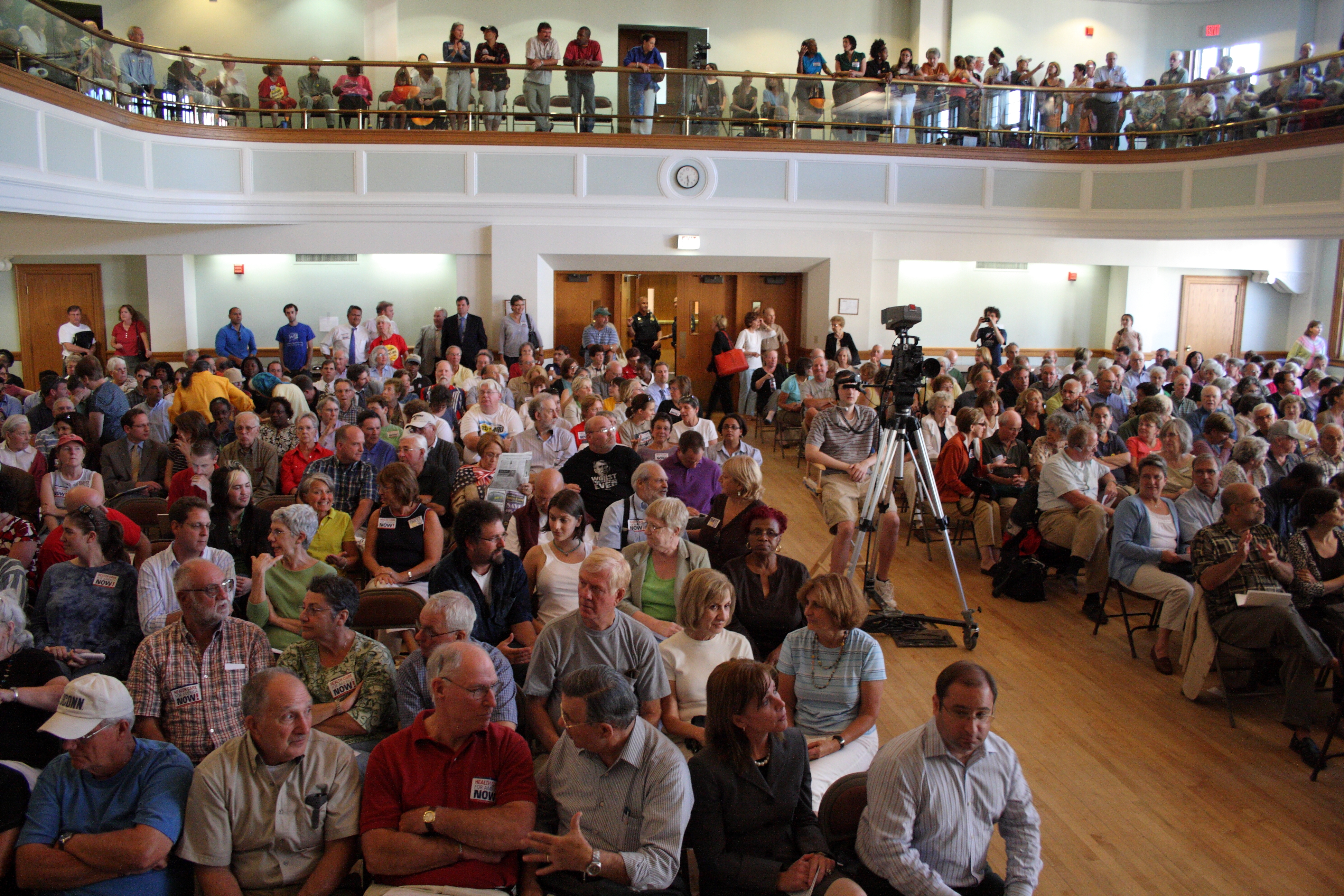
A town hall meeting is a public forum where elected officials, typically local or national politicians, engage directly with their constituents. These gatherings serve as a crucial, albeit often contentious, mechanism for democratic dialogue, allowing citizens to voice concerns, ask questions, and influence policy decisions. While the name evokes a specific civic building, town halls can occur in a wide array of venues, from school auditoriums to church basements, and increasingly, in digital spaces. Historically rooted in North American civic life, these meetings are designed to foster transparency and accountability, though they frequently become arenas for protest, heated debate, and the direct airing of grievances, particularly during periods of significant political polarization. The format's effectiveness and intent are subjects of ongoing discussion, with critics often questioning the genuine openness of such events.
🎵 Origins & History
The concept of the town hall meeting, as a direct conduit between the governed and their governors, finds its most prominent historical echoes in the New England tradition of the New England town meeting. By the 19th and 20th centuries, the term 'town hall meeting' became more widely associated with politicians holding structured Q&A sessions with their constituents, particularly in the United States. Unlike the participatory nature of the original town meetings, these were often one-way communication events, albeit with an opportunity for direct feedback. The practice gained significant traction in American political culture as a way for representatives to appear accessible and responsive, a stark contrast to the more formal parliamentary procedures found in countries like the United Kingdom, where politicians typically hold 'surgeries' instead.
⚙️ How It Works
At its core, a town hall meeting functions as a structured dialogue. An elected official, or a panel of officials, typically presides over the event, often beginning with a brief address on current issues or proposed legislation. The bulk of the meeting is then dedicated to questions from the audience, which are usually submitted in advance or via microphone during the event. Moderators often screen questions to ensure relevance and manage time. The goal is for the official to listen to constituent concerns, provide explanations, and sometimes, to persuade or gather support for their positions. While some meetings aim for open-ended discussion, others are more tightly controlled, with officials strategically selecting questions that allow them to highlight policy successes or address specific talking points. The physical or digital space itself is crucial, designed to facilitate interaction, whether through a microphone queue or a moderated online chat.
📊 Key Facts & Numbers
While precise global numbers are elusive, town hall meetings are a staple in the political calendars of many democracies. The average attendance can range from a few dozen to several hundred, though highly publicized events, especially those involving national figures like the President of the United States, can draw thousands. The cost of organizing these events can range from a few hundred dollars for local meetings to tens of thousands for larger, nationally televised events.
👥 Key People & Organizations
Key figures associated with the town hall format often include politicians who have made them a central part of their communication strategy. Bernie Sanders' town halls are often broadcast on CNN or MSNBC, to discuss his policy proposals, drawing significant viewership. Local government bodies, such as city councils and county commissions, also regularly convene town halls to address community-specific concerns. The National League of Cities also promotes best practices for municipal town hall engagement.
🌍 Cultural Impact & Influence
The cultural resonance of the town hall meeting is profound, particularly in American political lore, symbolizing a direct link between the people and their representatives. They have been depicted in countless films and television shows, often as pivotal scenes where a politician connects with ordinary citizens or faces tough questions. Think of the iconic scenes in films like 'Mr. Smith Goes to Washington' or the numerous political dramas that feature such events. These meetings can shape public perception, influence media narratives, and even alter the course of policy debates. For example, a particularly fiery town hall can generate significant media coverage, forcing politicians to address issues they might otherwise avoid. The format has also influenced online forums and digital town halls, attempting to replicate that sense of direct engagement in the digital age, as seen with platforms like Zoom and Twitch being used for political Q&As.
⚡ Current State & Latest Developments
In the current political climate, town hall meetings continue to be a significant, albeit often fraught, tool for political engagement. Following the widespread adoption of virtual meetings during the COVID-19 pandemic, many politicians have continued to offer hybrid formats, blending in-person and online participation. This has broadened accessibility but also introduced new challenges in managing digital discourse. Recent years have seen a rise in highly charged town halls, particularly during periods of intense partisan division, where protests and disruptions are common. For instance, during debates over healthcare reform or climate policy, town halls have often become flashpoints for activism. Politicians are increasingly using these events not just to listen, but also to rally support and counter opposition narratives, making them strategic communication battlegrounds. The ongoing debate about their utility and authenticity continues to shape how they are conducted and perceived in 2024.
🤔 Controversies & Debates
The town hall meeting is a nexus of considerable controversy. Critics often argue that these events are performative, with politicians carefully curating question-and-answer sessions to avoid genuine accountability. The selection of questions by moderators, the presence of 'ringers' planted by campaigns, and the sheer logistical challenge of giving everyone a voice can undermine the democratic ideal. Skeptics point to instances where politicians use town halls to deliver pre-scripted talking points rather than engage in spontaneous dialogue. Furthermore, the adversarial nature of some town halls, fueled by partisan media and online echo chambers, can devolve into shouting matches rather than constructive debate. The question of whether town halls truly represent the 'will of the people' or merely a vocal, often polarized, segment of the electorate remains a persistent point of contention, with figures like Newt Gingrich having previously criticized their effectiveness.
🔮 Future Outlook & Predictions
The future of town hall meetings will likely involve a continued evolution of their format and accessibility. The integration of digital platforms is set to deepen, potentially allowing for more sophisticated forms of audience participation and data analysis. We might see more AI-driven moderation tools or platforms that facilitate more nuanced forms of citizen feedback beyond simple Q&A. There's also a growing discussion about expanding the concept beyond political figures to include leaders in business, technology, and community organizations, fostering broader civic dialogue. However, the challenge of maintaining genuine engagement and avoiding performative politics will persist. As political polarization continues, the town hall may either become an even more critical space for bridging divides or an increasingly untenable arena for productive conversation. The potential for increased use of virtual reality or augmented reality to create immersive town hall experiences is also a speculative, yet plausible, future development.
💡 Practical Applications
Town hall meetings have direct practical applications in governance and public relations. For politicians, they are a vital tool for constituent outreach, policy e
Key Facts
- Category
- culture
- Type
- topic