
Contents
- 🌎 Introduction to Total Fertility Rate
- 📊 Calculating Total Fertility Rate
- 📈 Factors Influencing Total Fertility Rate
- 🌍 Global Trends in Total Fertility Rate
- 📊 Impact of Total Fertility Rate on Population Growth
- 👥 Relationship Between Total Fertility Rate and Family Planning
- 🏥 Role of Healthcare in Total Fertility Rate
- 📊 Economic Implications of Total Fertility Rate
- 🌟 Future Projections of Total Fertility Rate
- 🤝 Policy Implications of Total Fertility Rate
- 🌐 Conclusion: The Significance of Total Fertility Rate
- Frequently Asked Questions
- Related Topics
Overview
The total fertility rate (TFR) is the average number of children a woman would have in her lifetime based on the current fertility rates of a population. With a replacement rate of 2.1, many countries are experiencing below-replacement fertility rates, leading to aging populations and significant economic and social implications. The TFR is influenced by a multitude of factors, including education, urbanization, and access to contraception. According to the World Bank, the global TFR has declined from 5.0 in 1960 to 2.4 in 2020. This decline is attributed to improvements in healthcare, increases in female education, and changes in social norms. The impact of low fertility rates is being felt across the globe, with countries like Japan and Italy experiencing significant population decline, while others, such as the United States, are seeing a shift in population demographics due to immigration. As the world grapples with the challenges of low fertility rates, it is essential to consider the complex interplay of factors driving this trend and the potential consequences for future generations.
🌎 Introduction to Total Fertility Rate
The total fertility rate (TFR) is a crucial demographic indicator that measures the average number of children a woman would have in her lifetime, based on the current age-specific fertility rates (ASFRs) of a population. As explained by Demography experts, TFR is a key factor in determining the population growth rate of a country. The TFR is calculated by summing up the birth rates for women in different age groups, and it provides valuable insights into the reproductive health and behavior of a population. For instance, a low TFR can indicate a Population Decline, while a high TFR can lead to Population Growth. According to the World Health Organization, TFR is an essential metric for understanding the demographic dynamics of a country.
📊 Calculating Total Fertility Rate
Calculating the total fertility rate involves a complex process that takes into account the age-specific fertility rates of a population. As described by Fertility Rate researchers, the TFR is calculated by multiplying the age-specific fertility rates by the number of women in each age group, and then summing up the results. This calculation provides a snapshot of the current fertility patterns of a population and allows demographers to make predictions about future population trends. The TFR is often compared to the Replacement Rate, which is the rate at which a population replaces itself from one generation to the next. A TFR below the replacement rate can lead to a Declining Population, while a TFR above the replacement rate can result in a Growing Population.
📈 Factors Influencing Total Fertility Rate
Several factors influence the total fertility rate of a population, including Education, Urbanization, and Family Planning. As noted by Demographic Transition theorists, the TFR tends to decline as a country develops economically and socially. This decline is often driven by changes in women's Reproductive Health and Contraception use. For example, in countries with high levels of Female Education, women are more likely to delay marriage and childbearing, leading to a lower TFR. Additionally, Government Policies that support family planning and Reproductive Rights can also impact the TFR.
🌍 Global Trends in Total Fertility Rate
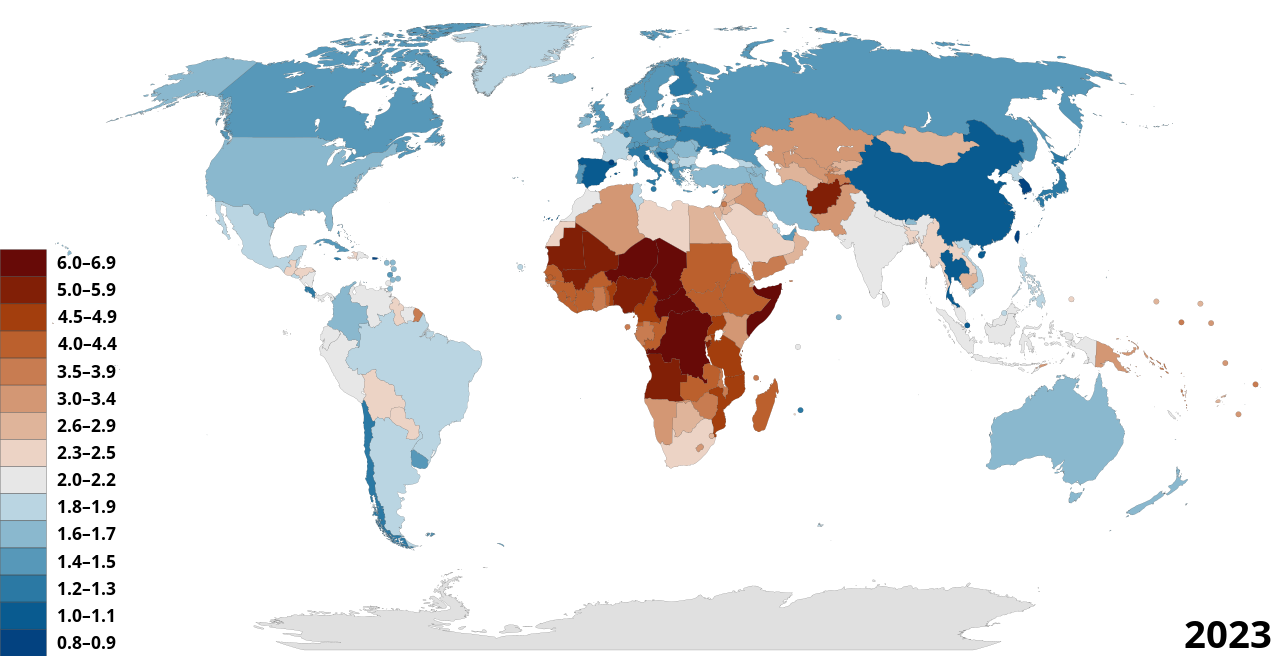
Global trends in total fertility rate reveal significant variations across regions and countries. As reported by the United Nations, the TFR has been declining in many parts of the world, particularly in Developed Countries. However, in some Developing Countries, the TFR remains high, leading to rapid Population Growth. The TFR is also influenced by Cultural Factors, such as the desire for large families or the importance of Traditional Family Values. For instance, in some African Countries, the TFR is high due to the cultural significance of large families. In contrast, in some East Asian Countries, the TFR is low due to the emphasis on Education and Career.
📊 Impact of Total Fertility Rate on Population Growth
The total fertility rate has a significant impact on population growth, as it determines the number of births that occur in a given year. As explained by Population Growth experts, a high TFR can lead to rapid population growth, while a low TFR can result in a Declining Population. The TFR is also closely linked to the Age Structure of a population, as it influences the number of young people in the population. A population with a high TFR will have a larger proportion of young people, while a population with a low TFR will have a larger proportion of older people. This, in turn, can impact the Economy and Social Security of a country.
👥 Relationship Between Total Fertility Rate and Family Planning
The relationship between total fertility rate and family planning is complex and multifaceted. As noted by Family Planning experts, the use of Contraception and Reproductive Health services can significantly impact the TFR. In countries where family planning is widely available and accessible, the TFR tends to be lower. However, in countries where family planning is limited or restricted, the TFR may be higher. The TFR is also influenced by Cultural and Social Factors, such as the desire for large families or the importance of Traditional Family Values. For example, in some Latin American Countries, the TFR is high due to the cultural significance of large families.
🏥 Role of Healthcare in Total Fertility Rate
The role of healthcare in total fertility rate is critical, as access to Reproductive Health services and Contraception can significantly impact the TFR. As reported by the World Health Organization, improvements in healthcare and Family Planning can lead to a decline in the TFR. Additionally, Maternal Health and Child Health are also important factors, as they influence the number of births that occur and the health of the population. The TFR is also linked to the Healthcare System of a country, as it affects the availability and accessibility of Reproductive Health Services.
📊 Economic Implications of Total Fertility Rate
The economic implications of total fertility rate are significant, as it influences the Labor Force and Economic Growth of a country. As explained by Economists, a high TFR can lead to a large and young workforce, while a low TFR can result in a smaller and older workforce. The TFR is also closely linked to the Pension System and Social Security of a country, as it influences the number of workers supporting the elderly population. For instance, in countries with a low TFR, the Pension System may be under strain due to the limited number of workers supporting the elderly population.
🌟 Future Projections of Total Fertility Rate
Future projections of total fertility rate are uncertain and depend on various factors, including Education, Urbanization, and Family Planning. As noted by Demographers, the TFR is likely to continue declining in many parts of the world, particularly in Developed Countries. However, in some Developing Countries, the TFR may remain high, leading to rapid Population Growth. The TFR is also influenced by Government Policies and International Development efforts, which can impact the availability and accessibility of Family Planning and Reproductive Health services.
🤝 Policy Implications of Total Fertility Rate
The policy implications of total fertility rate are significant, as it influences the Population Policy and Development Policy of a country. As explained by Policy Makers, a high TFR can lead to rapid Population Growth, while a low TFR can result in a Declining Population. The TFR is also closely linked to the Education Policy and Health Policy of a country, as it influences the availability and accessibility of Education and Healthcare services. For instance, in countries with a low TFR, the Education Policy may focus on increasing the Female Education and Reproductive Health awareness.
🌐 Conclusion: The Significance of Total Fertility Rate
In conclusion, the total fertility rate is a critical demographic indicator that measures the average number of children a woman would have in her lifetime. As noted by Demographers, the TFR is influenced by various factors, including Education, Urbanization, and Family Planning. The TFR has significant implications for Population Growth, Economic Growth, and Social Security. As the world continues to urbanize and develop, the TFR is likely to continue declining, leading to significant changes in the demographic landscape of countries around the world.
Key Facts
- Year
- 2020
- Origin
- World Bank
- Category
- Demography
- Type
- Demographic Indicator
Frequently Asked Questions
What is the total fertility rate?
The total fertility rate (TFR) is the average number of children a woman would have in her lifetime, based on the current age-specific fertility rates (ASFRs) of a population. The TFR is a key factor in determining the population growth rate of a country. As explained by Demography experts, the TFR is calculated by summing up the birth rates for women in different age groups. The TFR is influenced by various factors, including Education, Urbanization, and Family Planning.
How is the total fertility rate calculated?
The total fertility rate is calculated by multiplying the age-specific fertility rates by the number of women in each age group, and then summing up the results. This calculation provides a snapshot of the current fertility patterns of a population and allows demographers to make predictions about future population trends. The TFR is often compared to the Replacement Rate, which is the rate at which a population replaces itself from one generation to the next. A TFR below the replacement rate can lead to a Declining Population, while a TFR above the replacement rate can result in a Growing Population.
What factors influence the total fertility rate?
Several factors influence the total fertility rate, including Education, Urbanization, and Family Planning. The TFR tends to decline as a country develops economically and socially. This decline is often driven by changes in women's Reproductive Health and Contraception use. For example, in countries with high levels of Female Education, women are more likely to delay marriage and childbearing, leading to a lower TFR. Additionally, Government Policies that support family planning and Reproductive Rights can also impact the TFR.
What are the implications of a high or low total fertility rate?
A high total fertility rate can lead to rapid Population Growth, while a low total fertility rate can result in a Declining Population. The TFR is also closely linked to the Age Structure of a population, as it influences the number of young people in the population. A population with a high TFR will have a larger proportion of young people, while a population with a low TFR will have a larger proportion of older people. This, in turn, can impact the Economy and Social Security of a country. For instance, in countries with a low TFR, the Pension System may be under strain due to the limited number of workers supporting the elderly population.
How does the total fertility rate impact the economy?
The total fertility rate has significant implications for the Economy, as it influences the Labor Force and Economic Growth of a country. A high TFR can lead to a large and young workforce, while a low TFR can result in a smaller and older workforce. The TFR is also closely linked to the Pension System and Social Security of a country, as it influences the number of workers supporting the elderly population. For example, in countries with a low TFR, the Pension System may be under strain due to the limited number of workers supporting the elderly population.
What are the policy implications of the total fertility rate?
The policy implications of the total fertility rate are significant, as it influences the Population Policy and Development Policy of a country. A high TFR can lead to rapid Population Growth, while a low TFR can result in a Declining Population. The TFR is also closely linked to the Education Policy and Health Policy of a country, as it influences the availability and accessibility of Education and Healthcare services. For instance, in countries with a low TFR, the Education Policy may focus on increasing the Female Education and Reproductive Health awareness.
How does the total fertility rate impact social security?
The total fertility rate has significant implications for Social Security, as it influences the number of workers supporting the elderly population. A high TFR can lead to a large and young workforce, while a low TFR can result in a smaller and older workforce. The TFR is also closely linked to the Pension System of a country, as it influences the number of workers supporting the elderly population. For example, in countries with a low TFR, the Pension System may be under strain due to the limited number of workers supporting the elderly population.