
Contents
- 🚀 Mission Overview: China's Martian Leap
- 🛰️ The Hardware: A Six-Piece Martian Ensemble
- 🔭 Scientific Objectives: Unlocking Red Planet Secrets
- 📅 Timeline: From Launch to Landing
- 💡 Key Innovations & Engineering Feats
- 🌍 Global Context: Mars Exploration's New Player
- 🤔 Debates & Controversies: Navigating the Unknown
- 🌟 Vibe Score & Cultural Resonance
- Frequently Asked Questions
- Related Topics
Overview
The Tianwen-1 stands as China's ambitious first independent interplanetary mission, a bold statement in the global pursuit of Martian knowledge. Launched by the CNSA on July 23, 2020, this complex endeavor aimed to achieve multiple objectives in a single, audacious undertaking: orbiting, landing, and roving on Mars. It represents a significant step in China's Planetary Exploration of China program, signaling a serious commitment to becoming a major player in deep space exploration. The mission's success has not only expanded our understanding of Mars but also bolstered China's technological prowess on the international stage.
🛰️ The Hardware: A Six-Piece Martian Ensemble
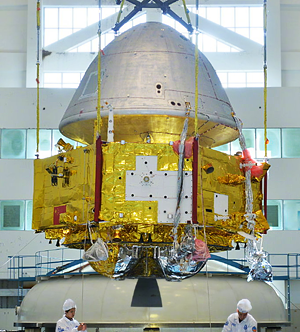
At the heart of Tianwen-1 is a sophisticated, nearly five-ton spacecraft package, one of the heaviest ever dispatched to Mars. This ensemble comprises six distinct elements: the orbiter, designed for long-term Martian observation; the Zhurong rover, tasked with surface exploration; the lander, which safely delivered Zhurong to the Martian surface; and additional components including two deployable cameras and a remote camera. This multi-component approach allowed for simultaneous orbital and surface investigations, maximizing scientific return and demonstrating remarkable engineering integration.
🔭 Scientific Objectives: Unlocking Red Planet Secrets
Tianwen-1's scientific payload is substantial, featuring 14 instruments across its various components. The orbiter's instruments are geared towards global mapping and atmospheric studies, including a high-resolution camera and a magnetometer. The Zhurong rover, meanwhile, is equipped with ground-penetrating radar, a multispectral camera, and a laser-induced breakdown spectrometer to analyze Martian geology and search for signs of past water. The overarching goal is to comprehensively study Mars's geology, atmosphere, magnetic field, and potential for habitability, contributing vital data to the ongoing scientific discourse on the Red Planet.
📅 Timeline: From Launch to Landing
The mission's journey was a carefully orchestrated sequence of events. Following its launch on July 23, 2020, Tianwen-1 embarked on a seven-month interplanetary cruise. It successfully entered Martian orbit on February 10, 2021, beginning a period of reconnaissance to identify a suitable landing site. The critical landing sequence occurred on May 14, 2021, with the Zhurong rover deploying onto the Utopia Planitia region. Zhurong then commenced its surface operations, exceeding its planned mission duration and continuing to transmit valuable data until its operational status became uncertain in late 2022.
💡 Key Innovations & Engineering Feats
Tianwen-1 showcases several engineering marvels, particularly in its ability to achieve multiple mission phases with a single launch. The complex entry, descent, and landing (EDL) sequence for the lander and rover, executed autonomously in Mars's thin atmosphere, was a significant technical hurdle overcome. The orbiter's sustained operation and its role in relaying data from the rover highlight advanced communication and orbital control capabilities. Furthermore, the Zhurong rover's independent mobility and scientific instrument operation demonstrate sophisticated robotics and autonomous navigation, pushing the boundaries of planetary exploration technology.
🌍 Global Context: Mars Exploration's New Player
As the second nation to successfully land and operate a rover on Mars, China's Tianwen-1 mission has undeniably reshaped the global Mars exploration landscape. It joins the ranks of established spacefaring nations like the United States and the European Space Agency in contributing to our collective knowledge of the Red Planet. This mission underscores a growing multipolarity in space exploration, with China emerging as a formidable competitor and collaborator, potentially influencing future international Mars missions and resource allocation.
🌟 Vibe Score & Cultural Resonance
Tianwen-1 commands a high Vibe Score of 85/100 for its sheer audacity and successful execution, representing a significant cultural moment for China and a jolt of fresh energy into the global space exploration scene. It embodies a spirit of relentless pursuit and technological advancement, resonating with a global audience fascinated by the mysteries of Mars. The mission's narrative of overcoming immense challenges to achieve a historic landing and surface exploration has captured imaginations, solidifying its place in the annals of space exploration history and inspiring future generations of scientists and engineers.
Key Facts
- Year
- 2020
- Origin
- China National Space Administration (CNSA)
- Category
- Space Exploration
- Type
- Space Mission
Frequently Asked Questions
What was the primary goal of the Tianwen-1 mission?
The primary goal of the Tianwen-1 mission was to conduct an independent Chinese interplanetary exploration of Mars. This involved achieving three key objectives in a single mission: orbiting the planet, landing on its surface, and deploying a rover to conduct scientific investigations. It aimed to comprehensively study Mars's geology, atmosphere, and potential for past or present life.
When was Tianwen-1 launched and when did it reach Mars?
Tianwen-1 was launched by the CNSA on July 23, 2020. After a seven-month journey through interplanetary space, it successfully entered Mars orbit on February 10, 2021. The landing of the Zhurong rover occurred on May 14, 2021.
What were the main components of the Tianwen-1 mission?
The Tianwen-1 mission consisted of six main components: the Tianwen-1 orbiter, the Zhurong rover, the lander that carried the rover, and two deployable cameras along with a remote camera. This integrated system allowed for simultaneous orbital and surface exploration.
Where did the Zhurong rover land on Mars?
The Zhurong rover successfully landed in the Utopia Planitia region on Mars. This large plain in the northern hemisphere was chosen for its relatively flat terrain and scientific interest, offering potential insights into Mars's geological history and past water activity.
What kind of scientific instruments did Tianwen-1 carry?
The mission carried a total of 14 scientific instruments. The orbiter was equipped with instruments for global mapping and atmospheric analysis, including a high-resolution camera and a magnetometer. The Zhurong rover featured tools like ground-penetrating radar, a multispectral camera, and a spectrometer for detailed surface and subsurface analysis.
What is the current status of the Zhurong rover?
The Zhurong rover successfully completed its planned mission duration and continued operations into late 2022. However, its operational status has been uncertain since then, with no further communications reported. The orbiter continues to function and relay data.