
Contents
- 🔬 What Exactly Are Thyroid Hormones?
- ⚡ How Do They Actually Work?
- 🍎 Where Does the Iodine Come From?
- 📉 When Things Go Wrong: The Goitre Connection
- 🤔 The T3 vs. T4 Showdown
- 💡 Beyond Metabolism: Other Roles
- 📈 Measuring Your Thyroid Vibe
- 💊 Thyroid Hormone Therapy: A Lifeline
- 🔮 The Future of Thyroid Regulation
- ❓ Frequently Asked Questions
- Frequently Asked Questions
- Related Topics
Overview
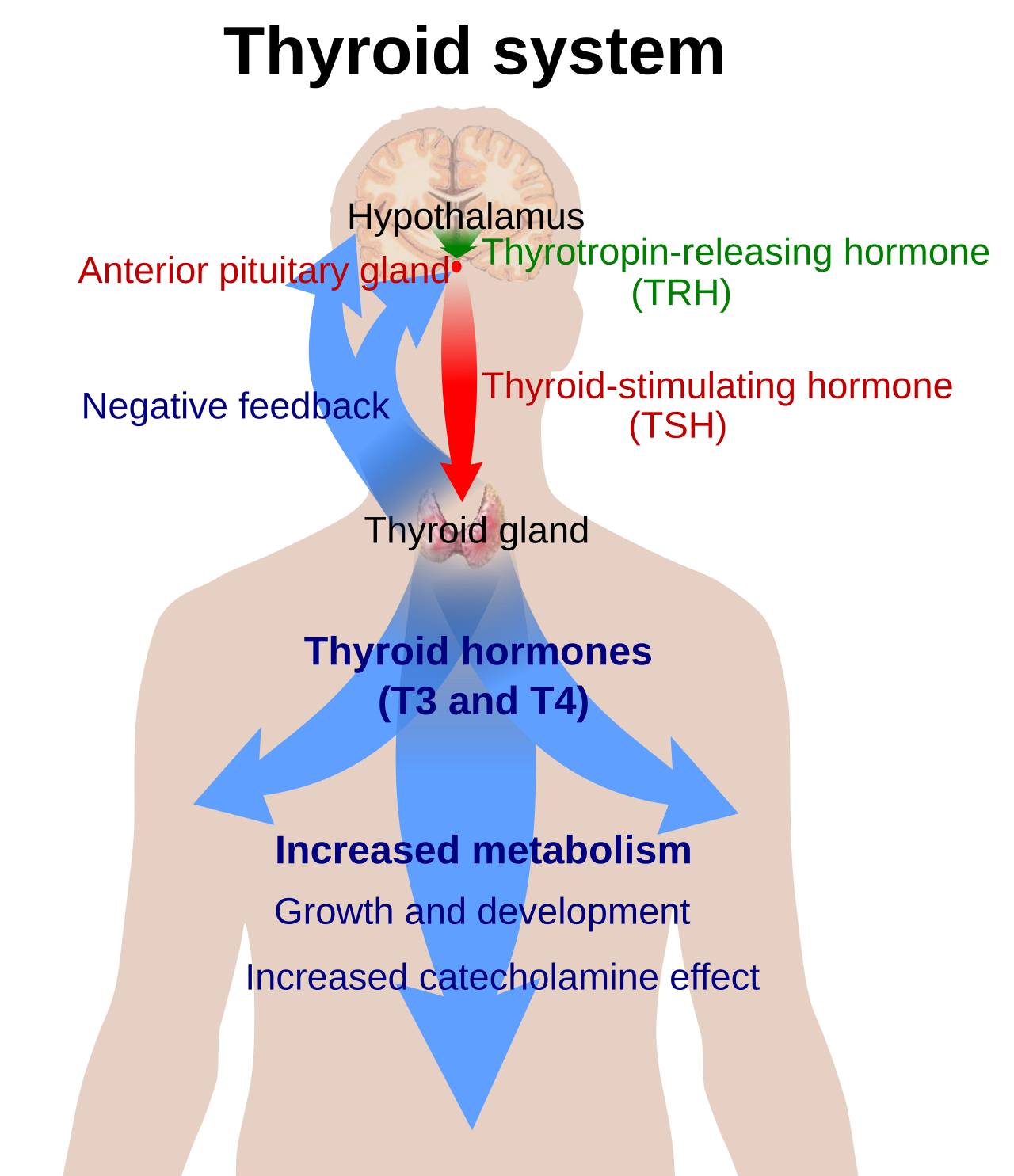
Thyroid hormones, primarily thyroxine (T4) and triiodothyronine (T3), are the endocrine system's unsung heroes, dictating metabolic rate, growth, and development across virtually every cell in the body. Produced by the thyroid gland in the neck, their synthesis is a complex dance orchestrated by the hypothalamus and pituitary gland, highlighting a critical feedback loop. Imbalances, whether hyperthyroidism (overactive) or hypothyroidism (underactive), can trigger a cascade of systemic issues, from weight fluctuations and heart problems to cognitive impairment. Understanding these hormones is key to grasping a vast array of physiological processes and common health conditions.
🔬 What Exactly Are Thyroid Hormones?
Thyroid hormones, primarily triiodothyronine (T3) and thyroxine (T4), are the body's master regulators, orchestrating a symphony of metabolic processes. Produced by the butterfly-shaped thyroid gland nestled in your neck, these potent molecules are essential for life, influencing everything from your heart rate to your body temperature. Think of them as the body's internal thermostat and energy manager, ensuring every cell functions at its optimal pace. Without them, the intricate machinery of your body grinds to a halt, making their proper production and function absolutely critical for overall health and vitality.
⚡ How Do They Actually Work?
The mechanism by which thyroid hormones exert their influence is fascinatingly complex, acting on nearly every cell in the body. They bind to nuclear receptors within cells, directly influencing gene expression. This means they can essentially tell your cells to "turn up" or "turn down" the production of various proteins and enzymes. This control over gene activity is how they dictate the rate of cellular respiration, the process by which cells convert nutrients into energy, thereby controlling your basal metabolic rate. It's a direct line of command, ensuring energy is produced and utilized efficiently.
🍎 Where Does the Iodine Come From?
The crucial building blocks for T3 and T4 are iodine atoms, which your body cannot produce on its own. This means you must obtain sufficient iodine through your diet. Historically, iodized salt became a public health triumph, dramatically reducing the incidence of iodine deficiency disorders. However, relying solely on iodized salt might not be enough for everyone, and understanding dietary sources like seafood, dairy products, and certain vegetables is key to ensuring adequate intake. The body's ability to synthesize these vital hormones is directly tethered to the availability of this essential mineral.
📉 When Things Go Wrong: The Goitre Connection
When iodine intake is chronically insufficient, the thyroid gland struggles to produce adequate T3 and T4. In a desperate attempt to capture more iodine from the bloodstream, the thyroid gland can enlarge, leading to a condition known as simple goitre. This visible swelling in the neck is a stark, physical manifestation of the body's struggle to maintain hormonal balance. It's a clear signal that the intricate feedback loop between the pituitary gland, the hypothalamus, and the thyroid is faltering due to a fundamental nutrient deficiency, impacting thousands globally.
🤔 The T3 vs. T4 Showdown
While both T3 and T4 are thyroid hormones, they aren't quite identical twins. T4, also known as thyroxine, is the more abundant form, produced in larger quantities. However, T3, or triiodothyronine, is the more potent and biologically active form. The body often converts T4 into T3 in peripheral tissues, acting as a reservoir for the active hormone. This conversion process is a critical step, ensuring that the body can precisely modulate the level of active thyroid hormone available to target cells, fine-tuning metabolic activity as needed.
💡 Beyond Metabolism: Other Roles
The influence of thyroid hormones extends far beyond just metabolism. They play vital roles in cardiac function, influencing heart rate and contractility. They are also critical for neurological development in infants and children, impacting brain maturation and cognitive function. Furthermore, they are involved in thermogenesis, helping to regulate body temperature, and play a role in the breakdown of fats and carbohydrates, impacting energy storage and utilization. Their reach is extensive, touching nearly every physiological system.
📈 Measuring Your Thyroid Vibe
Assessing thyroid hormone levels typically involves blood tests that measure circulating levels of TSH (thyroid-stimulating hormone), T4, and T3. TSH, produced by the pituitary gland, acts as a key indicator; high TSH often signals an underactive thyroid (hypothyroidism), while low TSH can suggest an overactive thyroid (hyperthyroidism). These tests are fundamental for diagnosing thyroid dysfunction and monitoring the effectiveness of treatment. Understanding these markers is the first step in managing your thyroid health.
💊 Thyroid Hormone Therapy: A Lifeline
For individuals with conditions like hypothyroidism or hyperthyroidism, thyroid hormone therapy can be a life-changing intervention. Synthetic T4 (levothyroxine) is the most common treatment for hypothyroidism, replacing the hormone the body can no longer produce sufficiently. For hyperthyroidism, treatments aim to reduce hormone production or block their effects. These therapies are carefully managed by endocrinologists to restore hormonal balance and alleviate debilitating symptoms, allowing individuals to regain their quality of life.
🔮 The Future of Thyroid Regulation
The future of thyroid hormone management likely involves more personalized approaches. Advances in genomics and understanding individual variations in hormone metabolism could lead to tailored treatment plans. Research into novel drug delivery systems and potentially even regenerative therapies for the thyroid gland itself are on the horizon. The goal is to move beyond simply replacing hormones to optimizing thyroid function at a deeper, more individualized level, potentially impacting millions worldwide.
❓ Frequently Asked Questions
Thyroid hormones are fundamental to human health, regulating metabolism and numerous other bodily functions. They are produced by the thyroid gland and require iodine from the diet. When their production is disrupted, it can lead to conditions like goitre. Understanding how T3 and T4 work, how they are measured, and the available treatments is crucial for maintaining overall well-being. The field continues to evolve, promising more precise and personalized care for thyroid-related conditions.
Key Facts
- Year
- 1914
- Origin
- Edward Kendall isolated thyroxine (T4) in 1914, a pivotal moment in understanding thyroid function.
- Category
- Biology & Medicine
- Type
- Biological Substance
Frequently Asked Questions
What are the main symptoms of thyroid problems?
Symptoms vary depending on whether the thyroid is underactive (hypothyroidism) or overactive (hyperthyroidism). Hypothyroidism can cause fatigue, weight gain, feeling cold, and dry skin. Hyperthyroidism might lead to weight loss, rapid heartbeat, anxiety, and tremors. Both can affect mood, energy levels, and digestion. Consulting a healthcare professional is essential for accurate diagnosis, as symptoms can overlap with other conditions.
Can I get enough iodine from a normal diet?
For most people, a balanced diet including iodized salt, seafood, and dairy products provides sufficient iodine. However, individuals on restrictive diets, such as those avoiding salt or dairy, or living in regions with iodine-poor soil, may be at risk for deficiency. It's advisable to discuss your dietary habits with a healthcare provider if you have concerns about your iodine intake.
What is the difference between T3 and T4?
T4 (thyroxine) is the primary hormone produced by the thyroid gland and acts as a precursor, while T3 (triiodothyronine) is the more potent, active form. The body converts T4 into T3 in various tissues. Both are crucial for regulating metabolism, but T3 has a stronger effect on cellular activity. Blood tests typically measure both to assess thyroid function.
How is thyroid disease diagnosed?
Diagnosis usually begins with a physical examination and a review of your symptoms. Blood tests are then performed to measure levels of thyroid-stimulating hormone (TSH), T4, and sometimes T3. Elevated TSH typically indicates hypothyroidism, while low TSH can suggest hyperthyroidism. Imaging tests like ultrasounds may also be used to examine the thyroid gland itself.
Is thyroid hormone therapy lifelong?
For most individuals diagnosed with hypothyroidism, thyroid hormone replacement therapy, typically with levothyroxine (synthetic T4), is a lifelong treatment. This is because the thyroid gland is unable to produce sufficient hormones on its own. Regular monitoring by a healthcare provider is necessary to ensure the dosage remains appropriate as your body's needs change.
Can stress affect my thyroid?
While stress doesn't directly cause thyroid disease, chronic stress can influence the body's hormonal balance, potentially exacerbating existing thyroid conditions or affecting how symptoms are perceived. The hypothalamic-pituitary-adrenal (HPA) axis, which regulates the stress response, interacts with the hypothalamic-pituitary-thyroid (HPT) axis. Managing stress is therefore an important component of overall health, including thyroid health.