
Contents
Overview
The roots of the temperance movement stretch back to ancient philosophical traditions and religious injunctions against excessive drinking, but its modern iteration truly coalesced in the early 19th century. Early organized efforts, like the American Temperance Society, rapidly gained traction, fueled by a potent mix of religious revivalism and social reformist zeal. Precursors included groups like the Washingtonians, which emphasized personal testimony and mutual support, demonstrating the power of lived experience in advocating for change. By the mid-19th century, temperance societies had become ubiquitous in the United States and Great Britain, with figures like Lyman Beecher delivering influential sermons and Carrie Nation later embodying a more radical, direct-action approach. The movement's momentum built steadily, advocating for local option laws and eventually pushing for national prohibition, a goal that would take decades to achieve.
⚙️ How It Works
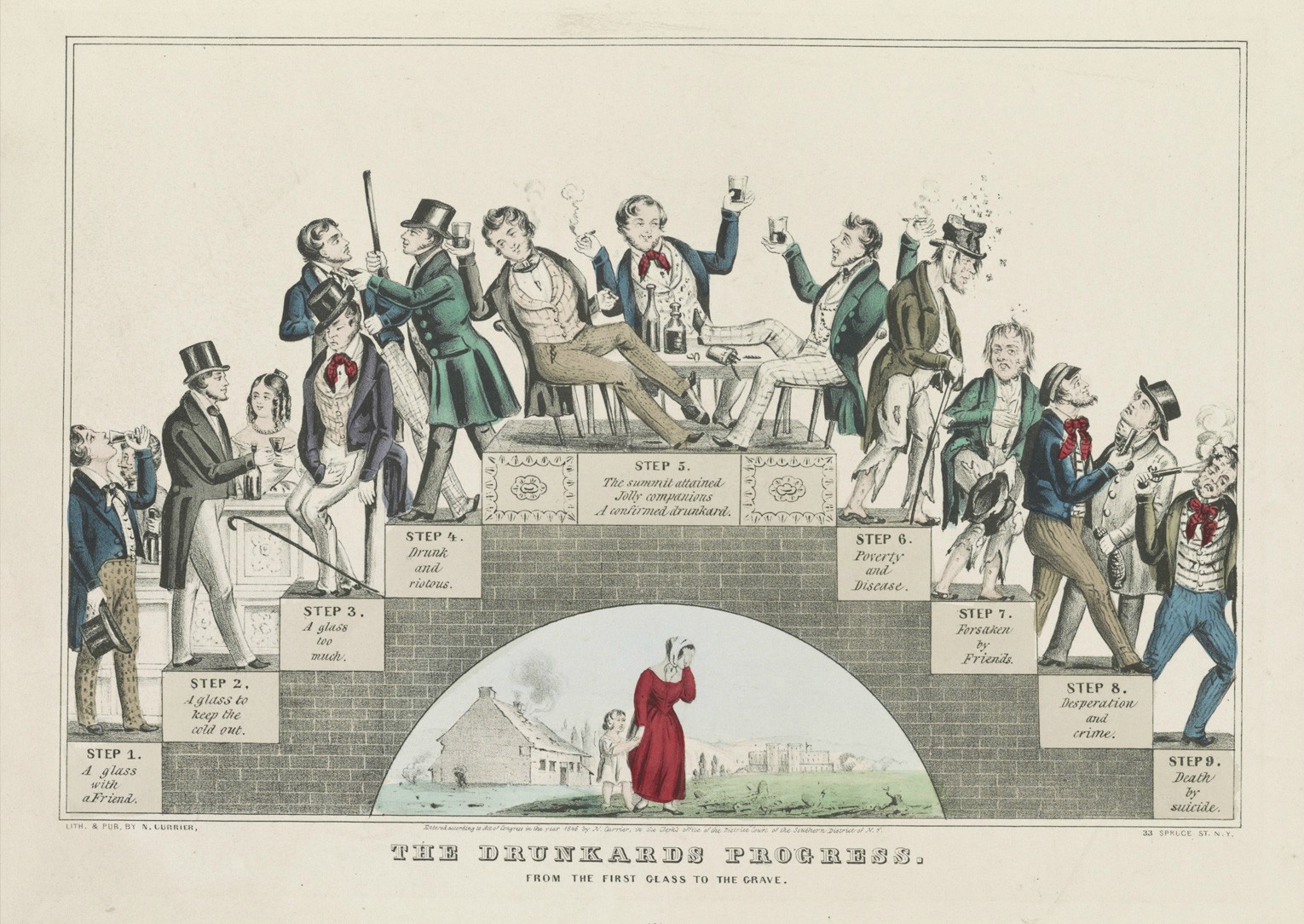
The temperance movement operated through a multi-pronged strategy, blending moral suasion with legislative action. Organizations disseminated educational materials, often depicting alcohol's supposed destructive path through propaganda like The Drunkard's Progress lithograph series. They organized public rallies, pledges campaigns, and established 'coffee houses' as alcohol-free social spaces. Crucially, temperance advocates lobbied relentlessly for legislative change, pushing for laws that ranged from restricting alcohol sales hours to outright bans. The movement's effectiveness often depended on its ability to mobilize large numbers of citizens, particularly women, who were often at the forefront of domestic reform efforts and saw alcohol as a direct threat to family stability. The formation of powerful lobbying groups, such as the Anti-Saloon League, proved instrumental in translating public sentiment into political pressure.
📊 Key Facts & Numbers
The temperance movement's reach was vast, impacting millions of lives and reshaping national policies. In the United States, the push for prohibition saw over 1,000 temperance organizations active by 1830, with millions signing pledges against alcohol consumption. The culmination of this effort was the Volstead Act and the 18th Amendment to the U.S. Constitution, enacted in 1920, which banned the manufacture, sale, and transportation of alcoholic beverages. This prohibition lasted for 13 years, during which time an estimated 1.5 million arrests were made for alcohol-related offenses. Globally, national prohibition was also enacted in Finland (1919-1932), Norway (spirits only, 1919-1926), and Canada (nationally from 1918-1920, with provincial variations). Despite the repeal of national prohibition in the U.S. in 1933, some regions, like parts of India, maintained local or state-level bans that persist to this day.
👥 Key People & Organizations
Numerous individuals and organizations propelled the temperance movement forward. In the United States, Lyman Beecher was an early and influential voice, while Frances Willard led the Woman's Christian Temperance Union (WCTU) from 1879 to 1898, transforming it into a formidable political force. Carrie Nation became a notorious figure for her radical direct-action tactics, smashing saloons with a hatchet. In Britain, the United Kingdom Alliance was a key organization, while figures like William Hoyle championed the cause. The Anti-Saloon League, founded in 1893, became arguably the most effective lobbying group, employing professional organizers and political strategists to achieve its prohibitionist goals. These individuals and groups, often working through a vast network of local chapters, formed the backbone of the movement's sustained pressure on governments.
🌍 Cultural Impact & Influence
The temperance movement left an indelible mark on global culture and policy. Its success in achieving national prohibition in the United States, however temporary, fundamentally altered American society, giving rise to organized crime syndicates like Al Capone's Chicago Outfit and a widespread culture of speakeasies. The movement also significantly empowered women in the political sphere, with organizations like the WCTU becoming major players in social reform and laying groundwork for the women's suffrage movement. The rhetoric and imagery developed by temperance advocates, such as the stark contrast between the 'virtuous' abstainer and the 'ruined' drunkard, permeated literature, art, and public discourse. Even after the repeal of prohibition, the underlying concerns about alcohol's societal impact continued to fuel public health campaigns and regulatory efforts, influencing everything from advertising restrictions to drunk driving laws.
⚡ Current State & Latest Developments
While the era of widespread national prohibition has largely passed, the spirit of the temperance movement continues to manifest in contemporary discussions and initiatives. Public health organizations and advocacy groups still campaign against the harms of excessive alcohol consumption, focusing on issues like underage drinking, drunk driving, and alcohol-related diseases. The rise of the zero-proof beverage market and the growing popularity of 'sober curious' lifestyles reflect a modern iteration of abstinence, driven by health and wellness trends rather than solely moral or religious imperatives. Furthermore, ongoing debates about alcohol pricing, advertising regulations, and the licensing of alcohol sales demonstrate that the core concerns of the temperance movement remain relevant in shaping public policy and social attitudes towards alcohol in the 21st century.
🤔 Controversies & Debates
The temperance movement is not without its critics and controversies. The most significant debate centers on the efficacy and unintended consequences of prohibition. In the United States, the 18th Amendment led to a surge in organized crime, corruption, and a general disregard for the law, ultimately contributing to its repeal. Critics argue that prohibition was an overreach of government power, infringing on personal liberties and failing to address the root causes of alcoholism. Furthermore, the movement's often religiously motivated stance and its association with nativist sentiments in some regions have drawn criticism for being judgmental and exclusionary. The debate continues over whether regulation, education, or outright prohibition is the most effective approach to managing alcohol's societal impact, with evidence often cited to support various viewpoints.
🔮 Future Outlook & Predictions
The future of temperance-inspired movements will likely be shaped by evolving societal attitudes towards health, wellness, and personal choice. We may see a continued growth in the market for non-alcoholic alternatives, driven by a generation increasingly mindful of physical and mental well-being. Public health advocacy will likely focus on harm reduction strategies and evidence-based interventions rather than broad prohibitionist measures. However, the potential for resurgent moral or religious objections to alcohol, particularly in response to perceived societal decay, cannot be entirely discounted. The ongoing tension between individual liberty and collective well-being will continue to define the landscape of alcohol policy, with temperance ideals serving as a historical touchstone for debates about societal control and personal responsibility.
💡 Practical Applications
While the direct application of national prohibition is rare today, the principles and tactics of the temperance movement have found application in various public health and social policy arenas. The emphasis on education and awareness campaigns, for instance, is a direct legacy, seen in modern initiatives combatting drunk driving, smoking, and drug abuse. The formation of organized lobbying groups and the strategy of pushing for legislative change are now standard practices in many advocacy movements. Furthermore, the concept of creating 'dry' or 'alcohol-free' zones, common during the temperance era, persists in some communities, schools, and event venues. The movement's success in mobilizing public opinion and influencing policy serves as a case study for subsequent social reform efforts, demonstrating how sustained
Key Facts
- Category
- movements
- Type
- topic