
Contents
- 🌌 Introduction to Space Time Continuum
- 📝 Definition and Mathematical Model
- 🕰️ Understanding Relativistic Effects
- 📊 Spacetime Diagrams and Visualizations
- 👥 Key Contributors and Theories
- 🔍 Experimental Evidence and Observations
- 📚 Comparison with Other Theoretical Frameworks
- 💡 Practical Applications and Implications
- 🤔 Controversies and Debates
- 📝 Getting Started with Space Time Continuum Research
- 📊 Advanced Topics and Future Directions
- Frequently Asked Questions
- Related Topics
Overview
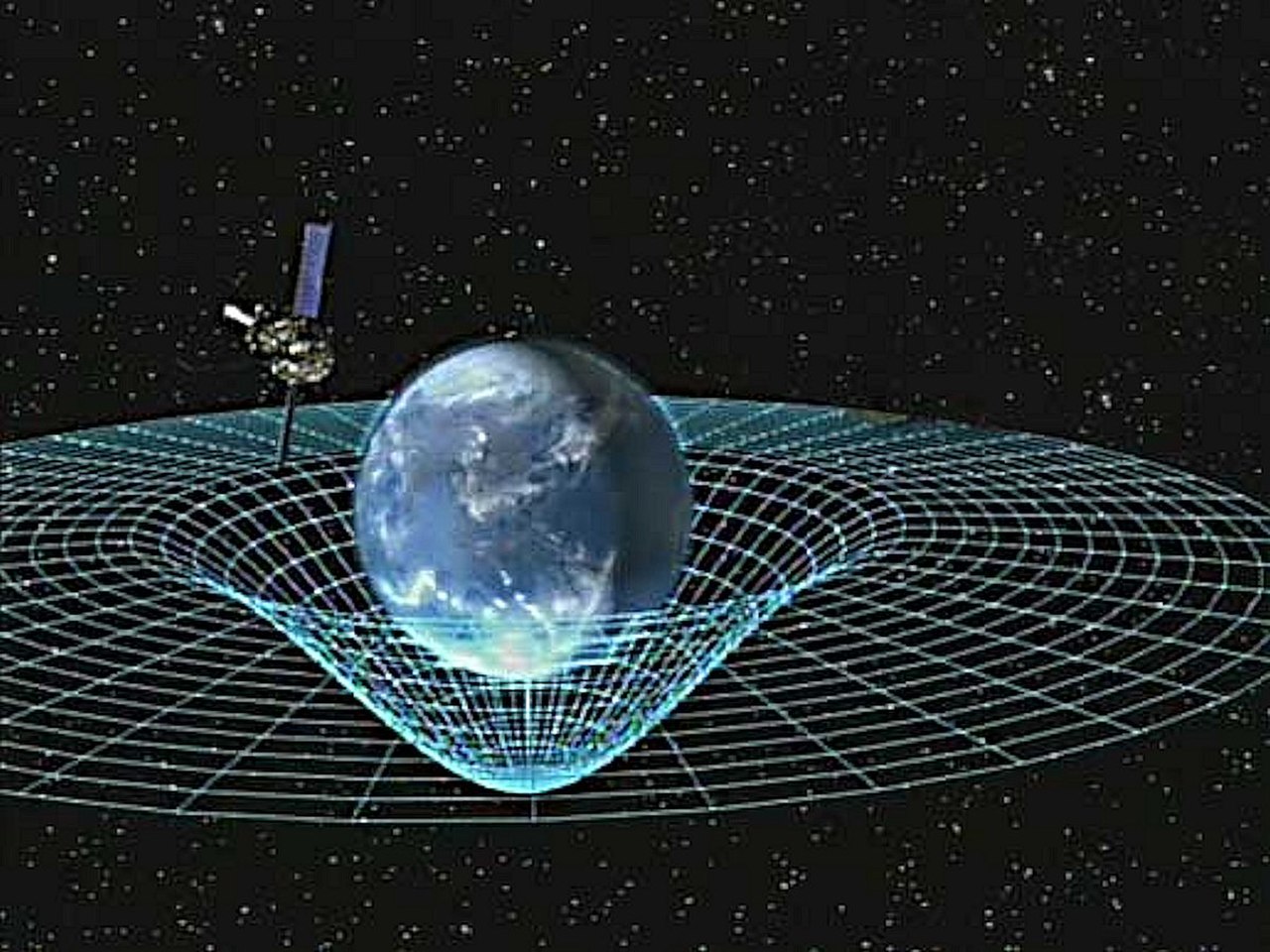
The space time continuum, a concept introduced by Albert Einstein's theory of relativity in 1905, describes the interconnectedness of space and time as a single, unified entity. This idea revolutionized our understanding of the universe, introducing concepts like time dilation and length contraction. The space time continuum is often visualized as a four-dimensional fabric, with three dimensions of space and one dimension of time. However, debates surrounding the nature of this continuum, such as the role of gravity and the implications of quantum mechanics, continue to fuel research and discussion among physicists. Notable figures like Stephen Hawking and Brian Greene have contributed to the ongoing exploration of this concept, with Hawking's black hole theories and Greene's work on string theory pushing the boundaries of our understanding. As our comprehension of the space time continuum evolves, so too do the possibilities for technological innovation and our grasp of the cosmos, with potential applications in fields like space travel and energy production.
🌌 Introduction to Space Time Continuum
The Space Time Continuum is a fundamental concept in Theoretical Physics, describing the fabric that combines space and time. This idea is crucial for understanding various phenomena in the universe, from the behavior of black holes to the expansion of the cosmos itself. The concept of spacetime is closely related to Relativity, which was introduced by Albert Einstein. To grasp the Space Time Continuum, one must delve into the mathematical models that describe it, such as the Lorentz Transformation and the Metric Tensor.
📝 Definition and Mathematical Model
The mathematical model of spacetime is based on the concept of a four-dimensional manifold, where three dimensions represent space and one dimension represents time. This model is essential for understanding how different observers perceive the universe, as described by the Theory of Relativity. The spacetime continuum is often represented using Spacetime Diagrams, which are useful tools for visualizing and understanding relativistic effects. These diagrams are closely related to the concept of Minkowski Space, which is a fundamental concept in special relativity.
🕰️ Understanding Relativistic Effects
Relativistic effects, such as time dilation and length contraction, are a direct result of the spacetime continuum. These effects become significant when objects approach the speed of light or are placed in extremely strong gravitational fields. The study of these effects is crucial for understanding various phenomena, including Black Holes and the behavior of particles in high-energy collisions. The concept of spacetime is also closely related to the Equivalence Principle, which states that gravity is equivalent to acceleration.
📊 Spacetime Diagrams and Visualizations
Spacetime diagrams are a powerful tool for visualizing and understanding the spacetime continuum. These diagrams can be used to illustrate various relativistic effects, such as the Twin Paradox and the Relativity of Simultaneity. They are also useful for understanding the concept of Causality and the relationship between different events in spacetime. The study of spacetime diagrams is closely related to the concept of Geodesic Equation, which describes the shortest path between two points in spacetime.
👥 Key Contributors and Theories
The concept of spacetime has been developed by many key contributors, including Albert Einstein, Hermann Minkowski, and David Hilbert. The Theory of General Relativity is a fundamental framework that describes the spacetime continuum and its relationship to gravity. Other important theories, such as Quantum Mechanics and Quantum Field Theory, also rely on the concept of spacetime. The work of these contributors has been instrumental in shaping our understanding of the universe, from the behavior of Subatomic Particles to the expansion of the cosmos itself.
🔍 Experimental Evidence and Observations
Experimental evidence and observations have consistently supported the concept of spacetime. The observation of Gravitational Redshift and the bending of light around massive objects are just a few examples of the many phenomena that can be explained by the spacetime continuum. The study of these phenomena is closely related to the concept of Astrophysics and the behavior of Cosmological systems. The Hubble Constant is a fundamental parameter that describes the expansion of the universe, which is closely related to the concept of spacetime.
📚 Comparison with Other Theoretical Frameworks
The spacetime continuum can be compared to other theoretical frameworks, such as Kaleidoscope Theory and String Theory. While these frameworks offer alternative perspectives on the nature of space and time, they are not mutually exclusive with the concept of spacetime. In fact, many of these frameworks rely on the spacetime continuum as a fundamental concept. The study of these frameworks is closely related to the concept of Theoretical Models and the development of new Mathematical Tools.
💡 Practical Applications and Implications
The practical applications and implications of the spacetime continuum are numerous. From the development of GPS Technology to the understanding of Black Hole Formation, the concept of spacetime is essential for many areas of research and technology. The study of spacetime is also closely related to the concept of Time Dilation and the behavior of High-Energy Particles. The LHC Experiment is a prime example of how the concept of spacetime is used to understand the behavior of particles at high energies.
🤔 Controversies and Debates
Despite its widespread acceptance, the concept of spacetime is not without controversy and debate. Some theories, such as Loop Quantum Gravity and Causal Dynamical Triangulation, offer alternative perspectives on the nature of spacetime. The study of these theories is closely related to the concept of Quantum Gravity and the development of new Theoretical Frameworks. The Black Hole Information Paradox is a fundamental problem that arises from the intersection of general relativity and quantum mechanics.
📝 Getting Started with Space Time Continuum Research
Getting started with Space Time Continuum research requires a solid understanding of mathematical concepts, such as Differential Geometry and Tensor Analysis. Researchers can begin by exploring the works of key contributors, such as Albert Einstein and Hermann Minkowski. Online resources, such as arXiv and Physics Stack Exchange, offer a wealth of information and discussion on the topic of spacetime. The Perimeter Scholars International program is a great resource for students and researchers who want to learn more about the concept of spacetime.
📊 Advanced Topics and Future Directions
Advanced topics and future directions in Space Time Continuum research include the development of new mathematical tools and the exploration of alternative theoretical frameworks. Researchers can explore topics, such as Quantum Foam and Holographic Principle, which offer new insights into the nature of spacetime. The study of these topics is closely related to the concept of Cosmological Constant and the behavior of Dark Matter. The Simons Observatory is a prime example of how the concept of spacetime is used to understand the behavior of the universe on large scales.
Key Facts
- Year
- 1905
- Origin
- Einstein's Theory of Special Relativity
- Category
- Theoretical Physics
- Type
- Scientific Concept
Frequently Asked Questions
What is the Space Time Continuum?
The Space Time Continuum is a mathematical model that combines the three dimensions of space and the one dimension of time into a single four-dimensional continuum. This concept is fundamental to our understanding of the universe, from the behavior of black holes to the expansion of the cosmos itself. The Space Time Continuum is closely related to the concept of Relativity, which was introduced by Albert Einstein. To grasp the Space Time Continuum, one must delve into the mathematical models that describe it, such as the Lorentz Transformation and the Metric Tensor.
Who are the key contributors to the concept of Space Time Continuum?
The key contributors to the concept of Space Time Continuum include Albert Einstein, Hermann Minkowski, and David Hilbert. Their work has been instrumental in shaping our understanding of the universe, from the behavior of Subatomic Particles to the expansion of the cosmos itself. The Theory of General Relativity is a fundamental framework that describes the spacetime continuum and its relationship to gravity. Other important theories, such as Quantum Mechanics and Quantum Field Theory, also rely on the concept of spacetime.
What are the practical applications of the Space Time Continuum?
The practical applications of the Space Time Continuum are numerous. From the development of GPS Technology to the understanding of Black Hole Formation, the concept of spacetime is essential for many areas of research and technology. The study of spacetime is also closely related to the concept of Time Dilation and the behavior of High-Energy Particles. The LHC Experiment is a prime example of how the concept of spacetime is used to understand the behavior of particles at high energies.
What are the controversies and debates surrounding the concept of Space Time Continuum?
Despite its widespread acceptance, the concept of spacetime is not without controversy and debate. Some theories, such as Loop Quantum Gravity and Causal Dynamical Triangulation, offer alternative perspectives on the nature of spacetime. The study of these theories is closely related to the concept of Quantum Gravity and the development of new Theoretical Frameworks. The Black Hole Information Paradox is a fundamental problem that arises from the intersection of general relativity and quantum mechanics.
How can I get started with Space Time Continuum research?
Getting started with Space Time Continuum research requires a solid understanding of mathematical concepts, such as Differential Geometry and Tensor Analysis. Researchers can begin by exploring the works of key contributors, such as Albert Einstein and Hermann Minkowski. Online resources, such as arXiv and Physics Stack Exchange, offer a wealth of information and discussion on the topic of spacetime. The Perimeter Scholars International program is a great resource for students and researchers who want to learn more about the concept of spacetime.
What are the advanced topics and future directions in Space Time Continuum research?
Advanced topics and future directions in Space Time Continuum research include the development of new mathematical tools and the exploration of alternative theoretical frameworks. Researchers can explore topics, such as Quantum Foam and Holographic Principle, which offer new insights into the nature of spacetime. The study of these topics is closely related to the concept of Cosmological Constant and the behavior of Dark Matter. The Simons Observatory is a prime example of how the concept of spacetime is used to understand the behavior of the universe on large scales.
What is the relationship between Space Time Continuum and other theoretical frameworks?
The Space Time Continuum can be compared to other theoretical frameworks, such as Kaleidoscope Theory and String Theory. While these frameworks offer alternative perspectives on the nature of space and time, they are not mutually exclusive with the concept of spacetime. In fact, many of these frameworks rely on the spacetime continuum as a fundamental concept. The study of these frameworks is closely related to the concept of Theoretical Models and the development of new Mathematical Tools.