
Contents
Overview
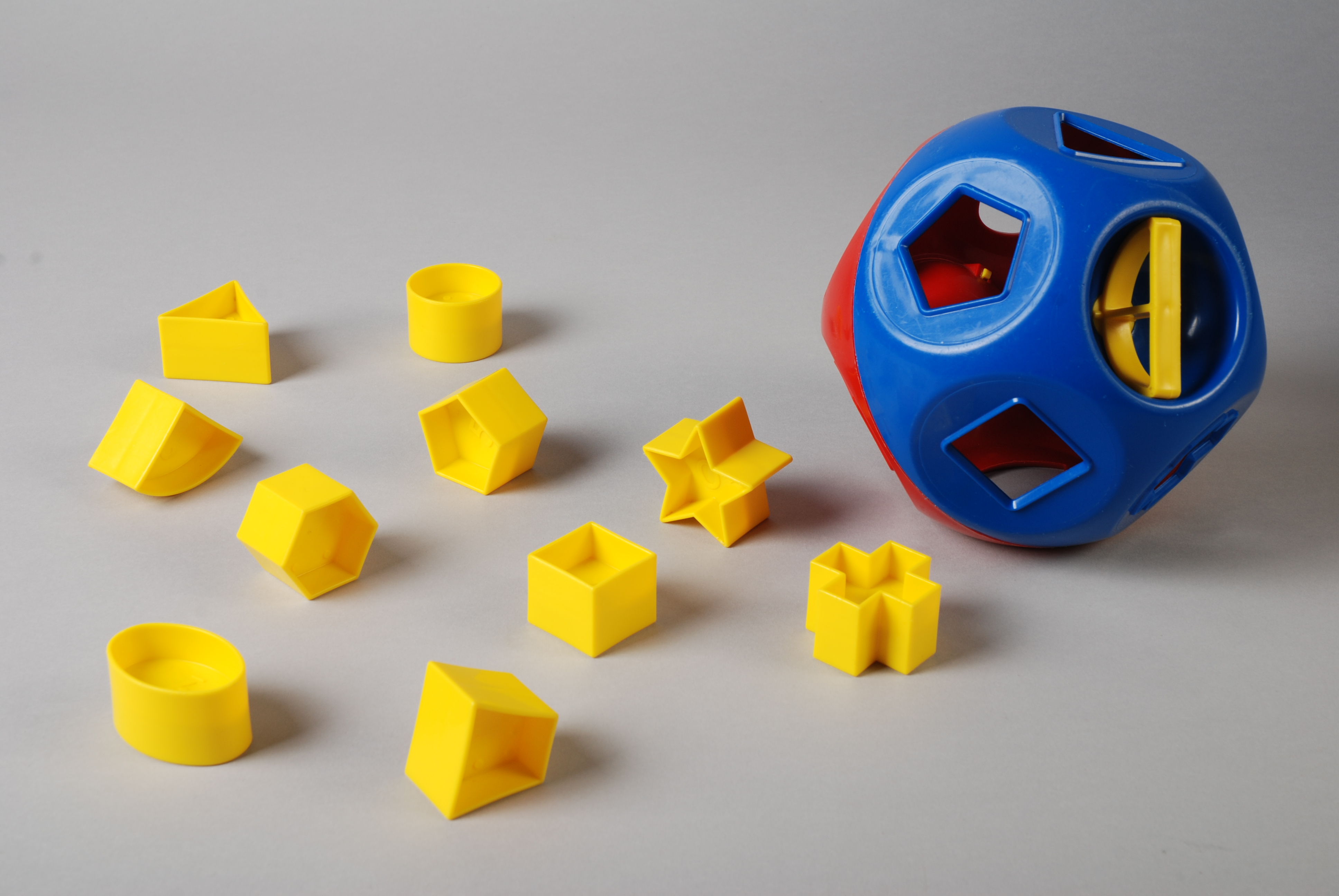
Shapes are the visual outlines and forms that define objects, distinguishing them by their boundaries rather than color or texture. In geometry, a shape is an abstract concept of form, independent of size or position, while a figure includes both shape and size. Plane shapes exist on a 2D surface, contrasting with solid 3D shapes. The concept of shape is fundamental across disciplines, from the precise definitions in Euclidean geometry to the subjective interpretations in art and design, and even the algorithmic representations in computer graphics. Understanding shapes allows us to categorize, analyze, and create the visual world around us, influencing everything from architectural design to user interface layouts.
🎵 Origins & History
The conceptualization of shapes predates recorded history, emerging from humanity's innate need to perceive and categorize the physical world. Early humans likely recognized basic forms like circles and lines in nature, using them for rudimentary tools and art. The study of shapes was later formalized through axioms and postulates. Mathematicians bridged geometry and algebra, allowing shapes to be described by equations, a crucial step towards their computational representation. The artistic exploration of shape has been equally long-standing, with prehistoric cave paintings and ancient pottery showcasing deliberate manipulation of form.
⚙️ How It Works
At its most fundamental, a shape is defined by its boundary or outline. In geometry, this boundary can be described mathematically. A two-dimensional shape like a circle can be represented by the equation x² + y² = r², where 'r' is the radius. A three-dimensional shape, such as a sphere, is defined by its surface in three-dimensional space, often described using spherical coordinates. The properties of a shape include its dimensionality (2D or 3D), its topology (how its parts are connected), and its geometric characteristics like angles, curves, and vertices. For computational purposes, shapes are often represented as collections of points, lines, curves, or polygons, forming meshes or vector graphics that can be manipulated by algorithms in computer graphics and CAD software.
📊 Key Facts & Numbers
The human visual system can distinguish millions of colors, but our perception of shape is arguably more fundamental to object recognition. The Open Graphics Project standardizes how shapes are rendered. The International Organization for Standardization (ISO) standard ISO 13599 defines geometric product specifications, impacting industries that rely on precise shape data.
👥 Key People & Organizations
Key figures in the study and application of shapes include Euclid, whose work laid the groundwork for geometric principles. René Descartes revolutionized shape description with analytic geometry, linking algebraic equations to geometric forms. In the realm of art, artists like M.C. Escher explored tessellations and impossible shapes, while Piet Mondrian famously reduced his compositions to fundamental geometric shapes. Organizations like the International Mathematical Union (IMU) and the American Mathematical Society (AMS) continue to advance geometric research. In computer graphics, pioneers like Edwin Catmull, co-founder of Pixar Animation Studios, have been instrumental in developing algorithms for representing and rendering complex shapes.
🌍 Cultural Impact & Influence
Shapes are the bedrock of visual communication and design. From the Apple logo's simplified silhouette to the intricate architectural forms of Zaha Hadid Architects, shapes convey meaning, evoke emotion, and guide perception. In user interface (UI) design, the shape of buttons and icons dictates their perceived function and ease of use, with studies by Nielsen Norman Group highlighting the importance of familiar shapes for intuitive interaction. The prevalence of geometric shapes in art movements like Bauhaus and De Stijl demonstrates their power to communicate order and modernity. Even abstract shapes in branding, like the Nike swoosh, become instantly recognizable symbols, demonstrating their profound cultural resonance and ability to transcend language.
⚡ Current State & Latest Developments
The current state of shape representation is heavily influenced by advancements in artificial intelligence (AI) and machine learning (ML). AI algorithms can now generate novel shapes, optimize existing ones for performance (e.g., in aerodynamics), and even interpret complex 3D shapes from limited data. Generative Adversarial Networks (GANs) are being used to create realistic 3D models for virtual reality and gaming. Furthermore, the development of 3D printing technologies has made it possible to materialize intricate shapes that were previously impossible to manufacture, leading to innovations in fields like bioprinting and custom prosthetics. The ongoing integration of augmented reality (AR) and virtual reality (VR) continues to push the boundaries of how we interact with and perceive digital shapes.
🤔 Controversies & Debates
One persistent debate revolves around the nature of geometric shapes: are they discovered abstract truths, or are they human constructs? Platonists argue for their objective existence, while constructivists see them as products of the human mind. Another controversy lies in the representation of shapes in digital environments, particularly concerning polygon count versus visual fidelity in video games and CGI – a constant tension between performance and realism. The ethical implications of AI-generated shapes, especially in design and manufacturing, also spark debate, touching on issues of authorship and potential job displacement for human designers. The very definition of 'shape' can also be contentious when considering complex, non-Euclidean geometries or fractal forms.
🔮 Future Outlook & Predictions
The future of shapes will likely be dominated by increasingly sophisticated computational methods and a blurring of the lines between the physical and digital. Expect AI to play an even larger role in shape generation and optimization, leading to hyper-efficient designs in engineering and architecture. The metaverse and Web3 technologies will necessitate new standards for interoperable 3D shapes, potentially leading to a universal 'shape language'. Furthermore, advancements in materials science may allow for shapes with dynamic, programmable properties – forms that can change their structure or function in response to stimuli. The exploration of higher-dimensional shapes, once purely theoretical, may also find practical applications in fields like quantum computing and theoretical physics.
💡 Practical Applications
Shapes are indispensable in countless practical applications. In architecture, they form the basis of structural integrity and aesthetic appeal, from the parabolic arches of Santiago Calatrava's bridges to the geodesic domes of Buckminster Fuller. Engineering relies on precise shape specifications for everything from aircraft wings to microchips. In medicine, shapes are crucial for understanding anatomy, diagnosing diseases through imaging like MRI scans, and designing surgical tools. User experience (UX) and user interface (UI) design use shapes to create intuitive and engaging digital products, while robotics depends on accurate shape recognition for navigation and manipulation. Even in everyday tasks like cooking, understanding the shapes of ingredients and utensils is key.
Key Facts
- Category
- aesthetics
- Type
- topic