
Contents
Overview
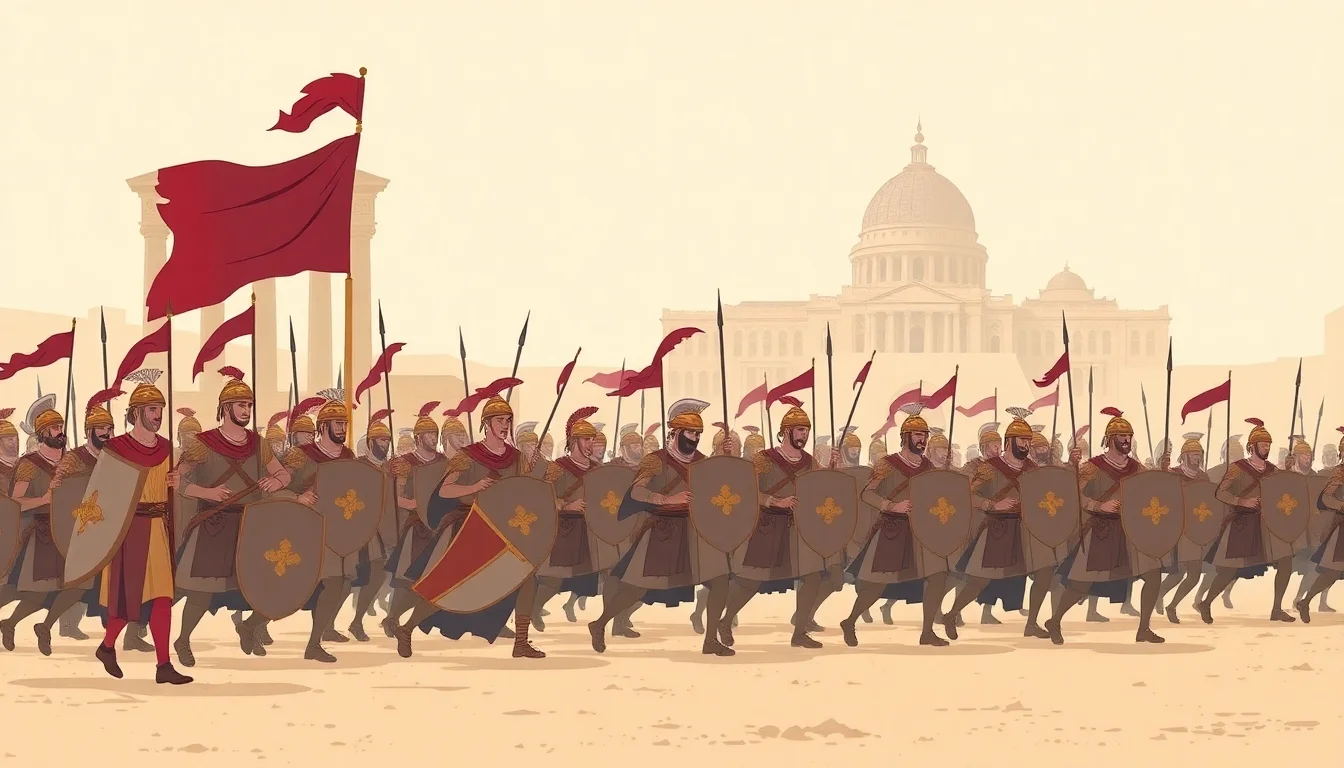
The Roman military was not merely a fighting force; it was the bedrock of Roman civilization, a meticulously organized and highly disciplined institution that underpinned Rome's expansion and enduring power for over a millennium. Evolving from a citizen militia into a professional standing army, it comprised legions of heavily armed infantry, supported by auxiliary troops and a naval arm. At its zenith, this formidable apparatus protected vast swathes of territory, numbering hundreds of thousands of soldiers and serving as the primary engine of Romanization and imperial administration. The military's influence permeated Roman society, shaping its politics, engineering, and even its cultural identity, leaving an indelible mark on Western military thought and practice.
🎵 Origins & Evolution
Initially, service was a civic duty tied to land ownership, with soldiers equipping themselves. This early phase saw the development of the phalanx, a Greek-inspired formation. The military transformed into a fully professional, long-service army, with soldiers receiving regular pay, standardized equipment, and pensions, a model that would endure for centuries.
⚙️ Structure & Tactics
The backbone of the Roman army was the legion, typically comprising around 5,000 heavily armored infantrymen known as legionaries. These soldiers were organized into cohorts, centuries, and contubernia (tent groups), fostering intense unit cohesion. Roman tactics emphasized discipline, coordinated maneuvers, and the effective use of standardized weaponry like the gladius (short sword) and pilum (javelin). Crucially, the legions were supported by auxiliary units recruited from non-citizen populations, providing specialized skills such as cavalry, archers, and skirmishers, all integrated into a flexible and formidable combined-arms approach that proved devastatingly effective against diverse enemies from the Celts of Gaul to the Parthians in the East.
📊 Scale & Logistics
At its peak in the 2nd century CE, the Roman military numbered upwards of 400,000 to 500,000 men, spread across numerous legions and auxiliary units garrisoning the empire's vast frontiers, from Hadrian's Wall in Britannia to the Euphrates River. Maintaining such a force required an immense logistical network, involving sophisticated supply chains, road construction, and the establishment of permanent military bases and fortifications. The army's engineering capabilities were legendary, constructing not only forts and walls but also bridges, aqueducts, and siege engines, demonstrating a capacity for large-scale infrastructure projects that few pre-modern states could match.
👥 Key Figures & Units
While legions like the Legio X Equestris or Legio IX Hispana are famous, the military's strength lay in its standardized structure and the collective prowess of its soldiers. The Roman Navy, though often overshadowed by the army, was vital for controlling the Mediterranean Sea, transporting troops, and conducting amphibious operations, playing a critical role in conflicts like the Punic Wars and the suppression of piracy.
🌍 Imperial Reach & Influence
Roman legions not only fought battles but also served as engineers, administrators, and agents of Romanization, building cities, roads, and infrastructure that facilitated trade and cultural exchange. The military's presence was a constant reminder of Roman power, influencing local governance and integrating diverse populations into the imperial system. The sheer scale of Roman military success, documented by historians like Titus Flavius Josephus (37–c. 100 CE), set a benchmark for imperial power for centuries.
⚡ Modern Legacy & Rediscovery
Interest in the Roman military has seen a resurgence in recent decades, fueled by archaeological discoveries and new academic research. Modern historians and archaeologists, using advanced techniques like ground-penetrating radar and DNA analysis, are continually uncovering new insights into Roman military life, from the organization of forts to the daily routines of soldiers. The enduring fascination with Roman legions, their tactics, and their equipment continues to inspire historical reenactment groups, popular culture, and academic study, ensuring the military's legacy remains vibrant.
🤔 Debates & Criticisms
Despite its successes, the Roman military was not without its critics or controversies. The immense cost of maintaining such a large standing army placed a significant burden on the Roman economy, contributing to heavy taxation and occasional unrest. The brutal efficiency of Roman conquest and the treatment of conquered peoples remain subjects of ethical debate among historians.
🔮 Future of Roman Military Studies
Future research will likely focus on comparative military studies, examining how Roman military practices influenced or were influenced by other ancient powers like the Persian Empire and the Parthian Empire. Advances in digital archaeology and computational modeling promise to offer even more detailed reconstructions of battles, logistics, and fortifications, providing a deeper understanding of Rome's military machine.
💡 Practical Applications (Historical)
The practical applications of the Roman military are primarily historical, serving as a foundational case study for military organization, logistics, and strategy. Roman military engineering, including road building, fortification design, and siege warfare, provided blueprints for subsequent military and civil engineering projects for centuries. The concept of a professional, long-service army with standardized training and equipment, pioneered by Rome, remains a core principle of modern military structures. The Roman military's success in integrating diverse populations into a cohesive fighting force also offers lessons in command and control within multicultural organizations.
Key Facts
- Category
- history
- Type
- concept