
Contents
Overview
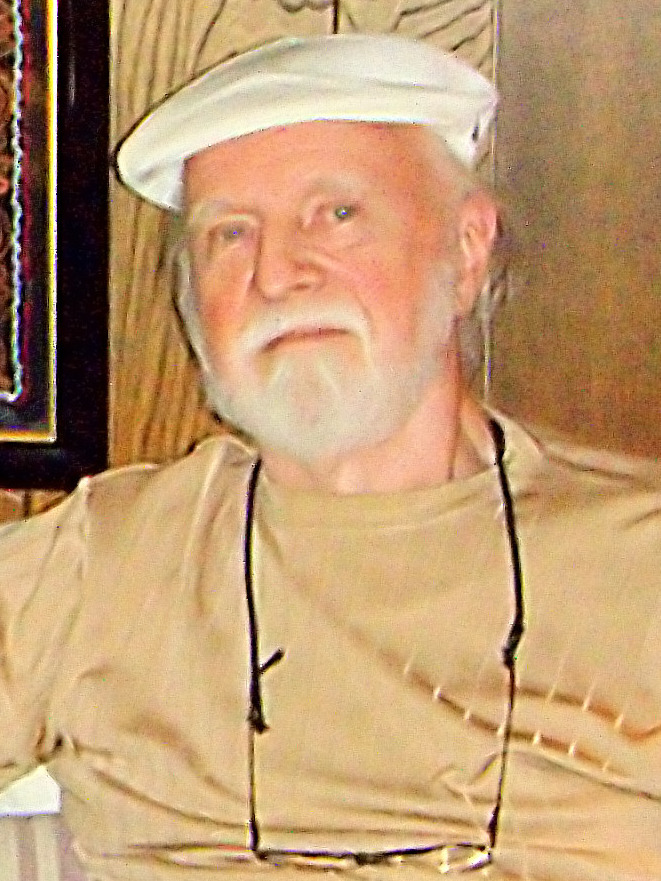
Richard Matheson was an American author and screenwriter whose work profoundly shaped the landscape of fantasy, horror, and science fiction. His most enduring legacy is the novel I Am Legend, a foundational text in post-apocalyptic fiction that has spawned multiple influential film adaptations, including The Omega Man and I Am Legend. Matheson's prolific output extended to television, where he penned iconic episodes for The Twilight Zone, such as "Nightmare at 20,000 Feet" and "Steel." He also demonstrated a remarkable talent for adapting classic horror, notably for Roger Corman's Edgar Allan Poe film series. His short story "Duel" was famously transformed into a film that launched Steven Spielberg's career, cementing Matheson's status as a master storyteller across multiple media.
🎵 Origins & History
Richard Burton Matheson's literary journey began in Brooklyn, New York. After serving in World War II, he pursued his passion for writing, graduating from Columbia University in 1949 with a degree in journalism. His early career saw him publishing short stories in pulp magazines like Amazing Stories and The Magazine of Fantasy and Science Fiction, honing the skills that would later define his distinctive voice. Matheson's breakthrough came with the publication of "Born of Man and Woman," a chilling tale that immediately signaled his arrival as a significant new talent in speculative fiction. This was followed by a string of impactful novels and stories that challenged genre conventions and explored the darker aspects of human nature and existence.
⚙️ How It Works
Matheson's writing methodology was characterized by a relentless focus on psychological realism, even within fantastical or horrific premises. He excelled at creating relatable characters grappling with extraordinary circumstances, making the unbelievable feel viscerally real. His narrative structures often employed a tight, propulsive pacing, drawing readers into suspenseful scenarios with a keen eye for detail and emotional depth. Whether crafting the existential dread of a vampire-haunted world in "I Am Legend" or the primal terror of a sentient truck in "Duel," Matheson's technique involved stripping away societal veneers to expose raw human (or inhuman) motivations. He was a master of the "what if" scenario, meticulously exploring its logical and emotional consequences.
📊 Key Facts & Numbers
Matheson's bibliography boasts hundreds of short stories, a staggering output that has sold tens of millions of copies worldwide. His seminal novel, "I Am Legend," has been translated into over 20 languages. The film adaptation The Omega Man (1971) grossed over $10 million domestically, while I Am Legend (2007) starring Will Smith achieved a global box office of over $585 million. Matheson wrote 16 episodes for the original The Twilight Zone series, contributing significantly to its enduring legacy. His short story "Duel" was adapted into a television film that garnered an estimated 47 million viewers in its initial broadcast in 1971.
👥 Key People & Organizations
Beyond Matheson himself, several key figures and entities were instrumental in shaping and disseminating his work. Alfred A. Knopf published many of his most famous novels, including "I Am Legend" and "The Shrinking Man." Robert Bloch, author of Psycho, was a contemporary and friend whose own work often shared thematic similarities. Steven Spielberg's adaptation of "Duel" launched his career and brought Matheson's storytelling to a massive new audience. Vincent Price starred in The Last Man on Earth (1964), one of the earliest adaptations of "I Am Legend," and his iconic performances often embodied the kind of chilling intensity Matheson's work demanded. Rod Serling, creator of The Twilight Zone, recognized Matheson's talent, commissioning numerous scripts that became classics of the series.
🌍 Cultural Impact & Influence
Richard Matheson's influence on genre fiction and film is immeasurable. "I Am Legend" is widely credited with popularizing the concept of a lone survivor battling a plague of vampiric or zombie-like creatures, a trope that has been endlessly imitated in literature, film, and video games like Resident Evil. His ability to blend science fiction, horror, and psychological drama paved the way for countless authors and filmmakers who followed. The chilling effectiveness of his Twilight Zone episodes, particularly "Nightmare at 20,000 Feet," has become ingrained in popular culture, often referenced and parodied. His work consistently explored themes of isolation, fear, and the human condition, resonating deeply with audiences across generations and solidifying his status as a foundational figure in modern speculative fiction.
⚡ Current State & Latest Developments
Matheson's literary and cinematic legacy continues to be celebrated and reinterpreted. In 2012, a year before his death, he received the World Fantasy Award for Lifetime Achievement, acknowledging his decades of groundbreaking work. His novels are frequently reissued by publishers like Penguin Books and Tor Books, introducing his stories to new readers. Discussions about his impact frequently appear in retrospectives on horror and science fiction cinema, with critics and fans alike revisiting his contributions. The ongoing interest in his adaptations, particularly the I Am Legend films and The Twilight Zone episodes, ensures his narratives remain relevant in contemporary media discussions.
🤔 Controversies & Debates
One of the primary controversies surrounding Matheson's work involves the adaptation of "I Am Legend." While Matheson himself co-wrote The Last Man on Earth (1964), he was reportedly unhappy with the direction of The Omega Man (1971), and the 2007 film I Am Legend diverged significantly from his novel's ending, a point of contention for many fans and critics who felt it softened the story's bleak philosophical core. Furthermore, debates occasionally arise regarding the attribution of certain genre tropes, with some scholars arguing that Matheson's innovations have been so thoroughly absorbed into the cultural bloodstream that their origins are sometimes overlooked. His work also touched on sensitive themes, leading to occasional discussions about the representation of violence and societal anxieties within his narratives.
🔮 Future Outlook & Predictions
The enduring power of Matheson's stories suggests a continued future for his adaptations and literary influence. Hollywood continues to mine his bibliography for new projects, with rumors of potential reboots or new adaptations of his lesser-known works circulating periodically. His thematic concerns—isolation, the fragility of civilization, the nature of humanity—remain acutely relevant in an increasingly interconnected yet often alienating world. Future generations of writers and filmmakers will undoubtedly continue to draw inspiration from his ability to craft suspenseful, thought-provoking narratives that tap into primal fears and fundamental questions about existence. The potential for new interpretations of his work, perhaps leveraging emerging technologies in filmmaking, remains significant.
💡 Practical Applications
Matheson's works have found practical application across numerous creative industries. His novel "The Shrinking Man" was adapted into the classic science fiction film The Incredible Shrinking Man (1957), providing a compelling visual narrative for the concept of scale and perspective. The screenplay for "Duel" demonstrated how a simple, high-concept premise could be executed with masterful tension, influencing countless thriller and action films. His Twilight Zone scripts, such as "Steel," offered profound explorations of artificial intelligence and humanity, themes that continue to be relevant in discussions surrounding AI ethics and robotics. Furthermore, his short stories have been anthologized extensively, serving as educational tools for aspiring writers learning the craft of speculative fiction.
Key Facts
- Category
- culture
- Type
- topic