
Contents
- 📖 What Are Religious Texts?
- 🌍 Major Traditions & Their Canons
- 📜 The Bible: A Library in One Book
- 🕌 The Quran: The Literal Word of God
- 🕉️ The Vedas & Upanishads: Foundations of Hinduism
- ☸️ The Tipitaka: Teachings of the Buddha
- ✡️ The Tanakh: The Hebrew Bible
- 📜 The Tao Te Ching: The Way and Its Power
- 🤔 Interpretation & Authority: Who Decides?
- 💡 Beyond the Canon: Apocrypha & Esoterica
- 🚀 The Future of Sacred Texts
- ✨ Accessing Sacred Texts Today
- Frequently Asked Questions
- Related Topics
Overview
Religious texts are foundational documents that articulate the beliefs, practices, and histories of various faith traditions. From the Bible and Quran to the Bhagavad Gita and the Tao Te Ching, these texts serve as spiritual guides, moral compasses, and historical records. They are not only central to worship but also influence art, law, and social norms across cultures. The interpretation and authority of these texts can lead to significant theological debates and cultural tensions, reflecting the dynamic nature of faith in the modern world. Understanding these texts is crucial for grasping the complexities of global religious landscapes and their impact on contemporary society.
📖 What Are Religious Texts?
Religious texts, often called scripture, are the foundational documents that define and guide spiritual traditions worldwide. They are not mere historical artifacts but living documents, imbued with authority by their respective communities. These texts typically compile core beliefs, ritual instructions, ethical codes, and narratives that shape a religion's identity and practices. Understanding them is key to grasping the worldview of billions. The definition of what constitutes a 'religious text' can be fluid, evolving across cultures and historical epochs, making a comprehensive overview a complex but essential endeavor.
🌍 Major Traditions & Their Canons
The world's major religious traditions each possess a distinct canon of sacred texts, forming the bedrock of their doctrines and practices. For Christians, this is primarily the Bible, a collection of Old and New Testaments. Muslims revere the Quran as the literal word of God. Hindus draw from a vast corpus including the Vedas, Upanishads, and Bhagavad Gita. Buddhists follow the Tipitaka (Pali Canon) and other sutras. Judaism's central text is the Tanakh, also known as the Hebrew Bible. These canons, while distinct, often share thematic concerns about creation, morality, and the divine.
📜 The Bible: A Library in One Book
The Bible, a cornerstone of Judaism and Christianity, is not a single book but a library compiled over centuries. It comprises the Old Testament (shared with Judaism as the Tanakh) and the New Testament, detailing the life and teachings of Jesus Christ. Its narratives span creation, law, prophecy, wisdom literature, and the early Christian church. The Bible's interpretation has fueled countless theological debates and artistic expressions, making it one of the most influential texts in Western civilization and beyond. Its translation into thousands of languages underscores its global reach.
🕌 The Quran: The Literal Word of God
The Quran, considered by Muslims to be the verbatim speech of God (Allah) revealed to the Prophet Muhammad, is the central religious text of Islam. It is revered for its linguistic beauty and profound theological pronouncements, covering monotheism, prophecy, divine law, and eschatology. Muslims believe the Quran is inimitable and perfectly preserved. Its recitation is a central act of worship, and its verses guide every aspect of a Muslim's life, from personal conduct to societal governance. The Quran's influence extends across vast swathes of the globe, shaping cultures and civilizations for over 1400 years.
🕉️ The Vedas & Upanishads: Foundations of Hinduism
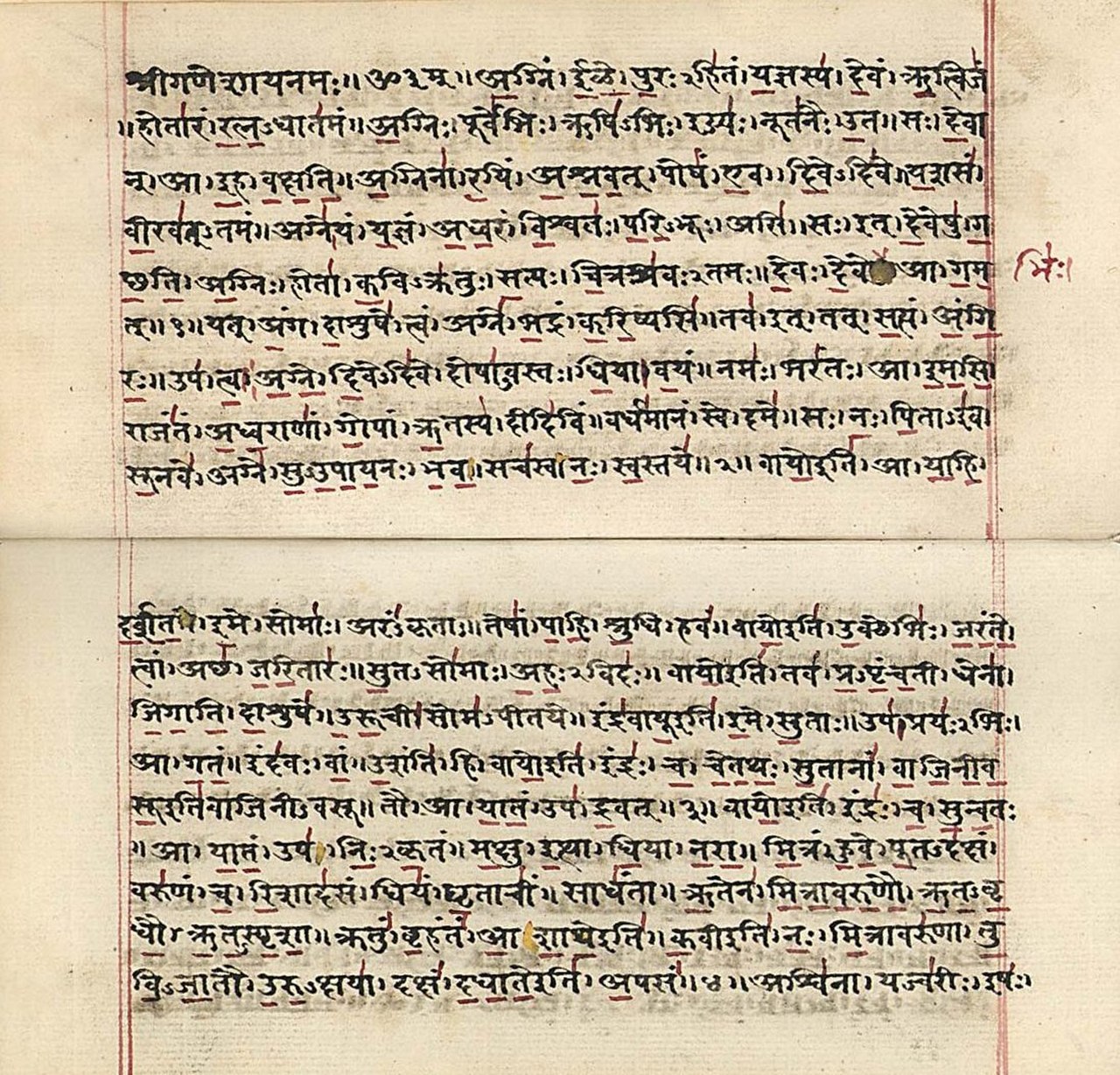
The foundational scriptures of Hinduism are the Vedas, ancient Sanskrit texts considered to be divinely revealed. These are complemented by the Upanishads, philosophical texts exploring the nature of reality, consciousness, and the self (Atman) and its relation to the ultimate reality (Brahman). Other crucial texts include the Bhagavad Gita, an epic dialogue on duty and devotion, and the Puranas, narratives detailing cosmology and genealogies. This vast body of literature offers diverse paths to spiritual realization, reflecting the multifaceted nature of Hindu practice.
☸️ The Tipitaka: Teachings of the Buddha
The Tipitaka, also known as the Pali Canon, is the standard collection of scriptures in the Theravada Buddhist tradition. It is believed to contain the teachings of Gautama Buddha, meticulously preserved through oral tradition before being committed to writing. The Tipitaka is divided into three 'baskets': the Vinaya Pitaka (rules for monks and nuns), the Sutta Pitaka (discourses of the Buddha), and the Abhidhamma Pitaka (philosophical analysis). It provides the doctrinal framework for understanding Buddhist philosophy and practice, emphasizing mindfulness, ethics, and wisdom.
✡️ The Tanakh: The Hebrew Bible
The Tanakh is the canonical collection of Jewish sacred scriptures, comprising the Torah (the first five books, also known as the Pentateuch), the Nevi'im (Prophets), and the Ketuvim (Writings). It narrates the history of the Israelites, their covenant with God, and the development of Jewish law and tradition. For Jews, the Tanakh is the primary source of divine revelation and guidance, shaping religious observance, ethical understanding, and communal identity. It forms the basis for much of rabbinic literature and continues to be studied and interpreted by scholars and laypeople alike.
📜 The Tao Te Ching: The Way and Its Power
The Tao Te Ching, attributed to the ancient Chinese philosopher Lao Tzu, is the foundational text of Taoism. It is a concise and poetic work exploring the concept of the Tao (the Way), an ineffable cosmic principle that underlies all existence. The text emphasizes living in harmony with nature, simplicity, humility, and non-action (wu wei). Its enigmatic verses have inspired contemplation and practice for centuries, influencing not only religious thought but also Chinese art, philosophy, and medicine. Its brevity belies its profound depth.
💡 Beyond the Canon: Apocrypha & Esoterica
Beyond the officially recognized canons lie vast bodies of literature considered sacred or authoritative by specific groups. These include apocryphal texts (like the Book of Enoch or the Gospel of Thomas), pseudepigrapha, mystical commentaries, and esoteric traditions. While often excluded from mainstream Bibles or Qurans, these texts can offer unique insights into historical beliefs, alternative theological viewpoints, and marginalized spiritual practices. Their study reveals the dynamic and often contested nature of religious authority and textual development.
🚀 The Future of Sacred Texts
The digital age is profoundly reshaping how religious texts are accessed, studied, and disseminated. Online archives, searchable databases, and digital translations make ancient scriptures more accessible than ever before. However, this also raises questions about the preservation of traditional modes of study, the potential for decontextualization, and the impact of algorithmic curation on spiritual discovery. Will new forms of 'digital scripture' emerge, or will technology primarily serve to amplify existing traditions? The Vibe score for textual engagement is certainly shifting.
✨ Accessing Sacred Texts Today
Accessing religious texts today is remarkably straightforward, thanks to both traditional and digital avenues. Physical copies of major scriptures like the Bible, Quran, and Bhagavad Gita are readily available in bookstores, religious supply shops, and public libraries worldwide. Online, numerous websites offer free access to scriptures in multiple languages, often with commentaries and study tools. Apps like YouVersion for the Bible or platforms dedicated to Islamic texts provide on-the-go access. Many religious institutions also offer study groups and classes, providing guided pathways for deeper understanding.
Key Facts
- Year
- 2023
- Origin
- Global
- Category
- Religion & Spirituality
- Type
- Concept
Frequently Asked Questions
Are all religious texts considered equally authoritative?
No, authority varies significantly. Within a tradition, there's usually a core canon considered divinely inspired or authoritative. However, interpretations of these texts, and the status of other related writings (like commentaries or apocrypha), can differ widely between denominations and schools of thought. The Vibe score for textual authority is highly contested across different religious communities.
How do I know which translation of a religious text is best?
The 'best' translation often depends on your purpose and background. For scholarly study, literal translations that prioritize word-for-word accuracy (e.g., the New American Standard Bible for English Christians) are often preferred. For devotional reading, dynamic-equivalence translations that focus on conveying the original meaning in natural language (e.g., the New International Version) might be more accessible. For the Quran, Arabic is the original and most revered language, with translations serving as interpretations.
Can I read religious texts from a religion I don't belong to?
Absolutely. Many people study texts from traditions outside their own for academic, philosophical, or personal enrichment. It's generally advisable to approach such study with respect and an open mind, perhaps seeking out introductory guides or commentaries written by adherents of that tradition to gain context. Understanding the historical context of a text is crucial.
What is the difference between a canon and apocrypha?
A canon refers to the collection of books officially recognized as sacred scripture by a religious community. Apocrypha (meaning 'hidden things') are texts that were sometimes considered sacred or authoritative by some groups but were ultimately excluded from the official canon by major traditions. Examples include the Book of Tobit in some Christian traditions or the Gospel of Mary in Gnostic Christianity.
How were religious texts originally preserved before printing?
Before the printing press, religious texts were meticulously copied by hand, usually by scribes. This process was time-consuming and prone to errors, but it was also a sacred duty for many. Oral tradition played a vital role in preserving teachings before they were written down, as seen in early Buddhism and Hinduism. The careful transmission of these texts is a testament to their perceived importance.
Are there religious texts that are not written?
While the term 'text' usually implies written material, some spiritual traditions emphasize non-written forms of transmission. This can include oral traditions, rituals, symbolic actions, and direct spiritual experiences. For instance, the transmission of certain Zen teachings is famously described as 'a special transmission outside the scriptures'.