
Contents
Overview
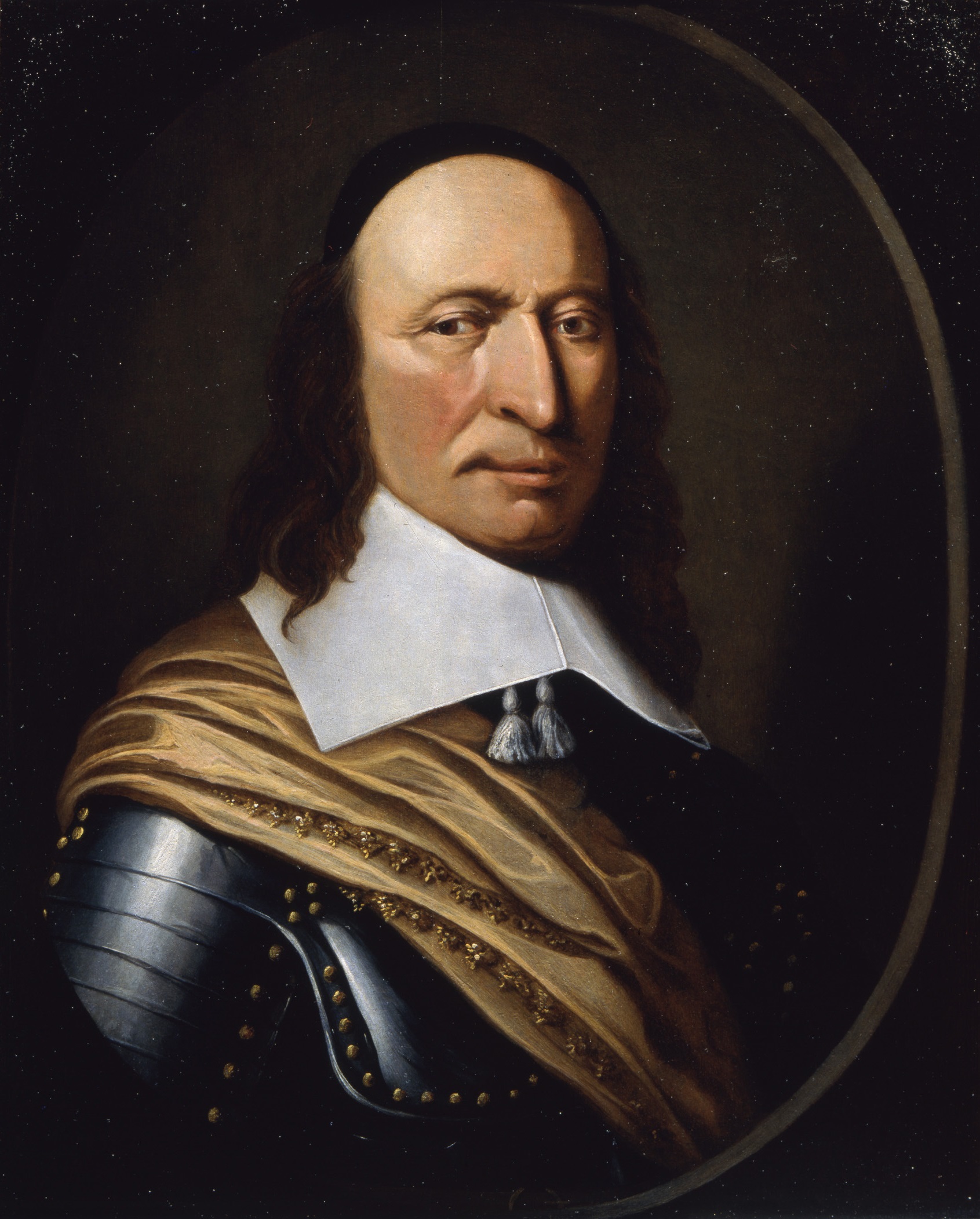
Peter Stuyvesant's tenure as the final Dutch Director-General of the colony of New Netherland concluded with its transfer to English control. His administration was marked by ambitious infrastructure projects, including the construction of a defensive palisade that lent its name to Wall Street and the canal that would become Broad Street, fundamentally shaping the nascent settlement of New Amsterdam. Despite his administrative achievements, Stuyvesant was a staunch advocate for the Dutch Reformed Church, leading to significant conflicts with other religious groups seeking to establish themselves in the colony. His name endures through numerous landmarks and neighborhoods in modern-day New York City, a testament to his indelible, albeit complex, impact on the region's colonial past.
🎵 Origins & Colonial Command
Peter Stuyvesant's origins trace back to the Netherlands. Before his colonial service, Stuyvesant had a military career with the Dutch West India Company (WIC), serving in various capacities, including as a commander in the Caribbean. His appointment as Director-General of New Netherland by the WIC was a strategic move to bring order and firm governance to the struggling North American colony, which had been plagued by internal strife and external pressures from English and Swedish settlements. His arrival marked a significant shift towards more centralized and authoritarian rule.
⚙️ Governing New Netherland
As Director-General, Stuyvesant inherited a colony in disarray and immediately set about imposing order. He initiated ambitious public works projects, most famously the construction of a defensive palisade on the northern edge of New Amsterdam, which lent its name to the iconic Wall Street. His administration also oversaw the digging of a canal that would eventually become Broad Street, and the development of major thoroughfares like Broadway. Stuyvesant sought to foster trade and agriculture, encouraging the expansion of settlements beyond Manhattan, including areas that would become Fort Orange (modern-day Albany) and New Castle, Delaware. His governance style was characterized by a strong belief in Dutch authority and a desire for efficiency, often at the expense of colonial consensus.
📊 Key Facts & Numbers
Stuyvesant's directorship saw New Netherland's population grow. Under his administration, the colony's fur trade, a primary economic driver, saw fluctuations but remained significant. He levied taxes to fund his infrastructure projects, with the colony's budget often strained. Stuyvesant personally owned a substantial farm, the Bouwerij, which became the origin of the Bowery neighborhood. His authority extended over a territory that encompassed parts of present-day New York, New Jersey, Delaware, and Connecticut, though English claims increasingly encroached upon these boundaries. The colony's annual revenue, though difficult to precisely quantify, was primarily derived from customs duties and trade monopolies.
👥 Key People & Organizations
Stuyvesant's administration was supported by a council, though his authority was largely absolute. Key figures in the colony included his council members and prominent merchants who often clashed with his policies. The Dutch West India Company (WIC) in Amsterdam served as his ultimate authority, though communication was slow and often led to Stuyvesant acting with considerable autonomy. His primary adversaries included not only the encroaching English settlers, particularly in Connecticut and Long Island, but also various religious dissenters within his own colony. The English colonies to the north and south, especially Maryland and Massachusetts Bay, represented constant geopolitical challenges. His interactions with Native American tribes were complex, marked by both trade and conflict, notably the Kieft's War which preceded his tenure but cast a long shadow.
🌍 Cultural Impact & Influence
Peter Stuyvesant's name is inextricably linked to the foundation of New York City. His efforts in developing New Amsterdam laid the groundwork for its future prominence. The infrastructure he commissioned, such as the rudimentary Wall Street and Broad Street, became foundational elements of the city's urban fabric. His legacy is preserved through numerous place names, including Stuyvesant High School, Stuyvesant Town, and the Bedford–Stuyvesant neighborhood in Brooklyn, all bearing witness to his historical significance. His image, often depicted with a wooden leg and a stern demeanor, has become an enduring symbol of the Dutch colonial era in America. The Dutch cultural influence he represented, though eventually supplanted by English rule, left an indelible mark on the region's identity, evident in place names, architectural remnants, and historical traditions.
⚡ The English Takeover & Later Years
The definitive end to Stuyvesant's governorship came in September 1664. When an English fleet arrived in New York Harbor demanding surrender, Stuyvesant was largely powerless to resist. Despite his initial defiance and desire to fight, the colony's inhabitants, weary of his authoritarian rule and lacking strong defenses, refused to support a prolonged conflict. The colony was provisionally ceded to the English, and Stuyvesant was compelled to sign the Articles of Capitulation. He lived on his farm, the Bouwerij, in New Netherland. He died there, a figure whose colonial career had ended abruptly but whose personal life continued in the land he once governed. The English renamed New Amsterdam to New York in honor of the Duke of York, solidifying the shift in power.
🤔 Controversies & Debates
Stuyvesant's tenure was marked by significant controversies, primarily stemming from his intolerance of religious diversity. As a devout member of the Dutch Reformed Church, he actively suppressed the rights of other religious groups, including Lutherans, Jews, Roman Catholics, and Quakers, who sought to worship freely in New Amsterdam. His refusal to allow a Lutheran church to be built and his attempts to expel Jewish settlers are prime examples of this intolerance, though the WIC often overruled him on the latter due to economic considerations. His authoritarian style also led to frequent clashes with the colonists, who desired greater representation and autonomy. The eventual surrender to the English, while perhaps inevitable given the geopolitical realities, remains a point of contention regarding his leadership effectiveness in the face of overwhelming odds.
🔮 Legacy & Enduring Presence
The enduring legacy of Peter Stuyvesant is complex and multifaceted. While celebrated for his role in developing New Amsterdam's infrastructure and establishing key institutions, his intolerance and autocratic methods are subjects of ongoing historical debate. His name's proliferation across New York City landmarks ensures his continued presence in public consciousness, serving as a constant reminder of the Dutch colonial chapter. Future historical scholarship will likely continue to grapple with the tension between his administrative achievements and his exclusionary policies, seeking a more nuanced understanding of his impact on the diverse society that eventually emerged from the colonial crucible. The narrative of Stuyvesant remains a critical lens through which to view the early formation of American urban centers and the evolving ideals of religious freedom and governance.
💡 Practical Applications
While Peter Stuyvesant himself is a historical figure, his name and the institutions he influenced have practical applications today. Stuyvesant High School, a prestigious public school in New York City, continues to educate gifted students in science, technology, engineering, and mathematics (STEM), serving as a pipeline for future innovators. Stuyvesant Town, a large residential complex in Manhattan, provides housing for thousands of New Yorkers, demonstrating the continued relevance of his name in urban planning and development. The historical narratives surrounding his governance and the development of New Amsterdam are used in educational curricula to teach about early American colonial history, urban development, and the struggles for religious tolerance. His story serves as a case study in colonial administration and the challenges of managing diverse populations under centralized rule.
Key Facts
- Category
- history
- Type
- topic