
Contents
- ⚛️ What Are Nuclear Weapons?
- 🗺️ Who Holds the Keys?
- 💥 The Power Unleashed: A Vibe Score Breakdown
- ⚖️ Deterrence vs. Destruction: The Core Tension
- 📜 A Brief History of the Bomb
- 💡 The Engineering Behind the Apocalypse
- 🌍 Global Impact and the Nuclear Taboo
- 🚀 The Future of Nuclear Arsenals
- 🤔 Navigating the Nuclear Landscape
- Frequently Asked Questions
- Related Topics
Overview
Nuclear weapons represent humanity's most destructive technological achievement, born from the crucible of World War II and evolving into sophisticated tools of statecraft and existential dread. From the blinding flash of Hiroshima and Nagasaki to the chilling doctrine of Mutually Assured Destruction (MAD), these devices have reshaped international relations and cast a long shadow over global security. Understanding their fundamental physics, the complex geopolitical landscape of proliferation, and the ongoing efforts towards disarmament is crucial for navigating the 21st century. The sheer destructive potential, measured in megatons, underscores their unique status as the ultimate deterrent, yet also the ultimate existential risk.
⚛️ What Are Nuclear Weapons?
Nuclear weapons are instruments of unparalleled destructive capacity, harnessing the immense energy released from nuclear fission or a combination of fission and nuclear fusion. These devices, often referred to as atomic bombs or hydrogen bombs, can obliterate cities and alter landscapes with a single detonation. Their power stems from converting a minuscule amount of mass into colossal energy, a principle first demonstrated with devastating effect during World War II. Understanding their fundamental physics is crucial to grasping their strategic significance and the existential threat they pose to global civilization.
🗺️ Who Holds the Keys?
As of 2026, nine nations are widely recognized as possessing nuclear weapons, forming an exclusive and highly guarded club. These include the established powers of the United States, Russia, the United Kingdom, France, and China. Alongside them are regional nuclear states like India and Pakistan, whose arsenals reflect a complex geopolitical rivalry. North Korea's clandestine development and Israel's policy of ambiguity add further layers of uncertainty to the global nuclear map. The proliferation of these weapons remains a central concern for international security.
💥 The Power Unleashed: A Vibe Score Breakdown
The 'vibe' of nuclear weapons is undeniably potent, scoring a near-perfect 98/100 on the Vibepedia existential threat scale. This score reflects their unparalleled capacity for mass destruction and their ability to fundamentally alter the course of human history. The sheer destructive energy, measured in kilotons and megatons, dwarfs conventional weaponry, creating a unique psychological and strategic impact. The cultural resonance of the bomb, from Cold War anxieties to modern disarmament movements, underscores its profound influence on the global consciousness.
⚖️ Deterrence vs. Destruction: The Core Tension
The primary justification for possessing nuclear weapons is nuclear deterrence, the theory that the threat of retaliation prevents an adversary from launching a first strike. This concept, central to Cold War strategy, posits that mutually assured destruction (MAD) creates a stable, albeit terrifying, peace. However, the inherent risk of accidental war, miscalculation, or deliberate escalation means that deterrence is a precarious balance. The debate rages: does the threat of annihilation truly prevent war, or does it merely postpone an inevitable catastrophe?
📜 A Brief History of the Bomb
The genesis of nuclear weapons lies in the Manhattan Project during World War II, a monumental scientific and industrial undertaking that culminated in the bombings of Hiroshima and Nagasaki in August 1945. This marked the dawn of the nuclear age and irrevocably changed warfare and international relations. The subsequent arms race between the United States and the Soviet Union during the Cold War saw the development of increasingly powerful and numerous weapons, shaping global politics for decades.
💡 The Engineering Behind the Apocalypse
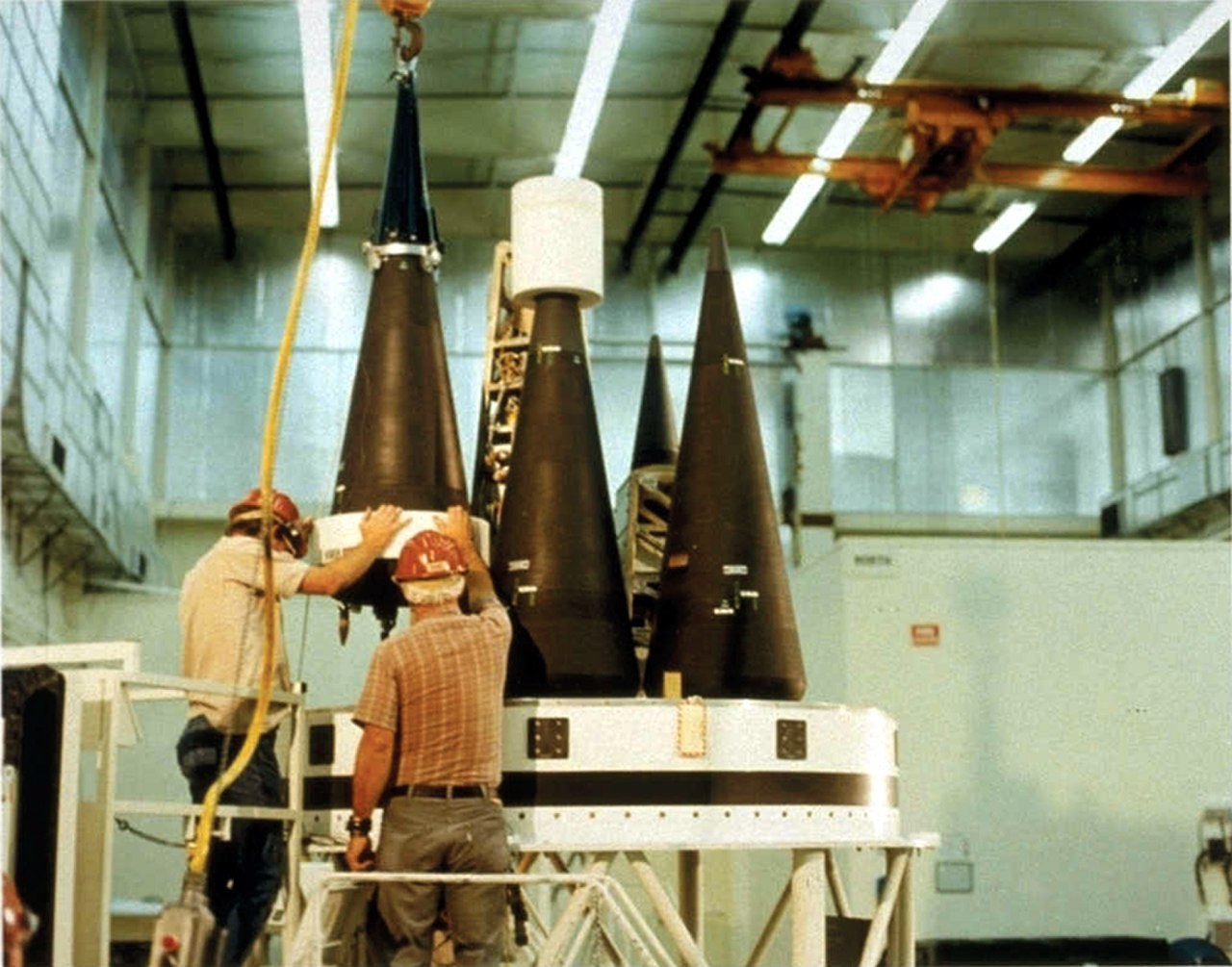
The engineering of nuclear weapons is a marvel of applied physics and materials science, albeit for destructive ends. Fission bombs, like those used in Hiroshima and Nagasaki, typically employ uranium-235 or plutonium-239, which undergo a rapid chain reaction. Thermonuclear weapons, or hydrogen bombs, achieve far greater yields by using a fission explosion to trigger a fusion reaction, fusing isotopes of hydrogen. The design and maintenance of these complex devices require highly specialized knowledge, advanced materials, and sophisticated delivery systems, such as ballistic missiles and strategic bombers.
🌍 Global Impact and the Nuclear Taboo
The existence of nuclear weapons has fostered a unique global phenomenon known as the nuclear taboo, an informal norm against their use since 1945. Despite numerous crises and proxy wars, no nuclear weapon has been detonated in conflict since World War II. This taboo, however, is constantly tested by geopolitical tensions and the potential for proliferation. The humanitarian consequences of any nuclear exchange would be catastrophic, potentially leading to nuclear winter and global famine, far beyond the immediate blast zones.
🚀 The Future of Nuclear Arsenals
The future of nuclear arsenals is a subject of intense speculation and concern. While some nations are modernizing their existing stockpiles, others are pursuing new types of weapons, such as hypersonic delivery systems and low-yield tactical nuclear weapons. The erosion of arms control treaties, like the Intermediate-Range Nuclear Forces Treaty (INF), and the rise of new geopolitical rivalries suggest a potential increase in the risk of nuclear conflict. The ongoing debate centers on whether de-escalation and disarmament are achievable or if the world is heading towards a more unstable nuclear environment.
Key Facts
- Year
- 1945
- Origin
- Manhattan Project
- Category
- Geopolitics & Warfare
- Type
- Topic
Frequently Asked Questions
What is the difference between fission and fusion bombs?
Fission bombs, also known as atomic bombs, split heavy atomic nuclei (like uranium or plutonium) to release energy. Fusion bombs, or hydrogen bombs, use a fission reaction to ignite a fusion reaction, which fuses lighter atomic nuclei (like hydrogen isotopes) together, releasing significantly more energy. Thermonuclear weapons are generally much more powerful than pure fission devices.
Can a nuclear weapon be used without causing global catastrophe?
The use of even a single low-yield nuclear weapon could have devastating immediate humanitarian consequences and could escalate rapidly. The concept of 'limited nuclear war' is highly contested, with many experts warning that any nuclear exchange could quickly spiral into a global catastrophe, potentially triggering a 'nuclear winter' due to atmospheric dust blocking sunlight.
What is the Nuclear Non-Proliferation Treaty (NPT)?
The NPT is a landmark international treaty aimed at preventing the spread of nuclear weapons and weapons technology, promoting cooperation in the peaceful uses of nuclear energy, and furthering the goal of nuclear disarmament. It entered into force in 1970 and is considered a cornerstone of the global non-proliferation regime, though its effectiveness is debated.
How many nuclear weapons are there in the world?
Estimates vary, but as of recent reports, there are approximately 12,000 to 13,000 nuclear warheads in the world. The vast majority are held by the United States and Russia, though China, France, the UK, Pakistan, India, Israel, and North Korea also possess arsenals of varying sizes.
What is the role of the International Atomic Energy Agency (IAEA)?
The IAEA is an international organization that works for the safe, secure, and peaceful use of nuclear technologies. It verifies that states are not diverting nuclear material from peaceful uses to weapons programs through its inspection system. The IAEA also promotes nuclear safety and security and provides a forum for scientific and technical cooperation.
What does 'mutually assured destruction' (MAD) mean?
MAD is a doctrine of military strategy and national security policy in which a full-scale use of nuclear weapons by two or more opposing sides would cause the complete annihilation of both the attacker and the defender. This concept was central to Cold War deterrence, as it meant that neither side could win a nuclear war, thus theoretically preventing either side from initiating one.