
Contents
Overview
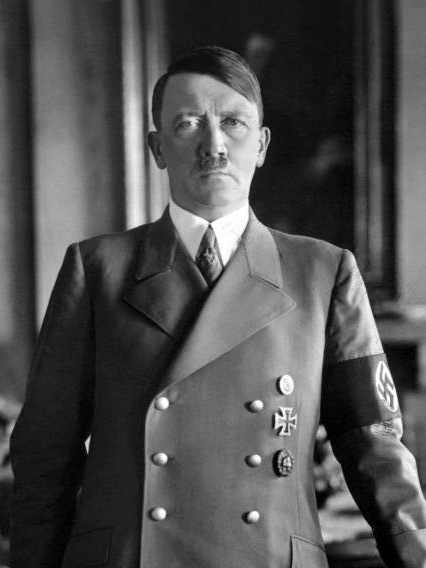
The roots of Nazism are deeply entwined with the political and social turmoil of post-World War I Germany. Emerging from fringe nationalist groups in Munich, the National Socialist German Workers' Party (NSDAP), led by Adolf Hitler, capitalized on widespread resentment over the Treaty of Versailles, economic instability, and a pervasive sense of national humiliation. Adolf Hitler's 1925 book, Mein Kampf, laid out the ideological blueprint, blending virulent antisemitism, pan-Germanism, and a belief in the necessity of 'Lebensraum' (living space) for the German people. The Great Depression accelerated the party's rise, which crippled the German economy and further radicalized segments of the population. By 1933, through a combination of political maneuvering, propaganda, and intimidation, Hitler was appointed Chancellor, rapidly dismantling democratic institutions and establishing the totalitarian Nazi state.
⚙️ How It Works
Nazism operated as a totalitarian system, demanding absolute loyalty and control over all aspects of public and private life. Its ideology was built upon a rigid, pseudoscientific racial hierarchy, with the 'Aryan race'—specifically ethnic Germans—at the apex, deemed superior and destined to rule. This was inextricably linked to extreme antisemitism, portraying Jews not merely as a religious group but as a parasitic 'race' responsible for Germany's woes and a threat to racial purity. The ideology also espoused fervent nationalism, anti-communism, anti-Slavism, and anti-Romani sentiment, viewing these groups as inherently inferior or hostile. The state, embodied by the Führerprinzip (leader principle) under Adolf Hitler, was paramount, demanding unquestioning obedience and suppressing all dissent through organizations like the Gestapo and the Schutzstaffel (SS). Eugenics and social Darwinism were invoked to justify policies of forced sterilization, euthanasia, and ultimately, genocide.
📊 Key Facts & Numbers
The Nazi regime's actions resulted in staggering human and material costs. The Holocaust alone led to the systematic murder of approximately six million Jews and an estimated five million others, including Soviet prisoners of war, Poles, Roma, homosexuals, and disabled individuals. The Second World War, initiated by Nazi Germany's invasion of Poland on September 1, 1939, claimed an estimated 70 to 85 million lives globally, making it the deadliest conflict in human history. Germany's infrastructure was devastated by Allied bombing campaigns. By the war's end in 1945, Germany's population had decreased significantly, and its cities lay in ruins, a direct consequence of the regime's aggressive expansionist policies and genocidal agenda.
👥 Key People & Organizations
The central figures of Nazism are undeniably Adolf Hitler, the Führer and architect of the ideology and its atrocities, and the National Socialist German Workers' Party (NSDAP), the political vehicle for its implementation. Key lieutenants included Hermann Göring, who played a significant role in the Luftwaffe and the economic planning for war; Joseph Goebbels, the Minister of Propaganda, masterfully manipulating public opinion; and Heinrich Himmler, the SS chief and a primary architect of the Holocaust. Other influential figures include Rudolf Hess, Hitler's deputy, and Reinhard Heydrich, a key planner of the 'Final Solution'. Organizations like the SS, the Gestapo, and the Hitler Youth were instrumental in enforcing Nazi rule and indoctrinating the population.
🌍 Cultural Impact & Influence
Nazism's cultural impact is profound and overwhelmingly negative, serving as a perpetual cautionary tale. The ideology's association with genocide and total war has made it a symbol of ultimate evil in global consciousness. The term 'Nazi' has become a universal pejorative for extreme authoritarianism, racism, and hatred. Conversely, the fight against Nazism during World War II forged alliances and inspired movements dedicated to democracy, human rights, and international cooperation, leading to institutions like the United Nations.
⚡ Current State & Latest Developments
While Nazism as a state ideology was defeated in 1945, its remnants and ideological descendants persist. Neo-Nazi groups continue to operate globally, advocating for white supremacy, antisemitism, and authoritarianism, often utilizing online platforms for recruitment and dissemination of propaganda. These groups, while fragmented and lacking the state power of the original NSDAP, represent a persistent threat. Recent years have seen a concerning rise in far-right extremism in various countries, with some groups echoing Nazi rhetoric and symbols, albeit often couched in more coded language. The ongoing struggle against online hate speech and the resurgence of extremist ideologies indicates that the battle against Nazism's core tenets is far from over.
🤔 Controversies & Debates
The primary controversy surrounding Nazism is its inherent barbarity and the unparalleled scale of its atrocities. Debates often center on historical interpretation, particularly regarding the extent of popular support for the regime, the motivations of perpetrators, and the complexities of collaboration and resistance in occupied territories. Holocaust denial, a fringe but persistent controversy, attempts to downplay or outright deny the systematic extermination of Jews, often fueled by antisemitic agendas. Furthermore, the use of Nazi symbols and rhetoric by contemporary extremist groups sparks intense debate about free speech versus hate speech, and the responsibility of social media platforms in curbing the spread of extremist ideologies. The very study of Nazism itself can be controversial, with concerns about glorification versus critical analysis.
🔮 Future Outlook & Predictions
The future outlook for Nazism and its neo-Nazi offshoots remains a subject of concern. While mainstream political systems globally have largely rejected its overt tenets, the underlying currents of ultranationalism, xenophobia, and scapegoating continue to find fertile ground in times of economic hardship and social upheaval. The increasing sophistication of online propaganda and the ability of extremist groups to connect globally pose a significant challenge. Futurists predict that while a state-level resurgence of Nazism is unlikely in the immediate future, the ideology's core elements will likely continue to manifest in various forms of far-right extremism, requiring constant vigilance and counter-efforts. The potential for radicalization through online echo chambers remains a critical concern for global security.
💡 Practical Applications
Direct 'practical applications' of Nazism are, by definition, abhorrent and universally condemned. However, understanding its mechanisms of control and propaganda offers insights into how totalitarian regimes operate and how to counter them. The study of Nazi propaganda techniques, for instance, informs modern counter-extremism strategies and media literacy education, helping individuals identify and resist manipulation. The legal frameworks developed post-WWII, such as international human rights law and war crimes tribunals like the Nuremberg Trials, were direct responses to Nazi atrocities and serve as practical applications of justice and accountability. Furthermore, the historical analysis of Nazi economic policies, particularly concerning rearmament and state control, provides lessons for understanding state intervention in economies, though always within a vastly different ethical context.
Key Facts
- Category
- movements
- Type
- topic