
Contents
Overview
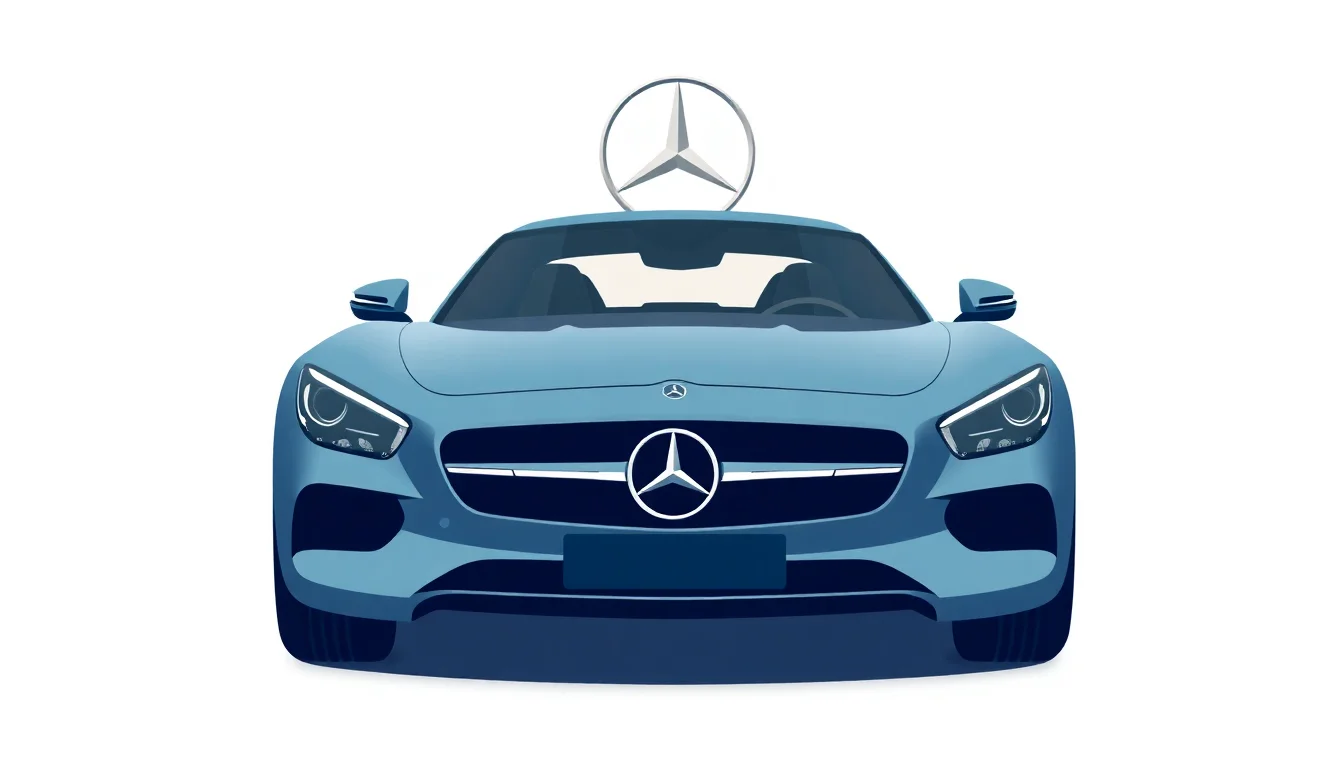
The story of Mercedes-Benz cars is inextricably linked to the invention of the automobile itself. Karl Benz and Gottlieb Daimler were developing their own internal combustion engines and vehicles. The pivotal moment arrived in 1926 with the merger of Benz & Cie. and Daimler-Motoren-Gesellschaft (DMG) to form Daimler-Benz AG. The iconic three-pointed star, originally a symbol of Daimler's ambition for motorization on land, sea, and air, became the emblem for the new company's passenger cars. Early models like the Mercedes-Benz SSK, a supercharged sports car, established a reputation for performance and engineering prowess that continues to define the brand. The post-war era saw the introduction of legendary models such as the Mercedes-Benz W180 'Ponton' and the iconic 300SL 'Gullwing', solidifying Mercedes-Benz's status as a purveyor of luxury and innovation.
⚙️ How It Works
At its core, a Mercedes-Benz car is a complex integration of mechanical, electrical, and software systems designed for comfort, safety, and performance. The brand's commitment to engineering excellence is evident in its proprietary engine technologies, ranging from sophisticated inline-six and V8 powertrains to advanced diesel and hybrid systems. Modern Mercedes-Benz vehicles feature sophisticated suspension systems, such as the AIRMATIC air suspension, which dynamically adjusts ride height and damping for optimal comfort and handling. Safety is paramount, with innovations like the DISTRONIC PLUS adaptive cruise control and PRE-SAFE® anticipatory occupant protection systems being hallmarks of the brand. The infotainment system, MBUX (Mercedes-Benz User Experience), utilizes artificial intelligence and natural language processing to provide an intuitive interface for navigation, entertainment, and vehicle controls, often featuring augmented reality overlays for navigation.
📊 Key Facts & Numbers
Mercedes-Benz is a global automotive titan, consistently ranking among the top luxury brands worldwide. The brand sells a significant number of vehicles annually, with key markets including China, Europe, and North America. The AMG division, responsible for high-performance variants, contributes significantly to the brand's performance image, with models like the AMG GT achieving cult status among enthusiasts, representing a substantial portion of the brand's halo effect and aspirational appeal.
👥 Key People & Organizations
The genesis of Mercedes-Benz cars is credited to two pioneering figures: Karl Benz and Gottlieb Daimler, whose independent companies merged in 1926. The Mercedes-Benz Group AG (formerly Daimler-Benz AG) is the parent company, headquartered in Stuttgart, Germany. Olaf Källenius currently serves as the Chairman of the Board of Management, guiding the company's strategic direction. The AMG division, founded by Hans Werner Aufrecht and Erhard Melcher, has been instrumental in developing the brand's performance credentials since its inception. Gorden Wagener, Chief Design Officer, is responsible for the brand's distinctive and evolving design language, influencing models from the S-Class to the GLA.
🌍 Cultural Impact & Influence
Mercedes-Benz cars have profoundly shaped automotive culture and societal perceptions of luxury and status. The brand's vehicles are frequently featured in films, music videos, and popular culture, often symbolizing success and aspiration. The iconic three-pointed star is instantly recognizable globally, representing a benchmark for automotive quality and engineering. Beyond mere transportation, a Mercedes-Benz has often been seen as a statement piece, a reward for achievement, and a symbol of discerning taste. The brand's influence extends to safety innovations, with technologies pioneered by Mercedes-Benz becoming industry standards, thereby enhancing road safety for all drivers, not just those behind the wheel of a Mercedes. The enduring appeal of models like the G-Class demonstrates a cultural resonance that transcends mere automotive trends.
⚡ Current State & Latest Developments
The current era for Mercedes-Benz cars is defined by a dual focus on electrification and digitalization. The EQ electric sub-brand is rapidly expanding, with models like the EQS sedan and EQE sedan challenging established players in the premium EV market. Mercedes-Benz aims for an all-electric future, with plans to go fully electric by 2030 in markets where conditions allow. Simultaneously, the company is enhancing its autonomous driving capabilities, aiming for Level 3 conditional automation with its DRIVE PILOT system in select regions. The integration of advanced software and over-the-air updates is becoming increasingly central to the ownership experience, promising continuous improvement and new features throughout the vehicle's lifecycle, as seen with the recent software updates for the S-Class and EQS models.
🤔 Controversies & Debates
The brand's long history is not without its controversies. Historically, Mercedes-Benz faced criticism regarding its wartime activities during World War II, including the use of forced labor in its factories, a topic that has been extensively researched and addressed by the company through historical commissions and reparations. More recently, debates have swirled around the perceived dilution of brand exclusivity as the model range has expanded significantly, and questions have been raised about the true environmental impact of some of its larger, less efficient models, despite the push towards electrification. Furthermore, the high cost of maintenance and repairs for Mercedes-Benz vehicles remains a persistent point of contention for owners, often cited as a significant drawback compared to more mainstream automotive brands.
🔮 Future Outlook & Predictions
The future of Mercedes-Benz cars is undeniably electric and increasingly autonomous. The company is committed to a significant ramp-up of its EQ electric vehicle lineup, with a goal of achieving an all-electric portfolio by the end of the decade. Expect further advancements in battery technology, charging infrastructure partnerships, and the integration of AI-powered features. Mercedes-Benz is also investing heavily in Level 4 and Level 5 autonomous driving technologies, aiming to offer hands-off, eyes-off driving experiences in the coming years, potentially transforming personal mobility and logistics. The brand is also exploring new business models, including subscription services and enhanced digital offerings, to adapt to changing consumer preferences and the evolving automotive landscape, potentially challenging traditional ownership paradigms.
💡 Practical Applications
Mercedes-Benz cars serve a wide array of practical applications, primarily in the personal transportation and executive fleet sectors. They are chosen for their blend of comfort, safety, and prestige, making them ideal for daily commuting, long-distance travel, and chauffeured services. The brand's high-performance AMG models are utilized in specialized driving schools and track days, offering enthusiasts an accessible way to experience extreme automotive performance. Furthermore, specialized vehicles like the Sprinter van, though not a passenger car, share the brand's engineering DNA and are widely used for commercial purposes, including emergency services, delivery, and camper conversions, showcasing the versatility of Mercedes-Benz's underlying technology and manufacturing capabilities.
Key Facts
- Category
- technology
- Type
- topic