
Contents
Overview
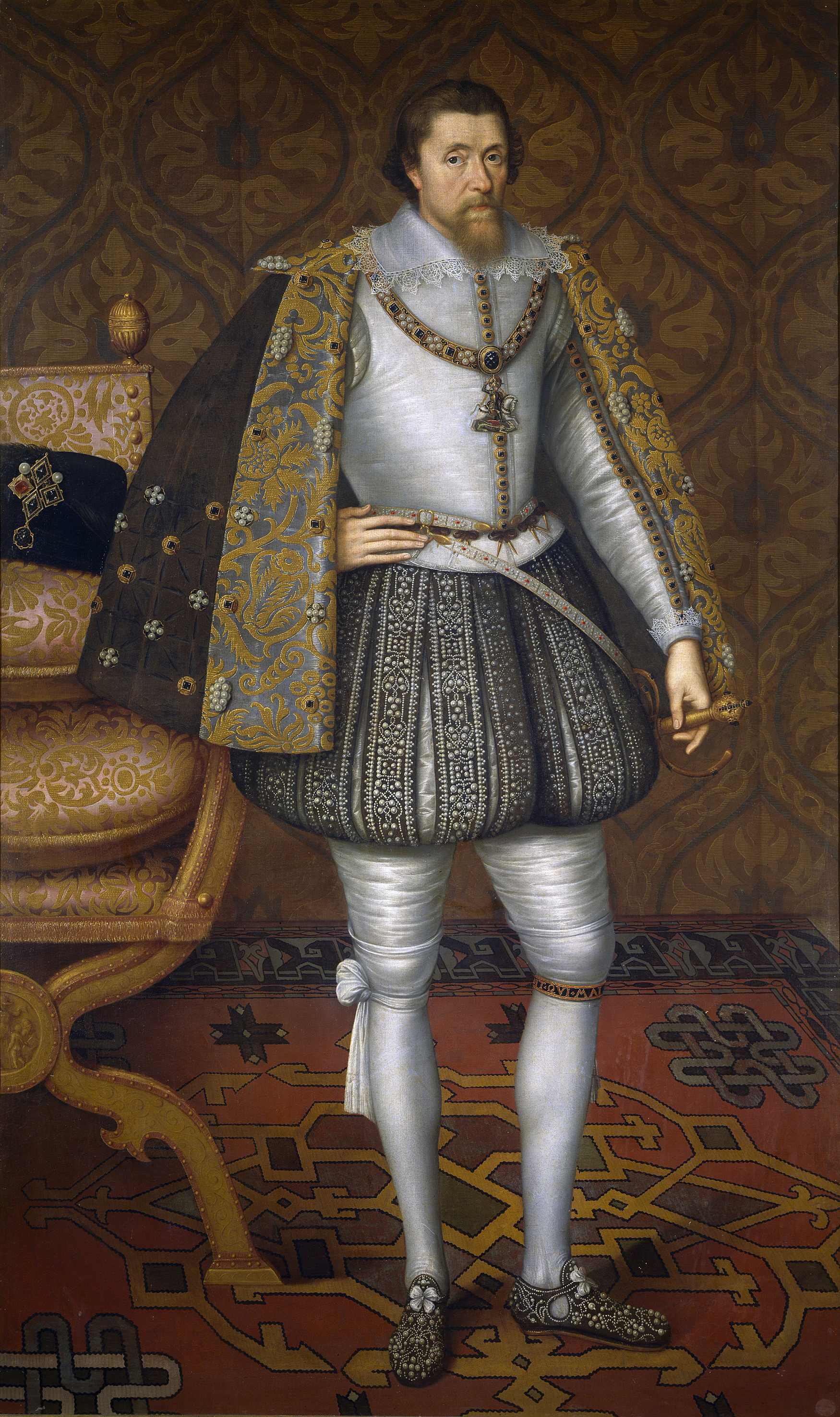
James VI and I (1566–1625) was a pivotal figure who reigned as King of Scotland from 1567 and, crucially, as King of England and Ireland from 1603 until his death. His ascension to the English throne, following the death of Elizabeth I, marked the first personal union of the Scottish and English crowns, a monumental shift in British history. Despite his ambition for a full political union, England and Scotland remained distinct kingdoms under his rule, each with its own parliament and legal system. Born the son of Mary, Queen of Scots, James navigated a tumultuous minority in Scotland, eventually consolidating power and ruling both nations with a blend of ambition, intellect, and a sometimes-controversial belief in divine right. His reign laid the groundwork for the future United Kingdom, while also sowing seeds of conflict that would blossom in the following decades.
🎵 Origins & History
James Charles Stuart was born at Edinburgh Castle, the only child of Mary, Queen of Scots, and her second husband, Henry Stuart, Lord Darnley. His claim to the throne was immediate and potent, as he was a great-great-grandson of Henry VII of England. His mother’s turbulent reign in Scotland led to her forced abdication, and James was crowned King James VI of Scotland. He eventually assumed full control in Scotland and, on March 24, 1603, upon Elizabeth I's death without an heir, James inherited the English and Irish thrones, uniting the crowns in what became known as the Union of the Crowns. This personal union, however, did not equate to a legislative one; Scotland and England remained separate kingdoms with distinct parliaments and legal systems, a distinction James struggled to overcome throughout his reign.
⚙️ How It Works
James VI and I's reign operated under the principle of the Divine Right of Kings, a political and religious doctrine asserting that monarchs derive their authority directly from God, not from their subjects. This belief underpinned his attempts to centralize power and push for a political union between Scotland and England, which he envisioned as a unified kingdom under a single parliament and legal framework. His administrative approach involved managing two distinct legal and parliamentary systems, a complex undertaking that required careful negotiation and a keen understanding of differing national identities. He appointed advisors and privy councillors in both kingdoms, attempting to streamline governance while respecting existing institutions. His efforts to create a more unified state, however, often met with resistance from the English Parliament, which jealously guarded its prerogatives and feared the dilution of English sovereignty. The management of royal finances was a constant challenge, exacerbated by the differing fiscal policies and parliamentary grants available in each realm.
📊 Key Facts & Numbers
James VI and I ascended the Scottish throne at the tender age of 13 months. He ruled Scotland for nearly 58 years, making it one of the longest reigns of any Scottish monarch. His accession to the English throne in 1603, at age 36, followed the death of Elizabeth I, who had reigned for 44 years. During his reign, approximately 4.5 million people lived in England and Wales, while Scotland's population was around 1 million. The Crown's debt in England was estimated to be over £400,000 upon his accession, a figure he struggled to reduce. He commissioned the King James Bible, a landmark translation of the Bible into English, which was completed in 1611 by 47 scholars over seven years. His reign saw the establishment of the first permanent English settlements in North America, including Jamestown, Virginia, founded in 1607, and the Plymouth Colony in 1620.
👥 Key People & Organizations
The most significant individuals surrounding James VI and I include his mother, Mary, Queen of Scots, whose turbulent reign and deposition directly led to his Scottish accession. His father, Henry Stuart, Lord Darnley, played a brief but consequential role. Key figures in his Scottish regency included John Knox (though their relationship was fraught), the Earl of Mar, and the Earl of Morton. In England, influential figures included Robert Cecil, 1st Earl of Salisbury, his chief minister, and Sir Francis Bacon, who served as Lord Chancellor. His wife, Anne of Denmark, was a significant presence, and their son, Charles I, succeeded him, inheriting many of the same political challenges. The Church of Scotland and the Church of England were crucial institutions that shaped and were shaped by his religious policies.
🌍 Cultural Impact & Influence
James VI and I's cultural impact is profound, most notably through the King James Bible, commissioned in 1604 and published in 1611. This translation became the definitive English Bible for centuries, profoundly influencing English literature, language, and religious thought, with an estimated 400 million copies printed by the mid-20th century. His reign also fostered a flourishing of literature and drama, though it is often overshadowed by the preceding Elizabethan era and the subsequent Jacobean era literature. He was a patron of the arts and sciences, supporting playwrights like Ben Jonson and philosophers like Sir Francis Bacon. His political theories, particularly his articulation of the divine right of kings in works like 'The True Law of Free Monarchies,' provided a theoretical framework for monarchical power that would be debated for generations. Furthermore, his reign saw the expansion of British influence overseas, with the establishment of Jamestown in 1607 marking a critical step in the colonization of North America.
⚡ Current State & Latest Developments
In the early 21st century, the legacy of James VI and I continues to be debated and re-evaluated by historians. While the Union of the Crowns he forged proved foundational for the eventual United Kingdom, the tensions he experienced with Parliament foreshadowed the English Civil War that erupted under his son, Charles I. Modern scholarship often highlights his intellectual contributions, his role as a peacemaker (negotiating the end of the Eighty Years' War between Spain and the Dutch Republic), and his patronage of the arts. However, his perceived extravagance, his sometimes-autocratic tendencies, and his handling of religious dissent remain subjects of scrutiny. The enduring influence of the King James Bible ensures his name remains prominent in cultural and linguistic history, even as the political landscape he navigated has been irrevocably transformed.
🤔 Controversies & Debates
James VI and I's reign was rife with controversy, most notably his staunch belief in the Divine Right of Kings, which frequently put him at odds with the English Parliament. This clash over royal prerogative versus parliamentary power was a recurring theme, exacerbated by his perceived extravagance and attempts to raise funds without parliamentary consent, such as through ship money and monopolies. His religious policies also generated significant friction; while he was a Protestant, his perceived leniency towards Catholics after the Gunpowder Plot of 1605 and his attempts to impose Anglican practices on the Church of Scotland alienated many Puritan factions and Scottish Presbyterians. His personal life, including his close relationships with male favorites like Robert Carr, Earl of Somerset, and later George Villiers, Duke of Buckingham, fueled gossip and accusations of favoritism, though the extent of any personal impropriety remains debated by historians.
🔮 Future Outlook & Predictions
The future trajectory of the United Kingdom owes a significant debt to the personal union forged by James VI and I. While he failed to achieve a legislative union, his reign laid the essential groundwork for the eventual Acts of Union in 1707. His legacy as a monarch who successfully navigated the complex political and religious landscape of early 17th-century Britain continues to be a subject of historical analysis. Future scholarship may further explore his role in shaping early colonial ventures in North America, particularly the establishment of Jamestown and Plymouth, and his impact on the development of distinct Scottish and English identities within a shared monarchy. The ongoing study of his writings on kingship and governance also offers insig
Key Facts
- Category
- history
- Type
- topic