
Contents
Overview
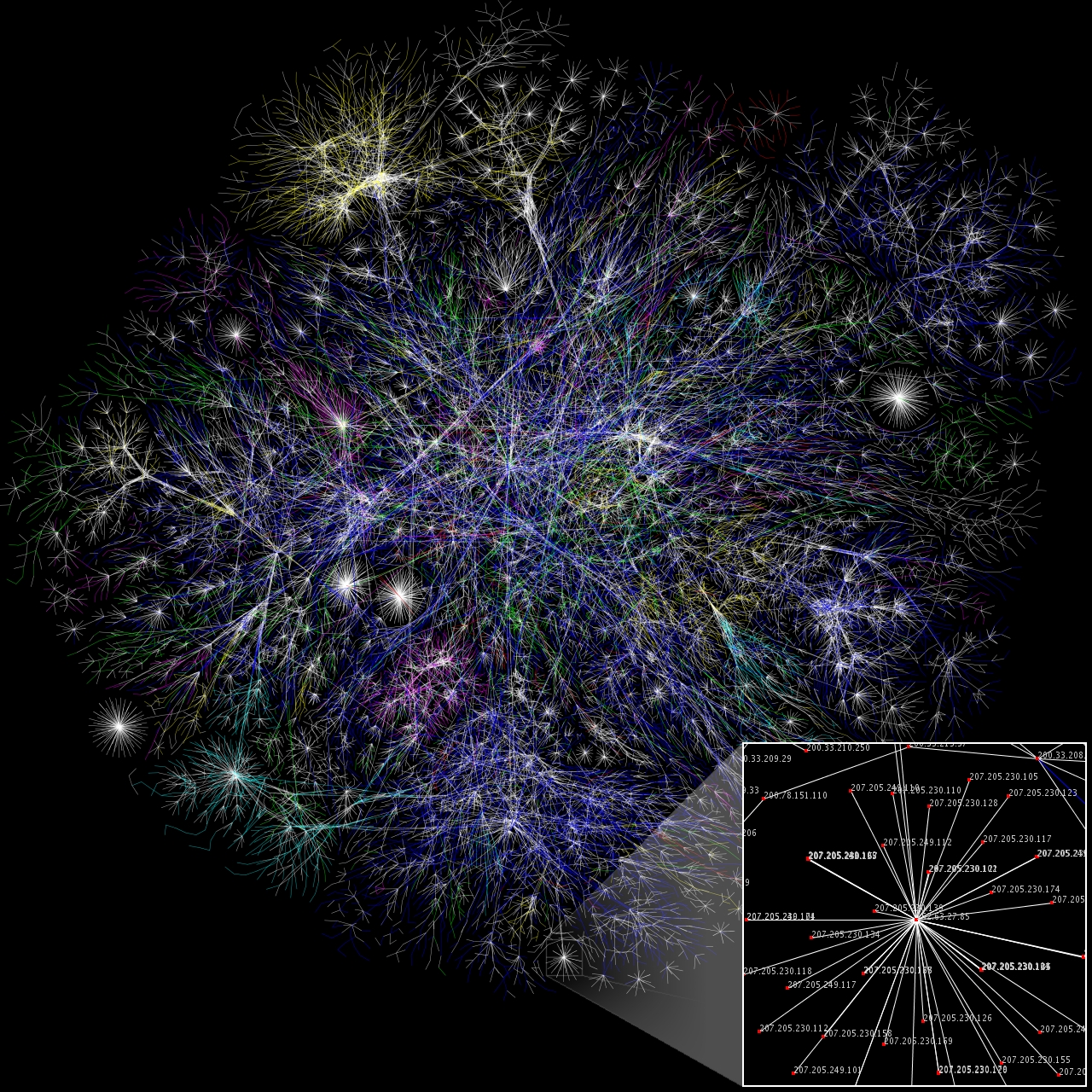
The genesis of information networks can be traced back to the mid-20th century, with early experiments in connecting computers for remote access and data sharing. However, the true explosion began with the development of packet switching in the 1960s, a concept pioneered by figures like Paul Baran and Donald Davies, which allowed data to be broken into smaller packets for more efficient routing. This laid the groundwork for ARPANET, the precursor to the modern internet, launched by the U.S. Department of Defense's Advanced Research Projects Agency in 1969. The subsequent development of TCP/IP protocols by Vint Cerf and Bob Kahn in the 1970s provided a universal language for disparate networks to communicate, effectively creating the internet as we know it by the 1980s.
⚙️ How It Works
At their core, information networks function by establishing pathways for data transmission between interconnected nodes, or devices. This involves a layered architecture, often described by the OSI model or the TCP/IP model, where each layer handles specific functions. Physical media, such as fiber optic cables, Ethernet cables, and Wi-Fi signals, form the base layer. Above this, protocols like IP manage addressing and routing, while TCP and UDP handle reliable or fast data transfer. Routers and switches direct traffic, ensuring data packets reach their intended destinations. Domain Name System (DNS) translates human-readable domain names into machine-readable IP addresses, making navigation seamless for users interacting with platforms like Google or Facebook.
📊 Key Facts & Numbers
The sheer scale of global information networks is almost incomprehensible. The global network infrastructure market was valued at over $300 billion in 2022 and is expected to grow to over $500 billion by 2028. The number of connected IoT devices alone surpassed 14 billion in 2023 and is projected to reach 29 billion by 2030. The average global internet speed hovers around 70 Mbps, though this varies dramatically by region, with countries like Singapore and South Korea boasting speeds well over 200 Mbps.
👥 Key People & Organizations
Numerous individuals and organizations have shaped the landscape of information networks. Vint Cerf and Bob Kahn are often called the 'fathers of the internet' for their work on TCP/IP. Tim Berners-Lee invented the World Wide Web in 1989, creating the protocols (HTTP, HTML) and first browser that made the internet accessible to the masses. Major organizations like the Internet Engineering Task Force (IETF) develop and promote internet standards, while the Internet Corporation for Assigned Names and Numbers (ICANN) manages domain names and IP addresses. Tech giants such as Google, Meta, and Microsoft are not only major users but also significant infrastructure providers and innovators in network technology.
🌍 Cultural Impact & Influence
Information networks have fundamentally reshaped human culture and society. The advent of the World Wide Web democratized information access, enabling global communication and the rise of social media platforms like Twitter (now X) and Instagram. E-commerce giants like Amazon have revolutionized retail, while streaming services like Netflix have transformed entertainment consumption. The ability to connect instantly across vast distances has fostered global communities and movements, but also introduced challenges related to misinformation and digital divides. The very concept of 'place' has been altered, with virtual interactions often taking precedence over physical proximity, impacting everything from dating to political discourse.
⚡ Current State & Latest Developments
The current state of information networks is characterized by rapid evolution and increasing complexity. The rollout of 5G cellular networks promises higher speeds and lower latency, enabling new applications in areas like autonomous vehicles and augmented reality. The Internet of Things (IoT) continues its exponential growth, connecting billions of devices from smart home appliances to industrial sensors, generating unprecedented volumes of data. Cloud computing, dominated by providers like Amazon Web Services (AWS), Microsoft Azure, and Google Cloud, has become the de facto standard for data storage and processing. Edge computing is also gaining traction, pushing computation closer to data sources to reduce latency and bandwidth demands.
🤔 Controversies & Debates
Information networks are rife with controversies and debates. Cybersecurity remains a paramount concern, with constant threats from malware, ransomware, and state-sponsored hacking groups targeting critical infrastructure and personal data. The issue of net neutrality continues to be debated, concerning whether internet service providers should treat all data equally or be allowed to prioritize certain traffic. Data privacy is another major battleground, with ongoing discussions about how companies like Meta collect and use user data, leading to regulations like the GDPR in Europe. The digital divide, the gap between those with and without access to reliable internet, remains a persistent global challenge, exacerbating existing inequalities.
🔮 Future Outlook & Predictions
The future of information networks points towards even greater integration and intelligence. The expansion of 6G networks is already being researched, promising speeds and capabilities far beyond current 5G. Artificial intelligence will play an increasingly crucial role in managing and optimizing network performance, detecting anomalies, and personalizing user experiences. The metaverse concept envisions persistent, interconnected virtual worlds requiring robust, high-bandwidth networks to support immersive experiences. Furthermore, the decentralization of network infrastructure through technologies like blockchain and DLT may challenge the dominance of current centralized providers, leading to more resilient and user-controlled networks.
💡 Practical Applications
Information networks are the invisible scaffolding supporting countless practical applications. They enable real-time communication via email, instant messaging apps like WhatsApp, and video conferencing platforms such as Zoom. They power global financial markets, facilitating high-frequency trading and electronic fund transfers. In education, they provide access to online courses, digital libraries, and collaborative learning tools. Healthcare benefits from telemedicine, remote patient monitoring, and the sharing of medical imaging data. Navigation systems rely on real-time data from GPS satellites and traffic sensors transmitted over networks. Even simple tasks like checking the weather or ordering food depend on the seamless functioning of these interconnected systems.
Key Facts
- Category
- technology
- Type
- topic