
Contents
- ⚔️ Overview: The Emperor's Sword
- 🗓️ Historical Context: From Feudalism to Global Power
- 🎖️ Key Eras & Campaigns: Defining Moments
- 🪖 Structure & Organization: The Machine of War
- 💡 Ideology & Doctrine: Bushido's Shadow
- 💥 Major Battles & Turning Points: Where History Was Forged
- 📉 Decline & Dissolution: The End of an Era
- 📚 Further Exploration: Deepening Your Knowledge
- Frequently Asked Questions
- Related Topics
Overview
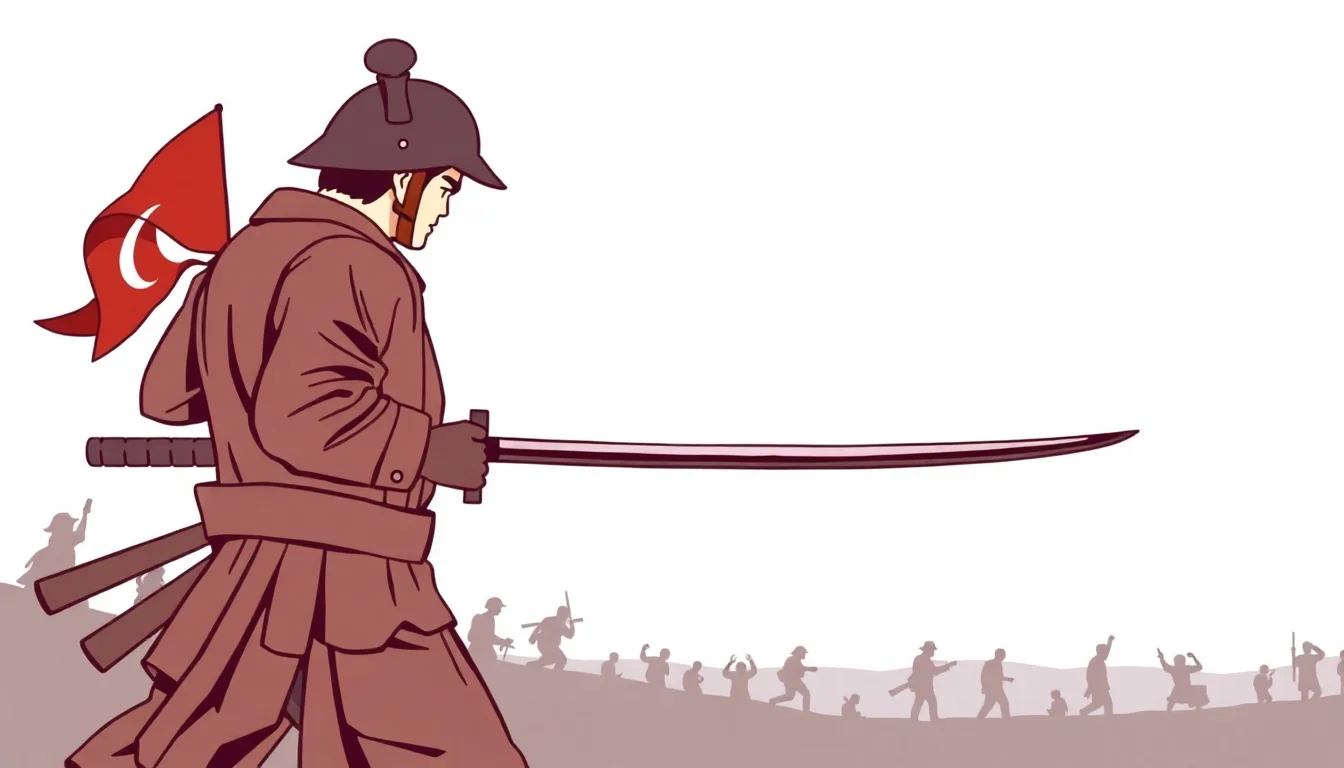
The Imperial Japanese Army (Dai-Nippon Teikoku Rikugun) was the official land force of the Empire of Japan from 1871 to 1945. Forged in the crucible of the Meiji Restoration, it rapidly modernized, becoming a formidable power that reshaped East Asian geopolitics through victories in the Sino-Japanese War (1894-1895) and Russo-Japanese War (1904-1905). Its doctrine evolved from Western models to a unique blend of bushido and modern warfare, emphasizing speed, aggression, and ideological indoctrination. By the 1930s, the IJA had become a dominant political force within Japan, driving expansionist policies that culminated in the Second Sino-Japanese War (1937-1945) and the Pacific Theater of World War II. Its eventual defeat in 1945 marked the end of an era and a profound reckoning with its legacy.
⚔️ Overview: The Emperor's Sword
The Imperial Japanese Army (Dai-Nippon Teikoku Rikugun) was the land force of the Empire of Japan from 1871 to 1945. More than just a military institution, it was a potent engine of state policy, deeply intertwined with national identity and expansionist ambitions. Understanding the IJA requires grasping its evolution from a conscript force to a formidable, often brutal, instrument of imperial will, shaping East Asian history for decades. Its legacy remains a complex and often contentious subject, demanding a nuanced historical perspective.
🗓️ Historical Context: From Feudalism to Global Power
Emerging from the ashes of the Tokugawa Shogunate, the Meiji Restoration (1868) saw the rapid modernization of Japan, with the IJA at its forefront. The creation of a national army, replacing the samurai class's feudal levies, was a cornerstone of the new imperial state. This transformation was heavily influenced by Western military models, particularly Prussian and French designs, aiming to build a modern, disciplined fighting force capable of defending Japan and projecting power. The IJA's early successes, like the First Sino-Japanese War (1894-1895), validated this modernization effort and fueled further imperial ambitions.
🎖️ Key Eras & Campaigns: Defining Moments
The IJA's history is punctuated by pivotal eras and campaigns. The Russo-Japanese War (1904-1905) marked Japan's arrival as a major world power, a stunning victory against a European giant. The subsequent period saw increasing involvement in China, culminating in the full-scale invasion during the Second Sino-Japanese War (1937-1945). World War II brought the IJA into conflict with Allied forces across the Pacific, from the jungles of Southeast Asia to the islands of the Pacific. Each campaign tested its capabilities and revealed its strengths and profound weaknesses.
🪖 Structure & Organization: The Machine of War
At its peak, the IJA was a vast and complex organization. It was structured into armies, corps, divisions, and smaller units, with a strong emphasis on centralized command. The Imperial General Headquarters, composed of the Army and Navy General Staffs, advised the Emperor. Its doctrine emphasized offensive spirit, speed, and decisive battles, often at the expense of logistical considerations or overwhelming firepower. The conscription system ensured a constant influx of manpower, though officer training and promotion were often influenced by factional politics within the army.
💡 Ideology & Doctrine: Bushido's Shadow
The ideological underpinnings of the IJA were a potent mix of emperor worship, nationalism, and a militaristic interpretation of Bushido, the samurai code. This ideology fostered a fierce loyalty to the Emperor and a willingness to sacrifice for the nation, often manifesting as extreme bravery and disregard for personal safety. However, it also contributed to a brutal approach to warfare, a belief in Japanese racial superiority, and a deep-seated anti-Western sentiment that fueled many of its aggressive actions. The concept of Gekokujō (lower overcoming higher) also played a role, allowing ambitious junior officers to exert significant influence.
💥 Major Battles & Turning Points: Where History Was Forged
Several battles stand as stark markers in the IJA's history. The Siege of Port Arthur (1904-1905) demonstrated its tenacity and engineering prowess. The invasion of Manchuria in 1931 and the subsequent Nanjing Massacre (1937-1938) revealed its capacity for extreme brutality. In World War II, the Battle of Singapore (1942) was a swift and decisive victory, while the protracted and costly Battle of Guadalcanal (1942-1943) signaled the beginning of the end for Japanese expansion in the Pacific. The Battle of Okinawa (1945) showcased the IJA's desperate and fanatical defense.
📉 Decline & Dissolution: The End of an Era
The IJA's operational capacity began to erode significantly by 1944, facing overwhelming Allied industrial might and strategic bombing. The atomic bombings of Hiroshima and Nagasaki in August 1945, coupled with the Soviet invasion of Manchuria, finally compelled Japan's surrender. Following the war, the IJA was formally dissolved as part of the Allied occupation. Its legacy is one of both remarkable military achievement and profound human rights abuses, a duality that continues to be debated by historians and policymakers.
📚 Further Exploration: Deepening Your Knowledge
For those seeking to understand the IJA, delving into primary sources and academic analyses is crucial. The Yasukuni Shrine controversy, for instance, highlights the ongoing debates surrounding the IJA's wartime actions and historical memory in Japan. Examining the military strategies of figures like Isoroku Yamamoto (though primarily associated with the Navy, his influence on overall strategy was significant) or the political machinations of army factions provides deeper insight. Consider exploring memoirs of soldiers, official histories, and comparative studies of imperial armies to gain a comprehensive view.
Key Facts
- Year
- 1871
- Origin
- Japan
- Category
- Military History
- Type
- Military Organization
Frequently Asked Questions
What was the primary role of the Imperial Japanese Army?
The IJA's primary role evolved from defending Japan against foreign powers to serving as the primary instrument of the Japanese Empire's expansionist foreign policy. It was tasked with conquering and occupying territories, suppressing resistance, and projecting Japanese military power across Asia and the Pacific.
How was the IJA organized?
The IJA was organized hierarchically, with command flowing from the Emperor through the Imperial General Headquarters down to armies, corps, divisions, and smaller tactical units. It relied heavily on conscription, supplemented by a professional officer corps, and was structured to facilitate rapid offensive operations.
What was the 'Bushido' influence on the IJA?
A militarized interpretation of Bushido, the samurai code, deeply influenced the IJA's ethos. It fostered extreme loyalty to the Emperor, a willingness to die in battle, and a disdain for surrender, which often translated into fanatical resistance and brutal conduct towards enemies and civilians.
When was the Imperial Japanese Army dissolved?
The Imperial Japanese Army was dissolved in September 1945, following Japan's unconditional surrender at the end of World War II. This demilitarization was a key component of the Allied occupation of Japan.
What are some major controversies surrounding the IJA?
Major controversies include widespread war crimes, such as the Nanjing Massacre and the use of comfort women, the IJA's role in the aggressive expansionism of the Japanese Empire, and ongoing debates in Japan about how to commemorate its wartime actions, particularly concerning the Yasukuni Shrine.
How did the IJA compare to Western armies of its time?
In its early years, the IJA was heavily influenced by Western (particularly Prussian and French) military organization and doctrine, achieving remarkable modernization. However, its ideological underpinnings and strategic doctrines, emphasizing offensive spirit and disregard for logistics, often led to unsustainable campaigns and significant losses against the industrial might of Allied forces in World War II.