
Contents
- 🖼️ What is Image Compression?
- 🗄️ Why Does Image Compression Matter?
- ⚖️ Lossy vs. Lossless: The Core Debate
- 🚀 Key Algorithms & Technologies
- 📈 Impact on Web Performance
- 💡 Visual Perception & Compression
- 💰 Storage & Bandwidth Savings
- 📱 Mobile & Edge Computing
- 🔮 The Future of Image Compression
- 🤔 Choosing the Right Method
- Frequently Asked Questions
- Related Topics
Overview
Image compression is the art and science of reducing the file size of digital images, a critical process for everything from web browsing to high-fidelity photography. It operates on two primary principles: lossless compression, which preserves every single pixel (think PNG, GIF), and lossy compression, which intelligently discards data imperceptible to the human eye to achieve much smaller files (JPEG is the king here). The choice between them hinges on the trade-off between file size and visual fidelity, a decision that impacts bandwidth, storage, and ultimately, user experience. Understanding these techniques is fundamental for anyone working with digital media, from graphic designers to web developers, and even casual smartphone users sharing photos.
🖼️ What is Image Compression?
Image compression is the process of reducing the file size of digital images. Think of it as packing a suitcase more efficiently for a trip. Instead of just stuffing everything in, you fold, roll, and strategically place items to save space. This is crucial for everything from displaying photos on a website to sending them via email. Without it, our digital lives would be bogged down by enormous files, making storage and transmission prohibitively expensive and slow. It's a fundamental technique in digital media that underpins much of our online experience.
🗄️ Why Does Image Compression Matter?
The necessity of image compression stems from the sheer volume of visual data we generate and consume daily. High-resolution images, especially those captured by modern cameras and smartphones, can easily reach tens or even hundreds of megabytes. Transmitting these uncompressed files across the internet would cripple bandwidth and lead to frustratingly long load times. cloud storage solutions would fill up in a blink. Therefore, effective image compression is not just a convenience; it's an engineering necessity for the modern digital ecosystem, impacting everything from social media platforms to professional photography workflows.
⚖️ Lossy vs. Lossless: The Core Debate
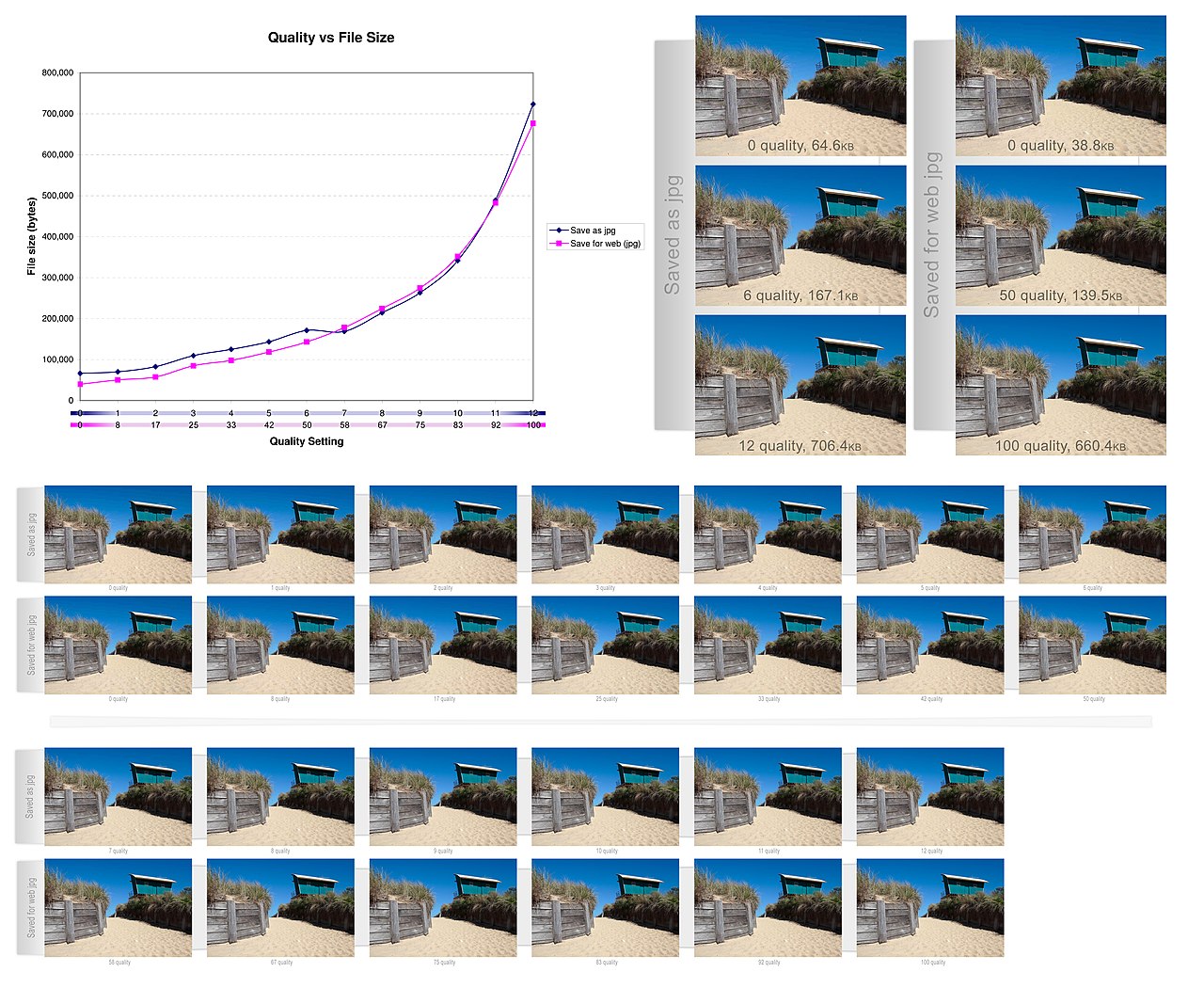
The central tension in image compression lies between 'lossy' and 'lossless' methods. Lossless compression reduces file size without discarding any image data, meaning the original image can be perfectly reconstructed. This is ideal for archival purposes or when absolute fidelity is paramount, such as in medical imaging. Lossy compression, however, achieves much smaller file sizes by permanently removing some image data that the human eye is less likely to notice. This trade-off between file size and quality is the heart of many debates in image processing and is critical for web use where speed is king.
🚀 Key Algorithms & Technologies
Several algorithms form the backbone of modern image compression. JPEG (Joint Photographic Experts Group) is the ubiquitous lossy standard for photographs, leveraging Discrete Cosine Transform (DCT) to discard high-frequency information. PNG (Portable Network Graphics) is a popular lossless format, excellent for graphics with sharp lines and transparency, using a combination of prediction and Huffman coding. Newer formats like WebP and AVIF offer superior compression ratios, often combining aspects of both lossy and lossless techniques, and are increasingly adopted by web browsers for better performance.
📈 Impact on Web Performance
For web developers and content creators, image compression is directly tied to website performance. Large, unoptimized images are a primary culprit behind slow page load times, which directly impacts user experience and search engine optimization (SEO) rankings. A website that loads quickly keeps visitors engaged, while a slow one drives them away. Implementing efficient compression, often using formats like WebP or AVIF, can dramatically reduce the bytes transferred, leading to faster rendering and a more satisfying user journey.
💡 Visual Perception & Compression
The effectiveness of image compression is deeply rooted in the principles of human visual perception. Our eyes are more sensitive to changes in brightness (luminance) than to changes in color (chrominance). Compression algorithms exploit this by reducing color information more aggressively than brightness information, a technique known as chroma subsampling, commonly used in JPEG. Similarly, the human eye is less adept at detecting fine details in complex textures compared to sharp edges. These perceptual 'blind spots' allow lossy compression to achieve significant size reductions with minimal perceived quality degradation.
💰 Storage & Bandwidth Savings
The most tangible benefit of image compression is the direct reduction in storage and bandwidth costs. For individuals, this means fitting more photos on their phone or cloud storage plan. For businesses, especially those serving vast amounts of visual content like streaming services or e-commerce platforms, the savings are monumental. Reducing file sizes by even 20-30% can translate into millions of dollars saved annually in data transfer fees and server infrastructure costs. This economic incentive drives continuous innovation in compression technologies.
📱 Mobile & Edge Computing
The rise of mobile computing and edge devices has further amplified the importance of efficient image compression. With limited on-device storage and often variable network conditions, mobile applications must be adept at handling images. Compression algorithms that are computationally efficient and achieve high compression ratios are paramount. Furthermore, as more image processing tasks move to the edge, such as real-time object recognition in autonomous vehicles or augmented reality applications, the need for rapid compression and decompression becomes critical.
🔮 The Future of Image Compression
The future of image compression is likely to be dominated by AI and machine learning. Neural networks are proving capable of learning complex statistical models of image data, potentially leading to compression algorithms that surpass traditional methods in efficiency and perceptual quality. We might see a move towards 'perceptual coding' where compression is tailored not just to the image content but also to the specific viewing context or user preferences. The ongoing development of new codecs and standards will continue to push the boundaries of what's possible, aiming for smaller files with even better visual fidelity.
🤔 Choosing the Right Method
Choosing the right image compression method depends heavily on your specific needs. For web use where speed is critical, lossy formats like JPEG, WebP, or AVIF are generally preferred, with WebP and AVIF offering better compression. If perfect image fidelity is non-negotiable, such as for professional photo editing or medical archives, lossless formats like PNG or TIFF are the way to go. Consider the trade-off: how much quality are you willing to sacrifice for a smaller file size? Understanding your priorities will guide you to the most effective solution for your digital assets.
Key Facts
- Year
- 1952
- Origin
- Early digital image processing research, with significant advancements driven by the development of the JPEG standard in the late 1980s and early 1990s.
- Category
- Technology & Media
- Type
- Concept
Frequently Asked Questions
What's the difference between lossy and lossless compression?
Lossless compression reduces file size without discarding any image data, allowing perfect reconstruction of the original image. Lossy compression achieves smaller file sizes by permanently removing some image data that is less perceptible to the human eye. Lossless is for perfect fidelity, while lossy is for smaller files, often used for web images.
Which image format is best for the web?
For most web use cases, modern formats like WebP and AVIF offer superior compression compared to older formats like JPEG and PNG, resulting in faster load times. JPEG is still widely used for photographs due to its good balance of quality and file size, while PNG is preferred for graphics with transparency or sharp lines.
How does image compression affect image quality?
Lossy compression inherently reduces image quality by discarding data. However, well-implemented lossy compression, like JPEG at moderate settings, can achieve significant file size reductions with minimal perceptible loss in quality. Lossless compression does not affect image quality at all.
Can I compress an image that's already compressed?
You can re-compress an image, but re-compressing a lossy file (like a JPEG) will generally lead to further quality degradation, as you're essentially discarding more data. Re-compressing a lossless file (like a PNG) might result in a slightly smaller file size if a more efficient lossless algorithm is used, but the quality remains identical.
What are the main benefits of image compression?
The primary benefits are reduced storage space requirements and faster transmission speeds over networks. This translates to lower costs for storage and bandwidth, improved website performance, better user experience, and more efficient data handling on mobile devices.
Are there any downsides to image compression?
The main downside is the potential loss of image quality with lossy compression. Over-compression can lead to visible artifacts like blockiness or color banding. Additionally, some compression algorithms require more processing power to encode and decode, which can be a factor on resource-constrained devices.