
Contents
Overview
The history of chemistry is a sprawling narrative tracing humanity's understanding of matter and its transformations, stretching from the earliest practical applications in antiquity to the sophisticated theories of the modern era. Ancient civilizations laid groundwork through metallurgy, fermentation, and the creation of glass and alloys, while the mystical pursuits of alchemy inadvertently fostered experimental rigor and record-keeping. Key figures like Robert Boyle challenged vitalism with his empirical approach in The Sceptical Chymist, paving the way for Antoine Lavoisier's chemical revolution, which established quantitative measurement and the law of conservation of mass. The 19th century saw the birth of organic chemistry and the development of the periodic table, while the 20th century brought quantum mechanics, fundamentally reshaping our comprehension of chemical bonding and reactivity. This evolution continues, with ongoing research in fields like nanotechnology and computational chemistry pushing the boundaries of what's possible.
🎵 Origins & Ancient Roots
The story of chemistry begins not with abstract theory, but with tangible human ingenuity. The discovery and control of fire allowed for the transformation of raw materials, leading to the creation of pottery and the extraction of metals like copper and iron from ores. Ancient Egyptians developed sophisticated glassmaking and dyeing techniques, while Mesopotamians perfected the art of creating bronze alloys. The fermentation of beer and wine demonstrated early understanding of biological and chemical transformations, and the extraction of plant compounds for medicine and perfumes hinted at the potential of chemical analysis. These practical arts, though lacking theoretical underpinnings, formed the bedrock upon which formal chemistry would eventually be built.
⚙️ The Alchemical Interlude
For centuries, the pursuit of understanding matter was dominated by alchemy, a complex blend of proto-science, philosophy, and mysticism. Alchemists, driven by the desire to transmute base metals into gold and discover the elixir of life, conducted countless experiments. While their ultimate goals proved unattainable, their meticulous, albeit often secretive, experimental practices and detailed record-keeping were crucial. Figures like Jabir ibn Hayyan in the Islamic Golden Age introduced systematic experimentation and the concept of chemical apparatus. The alchemical tradition, despite its esoteric nature, preserved and advanced practical chemical knowledge, laying essential groundwork for the empirical methods that would define modern chemistry, particularly through the distillation and purification techniques they developed.
💥 The Chemical Revolution
The 'chemical revolution' in the late 18th century, orchestrated by Antoine Lavoisier, marked a decisive shift towards quantitative measurement and empirical evidence. Lavoisier's systematic nomenclature provided the framework for future chemical inquiry.
📊 Key Discoveries & Milestones
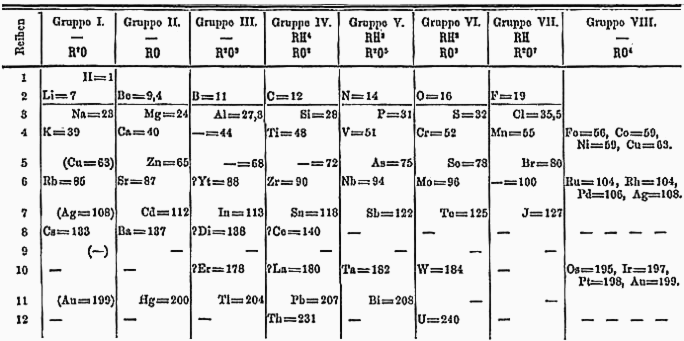
The 19th century saw significant discoveries that solidified chemistry as a distinct scientific discipline. The burgeoning field of organic chemistry saw chemists like Friedrich Wöhler synthesize urea from inorganic precursors in 1828, breaking down the vitalism theory that organic compounds could only be produced by living organisms. The latter half of the century culminated in Dmitri Mendeleev's development of the periodic table in 1869, which not only organized the known elements but also predicted the existence and properties of undiscovered ones, a testament to the underlying order of matter.
👥 Pioneers of the Field
The history of chemistry is punctuated by brilliant minds whose insights reshaped our understanding of the material world. Marie Curie, a pioneer in radioactivity research, was the first woman to win a Nobel Prize and the only person to win Nobel Prizes in two different scientific fields (Physics and Chemistry). Linus Pauling made foundational contributions to chemical bonding theory and molecular structure, earning him two unshared Nobel Prizes (Chemistry and Peace). Gilbert N. Lewis introduced the concept of the electron pair bond, a cornerstone of modern chemical understanding. These individuals, alongside countless others like Henri Le Chatelier and Svante Arrhenius, built upon each other's work, creating a cumulative scientific edifice.
🌍 Global Spread & Institutions
The practice and understanding of chemistry rapidly expanded globally throughout the 19th and 20th centuries, moving beyond its European origins. Universities established dedicated chemistry departments, fostering systematic education and research. The development of industrial chemistry, particularly in Germany with companies like BASF and Bayer, demonstrated the immense economic potential of chemical innovation, leading to the mass production of dyes, fertilizers, and pharmaceuticals. The establishment of professional societies, such as the Royal Society of Chemistry (founded 1841) and the American Chemical Society (founded 1876), provided platforms for collaboration, publication, and the dissemination of knowledge, solidifying chemistry's place in the global scientific community.
⚡ Modern Chemistry's Ascendancy
The 20th century ushered in an era where chemistry became intrinsically linked with physics, particularly through the advent of quantum mechanics. Theories developed by physicists like Erwin Schrödinger and Werner Heisenberg provided a fundamental explanation for chemical bonding, molecular structure, and reactivity at the atomic and subatomic levels. This quantum revolution enabled chemists to predict and design molecules with unprecedented precision, leading to breakthroughs in areas like polymer science, materials science, and pharmaceutical development. The discovery of DNA's double helix structure by James Watson and Francis Crick in 1953, elucidated through chemical principles, marked a pivotal moment in understanding life itself.
🤔 Debates & Paradigm Shifts
Throughout its history, chemistry has been shaped by significant debates and paradigm shifts. The transition from alchemy to chemistry itself was a major conceptual leap, driven by the insistence on empirical evidence over mystical explanations. The debate over atomism raged for centuries, with figures like Henri Le Chatelier and Svante Arrhenius contributing to the understanding of chemical equilibrium and reaction rates, but the true nature of atoms remained elusive until the 20th century. The development of organic chemistry challenged the notion of a 'vital force,' while the discovery of radioactivity by Henri Becquerel and further explored by Marie Curie and Ernest Rutherford demonstrated that atoms were not immutable, leading to profound shifts in understanding matter and energy.
💡 Practical Applications Through Time
The practical applications of chemistry are woven into the fabric of modern life, a testament to its enduring relevance. From the fertilizers that enable global food production, developed through the Haber-Bosch process by Fritz Haber and Carl Bosch, to the plastics that form countless everyday objects, chemistry's impact is ubiquitous. The development of pharmaceuticals has revolutionized healthcare, with drugs like penicillin and modern antibiotics saving millions of lives. Advances in materials science have led to everything from high-strength alloys for aerospace to advanced semiconductors powering our digital world. Even the simple act of cleaning relies on soap and [
Key Facts
- Category
- history
- Type
- topic