
Contents
Overview
The genesis of the gas station convenience store can be traced back to the post-World War II era in the United States, a period marked by increased automobile ownership and suburban sprawl. Early iterations began in the 1920s and 1930s, with some service stations offering basic sundries. However, the true precursor to the modern c-store emerged in 1927 when the Southland Corporation (later known as 7-Eleven) began selling ice, milk, and bread at its Tote'm Inn stores in Dallas, Texas, to supplement their core business. The concept gained significant traction in the 1950s and 1960s as Americans embraced a more mobile lifestyle, demanding convenient access to goods beyond just gasoline. Companies like Speedway and QuikTrip further refined the model, integrating larger footprints and a wider product range, transforming the humble gas station into a destination for everyday needs.
⚙️ How It Works
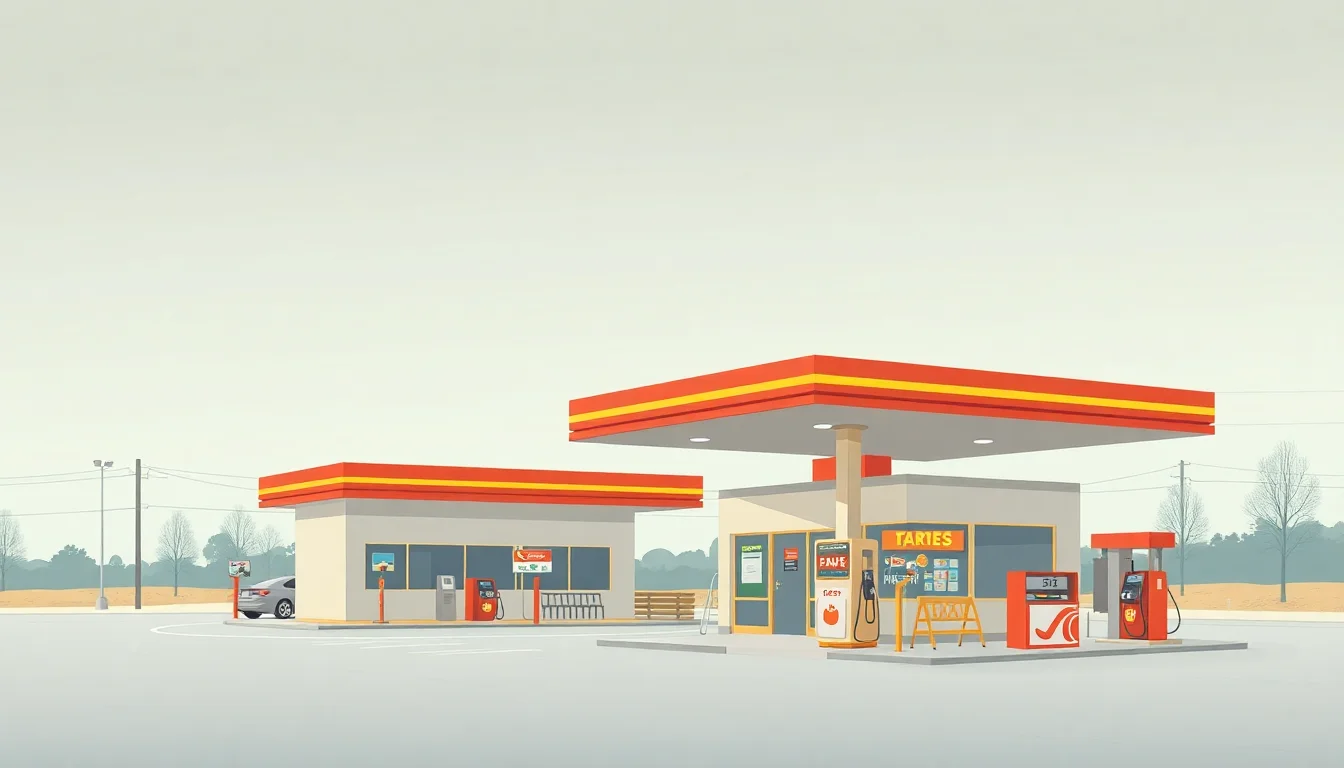
At its core, a gas station convenience store operates on a dual revenue stream: fuel sales and retail merchandise. The fuel pumps, often operated by Gilbarco or Wayne technology, provide the primary traffic driver. Customers then enter the attached store, where a carefully merchandised selection of products aims to capture impulse buys and fulfill immediate needs. This typically includes a wide array of beverages (sodas, energy drinks, coffee from brands like Starbucks's Ready-to-Drink line), snacks (chips, candy bars from Mars and Mondelez), tobacco products, lottery tickets, and basic toiletries. Point-of-sale systems, increasingly incorporating contactless payment options, manage transactions efficiently, while inventory management software, often from providers like Oracle, ensures stock levels are maintained. The layout is designed for quick navigation, with high-margin impulse items strategically placed near the checkout counters.
📊 Key Facts & Numbers
The global convenience store market, including those attached to gas stations, is a colossal economic force. In the United States alone, there are approximately 150,000 convenience stores, with over 70% of them selling motor fuels. The average c-store transaction value hovers around $10-$15, but this can vary significantly based on product mix and location. Fuel margins are notoriously thin, often less than 5%, making the high-margin retail sales—which can reach 30-40% profit—absolutely critical for profitability. These stores serve an estimated 35 million customers daily in the U.S.
👥 Key People & Organizations
Several key figures and organizations have shaped the gas station convenience store landscape. The Southland Corporation, founded by Joseph C. Thompson Sr., is credited with pioneering the 7-Eleven concept in 1927, transforming it into a global franchise. Peter Buck and William Warren were instrumental in developing the Slurpee drink for 7-Eleven in the 1960s, a product that became an iconic c-store offering. Sheetz Inc., a family-owned business founded by Bob Sheetz in 1952, is renowned for its early adoption of made-to-order food and 24/7 operations. QuikTrip, established by Chester Lynn Richardson in 1958, is celebrated for its clean facilities and customer service. Industry associations like the National Association of Convenience Stores (NACS) advocate for the sector and provide valuable market research.
🌍 Cultural Impact & Influence
Gas station convenience stores have woven themselves into the fabric of modern culture, particularly in North America. They are the ubiquitous backdrop for countless road trip narratives, late-night snack runs, and quick pit stops. The iconic 7-Eleven 'Slurpee' and QuikTrip 'roller dogs' have become cultural touchstones, instantly recognizable symbols of convenience. These stores often serve as informal community centers, especially in rural areas where they might be the only retail establishment for miles. Their presence influences urban planning and suburban development, with zoning laws and traffic patterns often dictated by the placement of these high-traffic locations. The very act of stopping at a gas station c-store is a ritual for many, a brief pause in the journey that offers a moment of accessible indulgence or necessity, as depicted in numerous films and television shows.
⚡ Current State & Latest Developments
The current landscape of gas station convenience stores is dynamic, driven by evolving consumer preferences and technological advancements. A major trend is the expansion of fresh food offerings, moving beyond traditional snacks to include salads, sandwiches, and even hot meals prepared on-site, mirroring the strategies of chains like Wawa and Sheetz. The integration of digital technology is accelerating, with many chains implementing mobile apps for pre-ordering, loyalty programs, and contactless payments, often powered by platforms like PayPal or Square. Electric vehicle charging stations are increasingly being integrated into forecourts, signaling a shift in the core business model. Furthermore, the industry is grappling with supply chain challenges and labor shortages, prompting investments in automation and improved employee training programs. For example, Circle K has been piloting automated checkout systems in select locations.
🤔 Controversies & Debates
The business model of gas station convenience stores is not without its controversies. Historically, these stores have faced criticism for their heavy reliance on the sale of tobacco products and sugary beverages, contributing to public health concerns. The placement of these stores in lower-income or minority neighborhoods has also raised questions about targeted marketing and potential health disparities. Furthermore, the thin profit margins on gasoline mean that price fluctuations can significantly impact the overall viability of a station, leading to debates about fair pricing and market manipulation. The increasing prevalence of made-to-order food raises food safety and preparation standards concerns, requiring rigorous oversight from bodies like the FDA. The environmental impact of single-use plastics for packaging and the energy consumption of refrigeration units are also subjects of ongoing debate.
🔮 Future Outlook & Predictions
The future of gas station convenience stores appears to be one of significant transformation. The accelerating shift towards electric vehicles (EVs) poses a fundamental challenge to the traditional fuel-centric model. Companies are investing heavily in EV charging infrastructure, viewing these stations as potential new revenue streams and opportunities to retain customer traffic. The focus on fresh food and healthier options is expected to intensify, with many c-stores aiming to compete directly with fast-casual restaurants. Automation, from self-checkout kiosks to robotic food preparation, will likely play a larger role in addressing labor costs and improving efficiency. Data analytics will become even more crucial, enabling personalized offers and optimized inventory management based on real-time consumer behavior. We might see a divergence, with some locations focusing purely on convenience and grab-and-go, while others evolve into full-service food destinations with enhanced amenities.
💡 Practical Applications
Gas station convenience stores serve a multitude of practical purposes in daily life. They are essential pit stops for travelers needing fuel, snacks, or a restroom break. For commuters, they offer a quick solution for breakfast, coffee, or forgotten lunch items. Many serve as local hubs for purchasing lottery tickets, paying utility bills, or picking up essential groceries like milk and bread. In rural areas, they often function as the primary retail outlet for a community. The integration of services like ATMs, post
Key Facts
- Category
- culture
- Type
- topic