
Contents
Overview
A flywheel is a mechanical device designed to store rotational kinetic energy, leveraging the principle of angular momentum. By spinning a heavy mass, it accumulates energy. This stored energy can then be released to smooth out fluctuations in power delivery, acting as a kinetic energy analogue to an electrical inductor or a generalized accumulator. Flywheels are crucial for stabilizing systems with intermittent power sources or sudden load changes, ensuring consistent operation. Their design and application span from ancient pottery wheels to modern industrial machinery and even advanced energy storage systems, demonstrating a remarkable persistence and adaptability across millennia of technological evolution. The core concept remains simple: store energy by spinning, release it when needed.
🎵 Origins & History
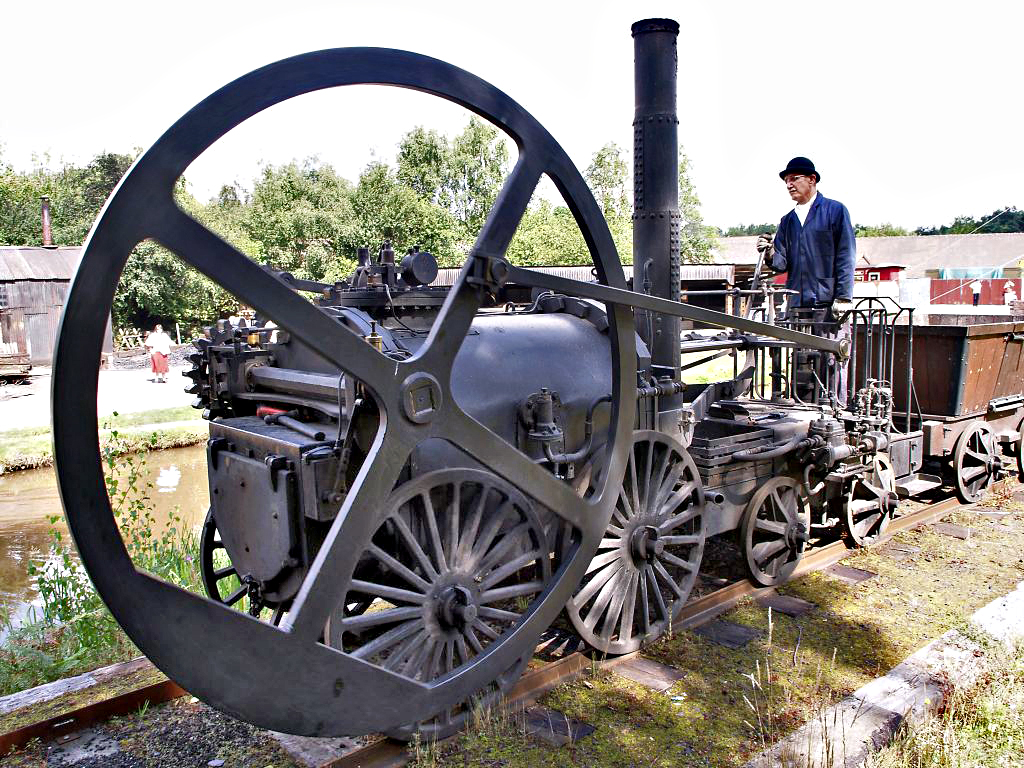
The concept of a flywheel, a rotating mass used to store energy and smooth motion, predates recorded history. The formal engineering understanding of flywheels as distinct components for energy storage and regulation began to solidify during the Industrial Revolution in the 18th century, particularly with the development of steam engines. Inventors like James Watt incorporated large, heavy flywheels into his steam engine designs to smooth out the pulsating power delivery of the piston, making the engine far more practical for driving machinery in factories like those of Manchester. This marked a transition from incidental flywheels to deliberately engineered components crucial for industrialization.
⚙️ How It Works
At its heart, a flywheel operates on the principle of conservation of angular momentum. Energy is imparted to a rotor, typically a heavy wheel or disc, causing it to spin at high speeds. When the system experiences a sudden demand for power (a load), the flywheel releases its stored energy, slowing down slightly but providing the necessary torque to maintain operational speed. Conversely, when the power source provides more energy than is immediately needed, the excess is used to accelerate the flywheel, storing it for future use. This continuous cycle of energy absorption and release effectively acts as a mechanical low-pass filter, smoothing out power fluctuations and maintaining a stable rotational speed, much like an inductor smooths electrical current.
📊 Key Facts & Numbers
A typical industrial flywheel can weigh anywhere from a few kilograms to over 100,000 kilograms. The energy storage capacity can be substantial; for instance, a flywheel designed for grid-scale energy storage might store several megawatt-hours (MWh) of energy. The rotational speeds can vary dramatically, from a few hundred revolutions per minute (RPM) in older applications to over 60,000 RPM in high-performance, vacuum-enclosed systems. The energy density of modern flywheel systems can reach up to 150 Wh/kg, significantly higher than traditional lead-acid batteries in some applications. For example, the Beacon Power flywheel system, acquired by Google, demonstrated storage capacities in the megawatt range. The cost of flywheel energy storage systems can range from $200 to $1,000 per kilowatt-hour (kWh), depending on scale and application.
👥 Key People & Organizations
While no single inventor is credited with the invention of the flywheel due to its ancient origins, key figures in its engineering development include James Watt, whose steam engine flywheels were pivotal in the Industrial Revolution. Later, Nikola Tesla explored various energy storage concepts, though his direct contributions to flywheel design are less documented than his electrical innovations. In the modern era, companies like Quantec Energy (formerly Beacon Power) and Voler Systems have been significant players in developing advanced flywheel energy storage systems. Research institutions such as MIT and Stanford University continue to push the boundaries of flywheel technology through material science and advanced control systems. The National Renewable Energy Laboratory (NREL) has also conducted extensive research into flywheel applications for renewable energy integration.
🌍 Cultural Impact & Influence
The flywheel's influence is pervasive, though often unseen. Its most profound impact was enabling the Industrial Revolution by making rotational machinery practical and reliable. Factories powered by steam engines with flywheels became the engines of economic growth in the 18th and 19th centuries, fundamentally reshaping societies in places like Great Britain and the United States. Beyond industry, flywheels are integral to the operation of countless devices, from the internal combustion engines in our cars (via the dual-mass flywheel) to the turbines in power plants and the gyroscopes in navigation systems. The concept of smoothing out energy fluctuations has also permeated other fields, influencing how we think about energy grids and even biological systems, where similar principles of energy buffering are at play. Its enduring presence underscores a fundamental engineering principle: managing energy flow through stored momentum.
⚡ Current State & Latest Developments
Current developments in flywheel technology are largely focused on enhancing energy density, improving efficiency, and reducing costs for energy storage applications. Researchers are exploring advanced materials like carbon fiber composites and graphene for rotors to achieve higher speeds and greater energy storage capacity. Innovations in magnetic bearings and vacuum containment systems are reducing friction losses, allowing flywheels to maintain their spin for extended periods with minimal energy input. Companies are also developing modular flywheel systems that can be scaled for various applications, from stabilizing renewable energy sources like wind turbines and solar power to providing uninterruptible power supplies (UPS) for critical infrastructure. The integration of flywheels with electric vehicles and grid stabilization services is an active area of research and commercialization.
🤔 Controversies & Debates
One persistent debate surrounding flywheels, particularly in the context of energy storage, is their cost-effectiveness and energy density compared to lithium-ion batteries. While flywheels offer advantages like long cycle life (hundreds of thousands of cycles with minimal degradation) and rapid charge/discharge capabilities, their initial capital cost can be higher, and they are less energy-dense than batteries. Another point of contention is safety; high-speed rotating masses, especially in older or poorly maintained systems, pose a significant mechanical hazard if containment fails. This has led to stringent safety standards and the widespread adoption of vacuum-sealed enclosures. Furthermore, the efficiency of flywheel systems can be impacted by friction, particularly at lower speeds, leading to energy losses over time, though advancements in magnetic bearings are mitigating this.
🔮 Future Outlook & Predictions
The future of flywheels appears bright, particularly in niche energy storage applications where their unique advantages shine. Expect continued advancements in composite materials and magnetic levitation to push energy density and efficiency further. Flywheels are poised to play an increasingly important role in grid stabilization, complementing intermittent renewables by providing rapid frequency regulation and peak shaving capabilities. Their ability to handle frequent charge/discharge cycles makes them ideal for applications requiring high power bursts, such as in electric vehicle charging infrastructure and industrial automation. As the demand for reliable and sustainable energy storage grows, flywheels will likely carve out a significant market share, especially in industrial and grid-scale contexts where their longevity and rapid response are paramount. Projections suggest the global flywheel energy storage market could reach several billion dollars by 2030.
💡 Practical Applications
Flywheels have a vast array of practical applications across numerous sectors. In internal combustion engines, they smooth out power delivery, reduce vibrations, and assist in starting the engine, often as part of a dual-mass flywheel system. In industrial machinery, they stabilize the speed of conveyors, press
Key Facts
- Category
- technology
- Type
- topic