
Contents
Overview
The concept of fatty acids as fundamental biological molecules emerged gradually through the work of early chemists. In 1779, Carl Wilhelm Scheele isolated butyric acid from butter, marking one of the earliest discoveries of a specific fatty acid. Later, in the 19th century, chemists like Michel Eugène Chevreul systematically broke down fats into their constituent components, including glycerol and various fatty acids, through saponification (hydrolysis with alkali). This period, roughly from the late 18th to the mid-19th century, laid the groundwork for understanding fatty acids not just as components of food but as distinct chemical entities with specific properties. The identification of their aliphatic nature and carboxylic acid function solidified their place in organic chemistry and biochemistry.
⚙️ How It Works
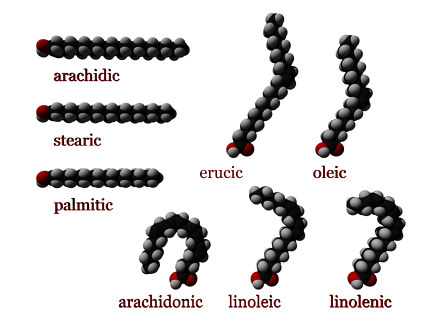
Fatty acids function as the primary building blocks for many types of lipids, the fats and oils essential for life. Their structure, a long hydrocarbon chain attached to a carboxyl group (-COOH), dictates their properties. The hydrocarbon chain can be saturated, meaning all carbon-carbon bonds are single, leading to a straight, rigid molecule that packs tightly. Unsaturated fatty acids contain one or more carbon-carbon double bonds, which introduce kinks or bends in the chain, preventing tight packing and resulting in a more fluid state. These chains are typically 4 to 28 carbons long, with even numbers being most common in nature. In biological systems, they are often esterified with glycerol to form triglycerides (energy storage) or with a phosphate group and other molecules to form phospholipids (cell membranes), or attached to cholesterol to form cholesteryl esters.
📊 Key Facts & Numbers
Globally, an estimated 1.5 billion metric tons of fats and oils are produced annually, with fatty acids being their primary constituents. The average human diet contains approximately 70-100 grams of fat per day, with saturated fatty acids typically making up 40-50% of this intake in Western diets, though this varies significantly by region and culture. For instance, the Mediterranean diet emphasizes unsaturated fatty acids, with olive oil being a major source. The human body can synthesize most fatty acids, but essential fatty acids like omega-3 and omega-6 must be obtained from the diet, with recommended daily intakes for adults often cited around 1-2% of total caloric intake. The global market for fatty acid derivatives alone was valued at over $20 billion USD in 2023, highlighting their industrial significance.
👥 Key People & Organizations
Key figures in understanding fatty acids include Michel Eugène Chevreul, who performed foundational work on fat composition in the 19th century. Later, George Olah, a Nobel laureate, made significant contributions to understanding carbocations, which are relevant to the reaction mechanisms involving fatty acids. In nutrition science, researchers like Ancel Keys (though controversial) significantly influenced dietary guidelines regarding fat intake. Organizations such as the American Oil Chemists' Society (AOCS) and the International Union of Pure and Applied Chemistry (IUPAC) play crucial roles in standardizing nomenclature and analytical methods for fatty acids. The National Institutes of Health (NIH) funds extensive research into the metabolic roles and health implications of various fatty acids.
🌍 Cultural Impact & Influence
Fatty acids have permeated culture and daily life, primarily through their association with food and health. The distinction between 'good' and 'bad' fats, largely driven by the perceived health impacts of saturated versus unsaturated fatty acids, has shaped dietary trends for decades. From the rise of olive oil as a health staple to the popularity of fish oil supplements for their omega-3 content, public awareness of fatty acids is significant. The culinary world celebrates specific fats, like the rich flavor imparted by butterfat or the unique properties of coconut oil. Moreover, the cosmetic industry extensively uses fatty acids and their derivatives in moisturizers and skincare products, recognizing their role in skin barrier function.
⚡ Current State & Latest Developments
Current research is intensely focused on the nuanced roles of specific fatty acids beyond simple energy provision. For instance, the role of short-chain fatty acids (SCFAs) produced by gut microbiota, such as butyrate, propionate, and acetate, in influencing immune function, brain health, and metabolic regulation is a rapidly expanding field. Advances in analytical techniques, including mass spectrometry and gas chromatography, allow for more precise identification and quantification of fatty acids in complex biological samples. The development of precision nutrition strategies increasingly considers individual fatty acid profiles and their impact on health outcomes, moving beyond generalized dietary advice.
🤔 Controversies & Debates
The debate surrounding saturated fatty acids and their link to cardiovascular disease remains a prominent controversy. While historical dietary guidelines, heavily influenced by early research from Ancel Keys, strongly advised limiting saturated fat intake, more recent meta-analyses and studies have questioned the strength and universality of this association. Critics argue that focusing solely on saturated fat overlooks the complex interplay of dietary patterns, genetics, and other lifestyle factors. Another debate centers on the optimal ratio of omega-3 to omega-6 fatty acids, with many modern diets considered to be too high in omega-6, potentially promoting inflammation. The marketing and health claims associated with specific fats, like coconut oil, also frequently spark scientific and public debate.
🔮 Future Outlook & Predictions
The future of fatty acid research points towards a deeper understanding of their signaling roles and therapeutic potential. Expect to see more personalized dietary recommendations based on an individual's genetic predisposition and gut microbiome composition, dictating optimal fatty acid intake. The development of novel pharmaceuticals incorporating specific fatty acids or their analogs for treating inflammatory diseases, neurological disorders, and metabolic syndromes is likely. Furthermore, advancements in biotechnology may lead to more sustainable and efficient production of specific high-value fatty acids through microbial fermentation or engineered plants, reducing reliance on traditional agricultural sources and potentially impacting the oleochemical industry.
💡 Practical Applications
Fatty acids are indispensable in numerous practical applications. In the food industry, they are used as emulsifiers, texturizers, and flavor enhancers. Margarine and shortening, for example, are products derived from the hydrogenation or interesterification of vegetable oils, altering their fatty acid composition to achieve desired textures. The oleochemical industry utilizes fatty acids as precursors for a vast array of products, including soaps, detergents, lubricants, plastics, and cosmetics. Biodiesel, a renewable fuel, is primarily composed of fatty acid methyl esters derived from vegetable oils or animal fats. In medicine, specific fatty acids are used in parenteral nutrition formulations to provide essential energy and nutrients to patients unable to eat normally.
Key Facts
- Category
- science
- Type
- topic