
Contents
Overview
Eddie Kramer is a South African-born, British audio engineer and record producer whose career has indelibly shaped the sound of rock and roll. From the psychedelic swirl of Jimi Hendrix's early work to the stadium-shaking anthems of Led Zeppelin, Kramer's touch is evident on some of the most iconic albums of the 20th century. His work spans genres and generations, encompassing collaborations with titans like The Beatles, David Bowie, and The Rolling Stones. Beyond engineering, Kramer is also a respected photographer, capturing intimate, behind-the-scenes glimpses of the artists he worked with, particularly Hendrix. His influence extends to film soundtracks, documenting legendary performances like Woodstock and The Who's Isle of Wight concert. Kramer's sonic philosophy, marked by a deep understanding of both technical precision and raw artistic energy, continues to resonate, making him a pivotal figure in music history.
🎵 Origins & History
Born April 19, 1942, in Cape Town, South Africa, Eddie Kramer's journey into the heart of music began with early studies at the South African College of Music. He found his footing in the burgeoning recording industry in London, where his initial work at Olympic Studios and Abbey Road Studios provided him with invaluable experience. His relocation to New York City and subsequent work with Jimi Hendrix catapulted him into the global spotlight, defining his signature sound and establishing his reputation as a master of capturing live energy in the studio.
⚙️ How It Works
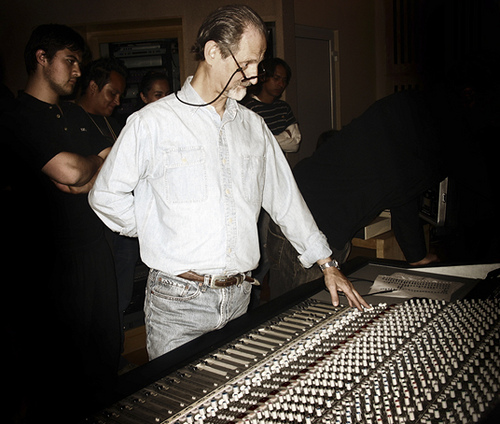
Kramer's engineering approach is characterized by a profound understanding of how to translate the visceral energy of a live performance into a recorded medium. He's renowned for his innovative use of microphones, often pushing them to their limits to capture raw power, and his meticulous attention to sonic detail. For instance, his work on Jimi Hendrix's 'Are You Experienced' album showcased his ability to create expansive, psychedelic soundscapes through creative panning and effects. He often favored analog equipment, understanding its unique warmth and saturation, and was adept at coaxing extraordinary sounds from instruments and voices, famously capturing Led Zeppelin's thunderous live sound on tracks like 'Whole Lotta Love'. His mixing techniques often involved layering sounds to create depth and impact, a hallmark of the era's most ambitious rock productions.
📊 Key Facts & Numbers
Kramer has been credited on a significant number of albums throughout his career. He engineered or produced landmark albums that have sold tens of millions of copies worldwide. His engineering work on Jimi Hendrix's 'Axis: Bold as Love' is considered a benchmark in psychedelic rock production. Kramer has worked with over 100 artists, including The Beatles, David Bowie, The Rolling Stones, Kiss, and Carlos Santana.
👥 Key People & Organizations
Kramer's career is inextricably linked to Jimi Hendrix, with whom he forged a close creative partnership, engineering landmark albums like 'Are You Experienced,' 'Axis: Bold as Love,' and 'Electric Ladyland.' He also worked extensively with Led Zeppelin, engineering their first five albums, including 'Led Zeppelin II' and 'Led Zeppelin III.' Other significant collaborators include David Bowie, for whom he engineered 'The Rise and Fall of Ziggy Stardust and the Spiders from Mars' (1972), and The Rolling Stones, contributing to 'Sticky Fingers' (1971). Kramer's influence is also felt through his mentorship of younger engineers and producers, passing on his knowledge of analog recording techniques and sonic artistry.
🌍 Cultural Impact & Influence
The sonic signatures Kramer imprinted on albums by Jimi Hendrix, Led Zeppelin, and David Bowie have become foundational elements of rock music's sonic vocabulary. His ability to capture raw, powerful performances, particularly in live settings, set a new standard for rock recording. Beyond music, his photography, especially his intimate portraits of Jimi Hendrix, offers a unique visual archive of a pivotal era in music history, exhibited globally. Kramer's work has inspired countless musicians and engineers, shaping the sound of generations and influencing the production techniques still employed today in genres ranging from hard rock to experimental electronic music.
⚡ Current State & Latest Developments
In recent years, Kramer has continued to be an active presence in the music industry, often consulted on reissues of classic albums and participating in documentaries about the artists he worked with. He remains a vocal advocate for analog recording techniques and the preservation of classic studios. His photography continues to be exhibited and published, offering new perspectives on iconic musicians. Kramer is also involved in mastering and remixing projects, bringing his sonic expertise to contemporary releases and ensuring his legacy continues to inform new music. He recently oversaw the remix of Jimi Hendrix's 'Live in Maui' (2022), showcasing his enduring connection to the artist.
🤔 Controversies & Debates
One of the persistent debates surrounding Kramer's work involves the extent to which his engineering and production choices shaped the final sound of an artist versus the artist's own vision. Critics sometimes question whether his distinctive sonic stamp might have overshadowed an artist's unique identity, particularly in cases where the artist's own production credits were less prominent. However, proponents argue that Kramer's genius lay in his ability to amplify and realize an artist's intent, translating their creative impulses into sonic reality. The line between engineer, producer, and artist collaborator is often blurred in his work, leading to ongoing discussions about creative authorship in the recording process.
🔮 Future Outlook & Predictions
The future for engineers like Eddie Kramer lies in the ongoing tension between digital precision and analog warmth. As music production increasingly relies on digital tools, Kramer's deep understanding of analog circuitry and tape saturation offers a valuable counterpoint, potentially influencing a new wave of producers seeking a more organic sound. His photographic archive represents a significant cultural asset, with potential for further exhibitions and publications. Furthermore, his continued involvement in remixing and remastering classic works suggests a future where his sonic stewardship of rock's golden age will continue to be a vital resource for both artists and fans.
💡 Practical Applications
Kramer's expertise is directly applicable to modern music production, particularly in genres that draw heavily on classic rock aesthetics. His techniques for capturing powerful drum sounds, creating expansive guitar textures, and achieving a dynamic vocal presence are still studied by aspiring engineers. His work on film soundtracks also highlights his ability to blend music with visual media, a skill crucial in contemporary scoring. Furthermore, his photographic endeavors demonstrate the symbiotic relationship between music and visual art, offering a model for artists seeking to expand their creative output beyond a single medium. His contributions to live sound engineering, though less documented, are also a practical application of his ability to capture raw performance energy.
Key Facts
- Category
- culture
- Type
- person