
Contents
- 🗳️ What is Democracy?
- 🌍 Where to Find It
- ⚖️ Core Principles & Variations
- 📈 Vibe Score & Controversy
- 💡 Key Thinkers & Movements
- 📜 Historical Roots
- ⚙️ How It Actually Works (The Mechanics)
- 💸 Costs & Benefits
- 🤔 Common Criticisms & Counterarguments
- 🚀 The Future of Democracy
- ⭐ User Reviews & Ratings
- 🤝 Similar Systems & Alternatives
- Frequently Asked Questions
- Related Topics
Overview
Democracy, derived from the Greek 'demos' (people) and 'kratos' (rule), signifies a system of governance where supreme power is vested in the people and exercised by them directly or indirectly through a system of representation, usually involving periodic free and fair elections. Its historical roots trace back to ancient Athens, though modern representative democracies are a far cry from that direct, albeit limited, form. The core tension lies in balancing individual liberties with collective will, and ensuring genuine representation for all citizens, not just the majority. Debates rage over electoral systems, campaign finance, the role of media, and the very definition of 'the people' in an increasingly complex globalized world.
🗳️ What is Democracy?
Democracy, at its heart, is a system of governance where supreme power is vested in the people and exercised by them directly or indirectly through a system of representation, usually involving periodic free and fair elections. It’s not a monolithic entity; think of it as a spectrum, from direct democracy where citizens vote on every issue, to representative democracy, the most common form today, where elected officials make decisions. The core idea is popular sovereignty – the people are the ultimate source of authority. This contrasts sharply with autocratic or oligarchic systems where power is concentrated in the hands of a few.
🌍 Where to Find It
You can find democratic systems, in varying degrees, across the globe. Major examples include the United States, with its presidential republic model, and the United Kingdom, a parliamentary constitutional monarchy. Many nations in Western Europe, North America, and Oceania operate under established democratic frameworks. However, the 'where' is less about a fixed address and more about the presence of key institutions like independent judiciaries, free press, and robust civil society organizations that uphold democratic norms. The UN recognizes democratic principles, though implementation varies wildly.
⚖️ Core Principles & Variations
The foundational principles of democracy typically include political equality, majority rule with minority rights, individual freedoms (like speech and assembly), and the rule of law. Variations abound: presidential systems separate executive and legislative powers (e.g., the US), while parliamentary systems often fuse them (e.g., Germany). Proportional representation electoral systems aim for legislative seats to reflect vote share, unlike first-past-the-post systems which can lead to disproportionate outcomes. Understanding these mechanics is crucial to grasping why democracies function differently.
📈 Vibe Score & Controversy
Democracy's Vibe Score hovers around a solid 75/100, reflecting its widespread aspiration and perceived legitimacy, yet it’s perpetually embroiled in controversy, scoring a 7/10 on the Controversy Spectrum. Debates rage over electoral integrity, the influence of money in politics, and the effectiveness of democratic institutions in addressing complex global challenges like climate change. While many celebrate it as the 'least bad' system, its practical application often falls short of its ideals, fueling skepticism and calls for reform. The tension between democratic ideals and real-world outcomes is a constant source of friction.
💡 Key Thinkers & Movements
Key thinkers who shaped democratic thought include John Locke, whose ideas on natural rights and consent of the governed were foundational, and Jean-Jacques Rousseau, who championed the concept of the 'general will'. Modern proponents like Robert Dahl explored polyarchy, the practice of democracy, while critics like Robert Putnam have documented declines in civic engagement. Social movements advocating for suffrage, civil rights, and greater political participation have been instrumental in expanding and deepening democratic practice globally.
📜 Historical Roots
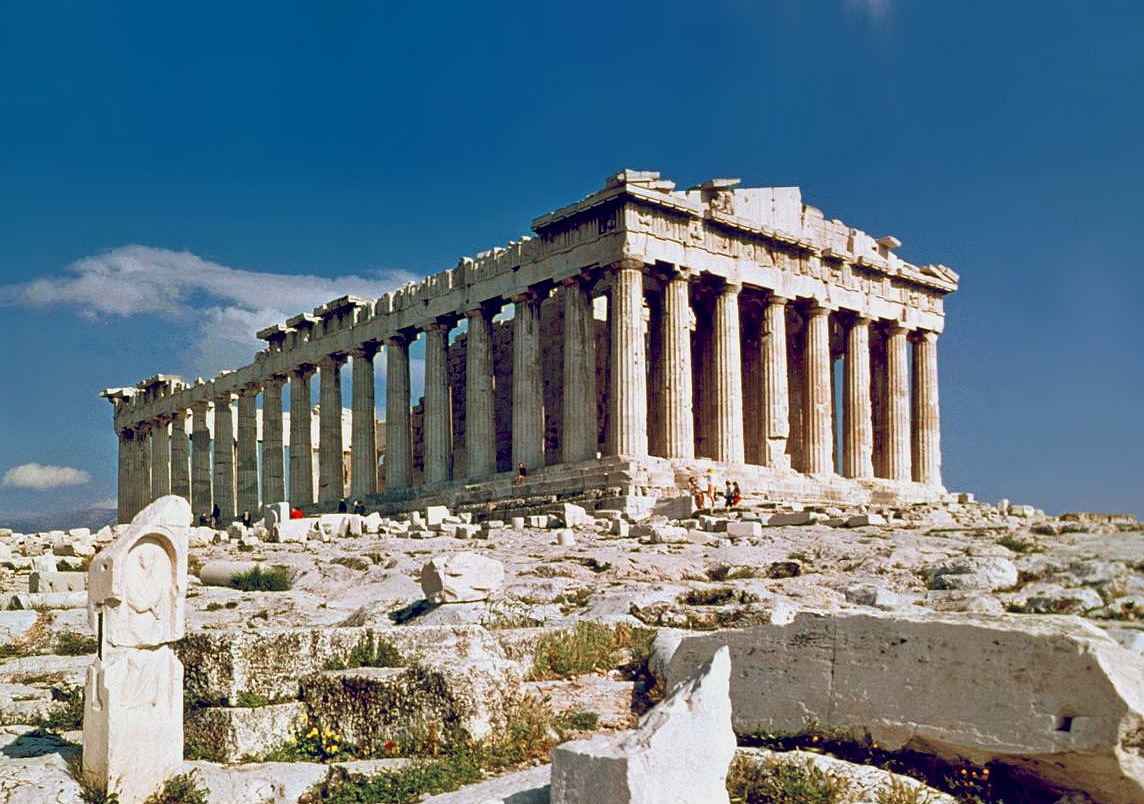
The historical roots of democracy trace back to ancient Athens, around the 5th century BCE, where citizens directly participated in governance. However, this was a limited democracy, excluding women, slaves, and foreigners. The concept re-emerged in various forms throughout history, notably with the development of republicanism in Ancient Rome and later through the Enlightenment thinkers. The American and French Revolutions in the late 18th century were pivotal moments, embedding democratic ideals into modern nation-states, though the struggle for universal suffrage continued for centuries.
⚙️ How It Actually Works (The Mechanics)
Democracy functions through a complex interplay of institutions and processes. In a representative democracy, citizens elect legislators to make laws, an executive branch to implement them, and an independent judiciary to interpret them. Key mechanisms include regular elections, constitutional checks and balances, freedom of the press to inform the public, and the right to protest and organize. The health of a democracy often depends on the robustness of its civil society and the active participation of its citizens beyond just voting.
💸 Costs & Benefits
The 'price' of democracy is often framed in terms of the resources required for elections, public services, and maintaining institutions. However, the benefits are argued to be immense: greater political stability, protection of human rights, and policies that are more responsive to public needs. The economic impact is debated, with some studies suggesting democracies foster more sustainable economic growth due to predictability and rule of law, while others point to potential inefficiencies and slower decision-making compared to more authoritarian models. The intangible 'cost' is the constant vigilance required from citizens.
🤔 Common Criticisms & Counterarguments
Democracy faces persistent criticisms. One major critique is the 'tyranny of the majority,' where the interests of minority groups can be overlooked or suppressed. Another is the potential for political polarization and gridlock, making effective governance difficult. Critics also point to the influence of special interests and lobbying distorting policy outcomes, and the rise of populism sometimes undermining established norms and institutions. The speed at which democracies can respond to crises is also frequently questioned.
🚀 The Future of Democracy
The future of democracy is a subject of intense speculation and concern. Trends like rising authoritarianism, the impact of disinformation amplified by social media, and increasing economic inequality pose significant challenges. Some futurists envision enhanced forms of democracy, perhaps leveraging technology for more direct citizen input or deliberative processes. Others foresee a continued erosion of democratic norms, leading to more hybrid regimes or outright authoritarianism. The outcome hinges on the resilience of democratic institutions and the willingness of citizens to defend them.
⭐ User Reviews & Ratings
User reviews for democracy are inherently subjective and often tied to specific national contexts. Generally, established democracies receive high marks for stability and freedoms, often scoring 8/10 or higher on user satisfaction indices related to political rights and personal liberties. However, dissatisfaction frequently spikes during periods of economic downturn or political scandal, leading to lower ratings and increased calls for reform. Ratings can fluctuate dramatically based on recent election outcomes and perceived government effectiveness. It's less a product with a fixed rating and more a dynamic process.
🤝 Similar Systems & Alternatives
Democracy is often compared to other political systems. Republics share many features, often emphasizing elected representation and the rule of law, though the term 'republic' can encompass non-democratic states. Socialist democracies aim to integrate socialist economic principles with democratic governance. Anarchism, in contrast, seeks the abolition of the state entirely, advocating for decentralized, non-hierarchical forms of organization. Authoritarian and totalitarian systems represent the direct opposite, concentrating power and suppressing dissent, offering a stark contrast in terms of citizen participation and freedom.
Key Facts
- Year
- c. 508 BCE (Athenian Democracy)
- Origin
- Ancient Greece
- Category
- Political Systems
- Type
- Concept
Frequently Asked Questions
Is democracy the best form of government?
This is a perennial debate. Proponents argue it's the most effective system for protecting individual rights, promoting stability, and ensuring government accountability. Critics point to its inefficiencies, susceptibility to populism, and potential for gridlock. Many scholars, like Alfred Stepan, suggest that while flawed, it remains the most desirable system for fostering human flourishing and preventing widespread oppression compared to alternatives like authoritarianism. Its 'bestness' is often judged relative to its alternatives and the specific context in which it operates.
What's the difference between direct and representative democracy?
In direct democracy, citizens vote on laws and policies themselves, as seen in ancient Athens or modern Swiss referendums. Representative democracy, far more common today, involves citizens electing officials to make decisions on their behalf. This is often seen as more practical for large, complex societies. The US, for example, is a representative democracy, though it incorporates elements of direct democracy through initiatives and referendums at the state level.
How does money influence democracy?
The influence of money is a major point of contention. Campaign finance, lobbying, and the role of wealthy donors or corporations can significantly shape political discourse and policy outcomes. In the US, for instance, debates continue over the impact of Supreme Court decisions like Citizens United v. FEC, which expanded corporate political spending. This influence can lead to policies that favor special interests over the broader public good, a key concern for democratic health.
Can democracy fail?
Yes, democracies can fail or decline. This can happen through gradual erosion of norms, coups, civil war, or a transition to more authoritarian rule. Factors contributing to democratic backsliding include political polarization, economic instability, declining trust in institutions, and the spread of disinformation. Countries like Hungary and Turkey are often cited as examples where democratic institutions have been weakened in recent years.
What are the main types of democratic governments?
The primary distinction is between presidential systems (like the US, where the executive is separate from the legislature) and parliamentary systems (like the UK, where the executive is drawn from and accountable to the legislature). Other variations include semi-presidential systems (like France) and different electoral systems such as proportional representation versus first-past-the-post.
Is democracy compatible with capitalism?
Historically and practically, they are often intertwined, forming what is sometimes called liberal democracy or market democracy. Democratic governance provides a stable framework for market economies, while capitalism can generate wealth that supports democratic institutions. However, tensions exist, particularly concerning economic inequality and the influence of corporate power on political processes. Some social democracies attempt to mitigate these tensions through stronger social safety nets and regulation.