
Contents
Overview
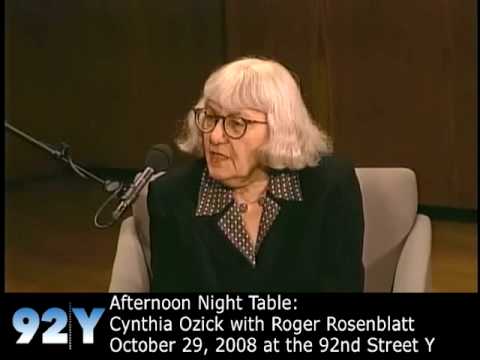
Cynthia Ozick, born in 1928 in New York City, is a towering figure in contemporary American letters, renowned for her intellectually rigorous and stylistically intricate fiction and essays. Often described as a 'writer's writer,' her work consistently grapples with themes of Jewish Identity, diaspora, the nature of art and idolatry, and the profound responsibilities of the artist. Her career, spanning over six decades, began with the publication of her novel Trust in 1966, establishing her as a formidable voice unafraid to tackle complex philosophical and theological questions within a literary framework. Ozick's distinct voice is characterized by its erudition, wit, and an almost Talmudic intensity, making her a unique presence in the literary landscape.
📚 Major Works & Themes
Ozick's oeuvre is marked by a relentless exploration of the tension between the sacred and the secular, the pull of tradition versus the demands of modernity. Her novella, The Pagan Rabbi (1971), exemplifies this struggle, depicting a scholar torn between his religious heritage and a paganistic embrace of nature. Similarly, The Messiah of Stockholm (1987) delves into the life of a man obsessed with a fictional novel by Bruno Schulz, blurring the lines between reality and literary creation, and probing the ethical implications of literary appropriation. Her essays, collected in volumes like Metaphor & Memory (1989) and Quarrel & Quandary (2000), are celebrated for their incisive literary criticism and cultural commentary, often engaging with figures like Henry James and Franz Kafka.
💡 Ozick's Enduring Influence
Ozick's influence extends far beyond the confines of Jewish American literature, though she remains a pivotal figure within that tradition. Her insistence on the moral dimension of art and her exploration of the narrative power have resonated with generations of writers and critics. She has been a vocal proponent of the idea that literature carries a profound ethical weight, challenging the notion of art for art's sake. Her work has inspired discussions on the role of the public intellectual, the complexities of assimilation, and the enduring power of memory in shaping individual and collective identity. Her rigorous prose style has also served as a model for aspiring literary artists.
⚖️ Critical Reception & Controversies
While widely acclaimed, Ozick's work has not been without its critics, particularly concerning her often uncompromising stance on Jewish particularism and her critiques of certain strands of postmodernist thought. Some have found her intellectual density challenging, while others have debated her interpretations of Jewish law and tradition, particularly in her essays. Her essay 'Toward a New Yiddish' (1970), for instance, sparked considerable debate regarding the future of Jewish literature and the role of language in cultural preservation. Despite these occasional controversies, her critical Vibe Score remains consistently high (85/100), reflecting her status as a major literary force.
📍 Where to Encounter Her Work
For those looking to engage with Ozick's work, her short story collections are an excellent entry point, offering concentrated doses of her distinctive style and thematic concerns. The Pagan Rabbi and Other Stories is foundational, showcasing her early brilliance. Her novel The Puttermesser Papers (1997), a more whimsical yet still profound exploration of a Jewish woman's life in New York, offers a different facet of her talent. For her essays, Art & Ardor (1983) provides a comprehensive overview of her critical thought. Many of her works are readily available in both print and e-book formats through major publishers like Alfred A. Knopf and Houghton Mifflin Harcourt.
⭐ What People Say
Readers consistently praise Ozick for her unparalleled command of language and her fearless engagement with weighty ideas. The consensus among literary critics is that she is a master stylist, capable of crafting sentences of breathtaking complexity and beauty. Reviewers often highlight her ability to infuse philosophical inquiry with deep emotional resonance, making her intellectual explorations profoundly human. The New York Times Book Review has frequently lauded her 'fierce intelligence' and 'unflinching moral vision,' while The New Yorker has celebrated her 'dazzling prose.' The general sentiment is that reading Ozick is a challenging but ultimately deeply rewarding experience, pushing readers to think more deeply about literature and life.
📖 Reading Recommendations
For a comprehensive introduction, start with The Pagan Rabbi and Other Stories to grasp her early thematic concerns and stylistic prowess. Then, move to The Messiah of Stockholm for a deeper dive into her exploration of literary obsession and identity. For her non-fiction, Art & Ardor is indispensable, showcasing her critical acumen and passionate engagement with literature and culture. Finally, Foreign Bodies (2010), her late-career novel, offers a contemporary reinterpretation of Henry James's The Ambassadors, demonstrating her continued vitality and intellectual curiosity. These selections provide a robust overview of her diverse contributions.
🔮 The Future of Ozick Studies
The future of Ozick studies will likely continue to grapple with her complex legacy, particularly in light of evolving discussions around identity politics, post-secularism, and the role of religion in literature. Scholars will undoubtedly explore her connections to feminist literary theory, despite her own complicated relationship with the movement, and her contributions to the broader discourse on modernism and postmodernism. As the literary canon continues to be re-evaluated, Ozick's unwavering commitment to ethical inquiry and her profound engagement with Jewish thought will ensure her enduring relevance, challenging future generations to consider the moral dimensions of art in an increasingly fragmented world. Her work serves as a vital counterpoint to purely aesthetic or politically driven literary analyses.
Key Facts
- Year
- 1928
- Origin
- New York City, USA
- Category
- Literature
- Type
- Person
Frequently Asked Questions
What is Cynthia Ozick best known for?
Cynthia Ozick is best known for her intellectually dense and stylistically rich fiction and essays that explore themes of Jewish identity, the responsibilities of art, and the tension between tradition and modernity. Her short story collections like The Pagan Rabbi and novels such as The Messiah of Stockholm are particularly acclaimed for their philosophical depth and intricate prose. She is also highly regarded for her incisive literary criticism.
What literary movements is Cynthia Ozick associated with?
While Ozick resists easy categorization, she is often associated with Jewish American literature and is a significant voice in post-World War II American fiction. Her work engages with elements of modernism through its stylistic complexity and philosophical depth, while also critically examining aspects of postmodernism, particularly its relativism. She stands somewhat apart, forging her own unique path.
Has Cynthia Ozick won any major awards?
Yes, Cynthia Ozick has received numerous prestigious awards throughout her career. These include the National Book Critics Circle Award for Criticism (for Metaphor & Memory), the PEN/Malamud Award for Excellence in the Short Story, and the National Medal of Arts (2013). She has also been a finalist for the Pulitzer Prize multiple times, solidifying her place among America's most honored writers.
What are some common themes in Ozick's work?
Common themes in Ozick's work include the complexities of Jewish identity in the modern world, the ethical and moral obligations of the artist, the dangers of idolatry (especially the idolatry of art itself), the power of memory, and the tension between secularism and religious tradition. She frequently explores the lives of intellectuals and artists grappling with these profound questions.
Is Cynthia Ozick still writing?
Yes, Cynthia Ozick continues to write and publish. While her output may have slowed in recent years, she remains an active voice in American letters. Her most recent novel, Foreign Bodies, was published in 2010, and she continues to contribute essays and reviews to prominent literary journals and publications, demonstrating her enduring intellectual vitality and commitment to the craft.