
Contents
Overview
A concept album is a musical work where individual songs are unified by a larger narrative, theme, or idea, creating a cohesive experience beyond the sum of its parts. This unity can manifest through lyrical storylines, recurring musical motifs, or a shared philosophical exploration. While the term is most commonly associated with rock music, its roots stretch back to early folk and traditional pop recordings. The precise definition remains a point of contention among critics, with some arguing for strict narrative adherence and others accepting albums of "uniform excellence" as conceptual. The format's evolution has seen it spawn subgenres like the rock opera, demonstrating its enduring influence on musical storytelling.
🎵 Origins & History
The genesis of the concept album can be traced back to early 20th century recordings. Frank Sinatra's meticulously curated albums of the 1940s and 1950s explored unified emotional landscapes, though the term "concept album" wasn't yet widely applied. The format truly gained traction in the 1960s with The Beatles' Sgt. Pepper's Lonely Hearts Club Band (1967) and The Beach Boys' Pet Sounds (1966), which pushed the boundaries of the album as a singular artistic statement. This era also saw the emergence of the rock opera, exemplified by The Who's Tommy (1969), solidifying the album's potential for extended narrative.
⚙️ How It Works
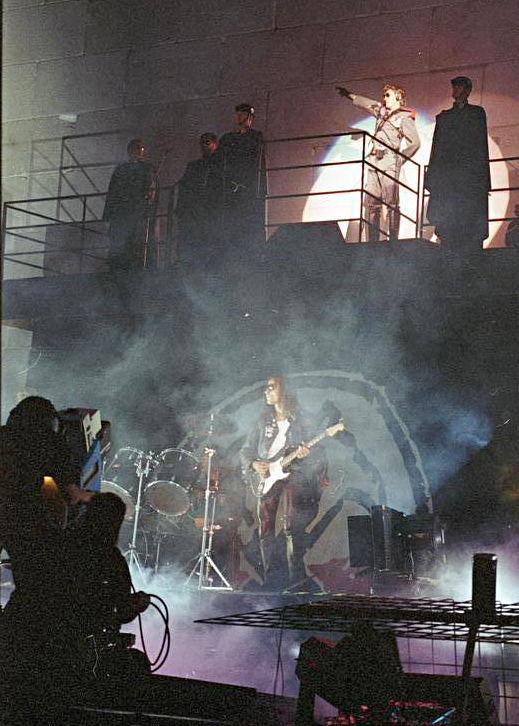
At its core, a concept album functions by establishing a unifying element that binds its tracks together. This can be a linear narrative, as seen in Pink Floyd's The Wall (1979), which chronicles the psychological breakdown of its protagonist, or a thematic exploration, like David Bowie's The Rise and Fall of Ziggy Stardust and the Spiders from Mars (1972), which centers on an alien rock star. The unity might also be purely musical, with recurring melodic fragments or harmonic structures, or even a shared mood or atmosphere, as arguably present in Miles Davis's instrumental jazz masterpiece Bitches Brew (1970). The success of a concept album often hinges on the listener's engagement with this overarching structure, encouraging repeated listens to uncover deeper connections and meanings.
📊 Key Facts & Numbers
While precise figures are elusive, the concept album has been a significant commercial force. The Beatles' Sgt. Pepper's Lonely Hearts Club Band sold over 11 million copies in the US alone, demonstrating the format's mass appeal. Pink Floyd's The Dark Side of the Moon (1973), a perennial fixture on album charts, has spent over 900 weeks on the Billboard 200, a testament to its enduring conceptual power and widespread popularity. Estimates suggest that over 50% of albums released by major rock artists in the 1970s could be classified as concept albums, highlighting its dominance during that decade. The global market for music, encompassing all genres, was valued at over $25 billion in 2022, with concept albums contributing a substantial, albeit unquantified, portion through their critical acclaim and sustained sales.
👥 Key People & Organizations
Key figures instrumental in popularizing the concept album include Frank Sinatra, whose early thematic albums laid groundwork, and The Beatles, particularly Paul McCartney and John Lennon, who pushed the artistic envelope with Sgt. Pepper. Brian Wilson of The Beach Boys is credited with creating a highly influential precursor with Pet Sounds. In the progressive rock sphere, bands like Genesis and Yes consistently released complex, narrative-driven works. Roger Waters of Pink Floyd stands out for his thematic depth and lyrical prowess, particularly on albums like The Wall. Record labels like Apple Records and Columbia Records were crucial in distributing these ambitious projects.
🌍 Cultural Impact & Influence
The concept album has profoundly shaped musical expression and listener engagement. It elevated the album from a mere collection of singles to a unified artistic statement, influencing genres from progressive rock and heavy metal to hip-hop and electronic music. Janelle Monáe with the Metropolis suite has brought conceptual narratives to contemporary R&B and hip-hop. The format encourages deeper listener immersion, fostering dedicated fan bases who dissect lyrical meanings and musical connections, often leading to extensive online discussions and fan theories on platforms like Reddit. Its influence extends to other media, inspiring films, literature, and theatrical productions.
⚡ Current State & Latest Developments
In the contemporary music landscape, the concept album continues to thrive, albeit in more diverse forms. While the overt narrative structures of the 1970s may be less common, artists are increasingly exploring thematic cohesion through sonic palettes, lyrical introspection, and interconnected visual elements. The rise of streaming platforms like Spotify and Apple Music presents both challenges and opportunities, allowing for easier distribution of longer, more complex works while also demanding constant new content.
🤔 Controversies & Debates
The definition of a concept album remains a persistent point of debate. Critics often disagree on whether a loose thematic connection or a strict narrative is required. For instance, The Beatles' Sgt. Pepper's Lonely Hearts Club Band is widely considered a landmark, yet some argue it lacks a true narrative thread, functioning more as a collection of songs under a unified aesthetic. Conversely, albums with minimal lyrical content, like Miles Davis's Bitches Brew, are sometimes championed as conceptual due to their sonic unity. The "uniform excellence" criterion, suggesting any album of consistently high quality is conceptual, is particularly contentious, as it risks diluting the term's specificity. This ambiguity fuels ongoing critical discussion and analysis.
🔮 Future Outlook & Predictions
The future of the concept album likely lies in its continued adaptation to new technologies and artistic sensibilities. We may see more artists utilizing augmented reality or interactive digital components to enhance conceptual narratives, creating immersive experiences that extend beyond the audio. The increasing fragmentation of music consumption could lead to more "thematic suites" within albums or interconnected EPs rather than monolithic full-length works. Furthermore, as AI-generated music evolves, the concept of a human-curated conceptual work might gain even greater artistic value, emphasizing intentionality and emotional depth. The potential for cross-media conceptual projects, blending music with visual art, gaming, and literature, is also significant.
💡 Practical Applications
Concept albums offer a rich framework for artistic expression and listener engagement. They are utilized across genres to explore complex themes, tell compelling stories, and create immersive sonic worlds. In rock, they provide a vehicle for epic narratives and social commentary. In jazz, instrumental concept albums allow for intricate improvisational journeys around a central idea. Even in pop, artists use thematic albums to articulate personal growth or societal observations. Beyond music, the principles of concept albums – unified themes, narrative arcs, and cohesive artistic vision – can be applied to filmmaking, literature, and even video game design, demonstrating their broad applicability as a storytelling and artistic structure.
Key Facts
- Category
- culture
- Type
- topic