
Contents
Overview
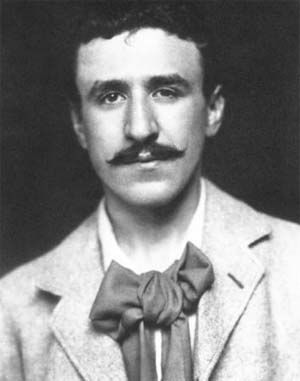
Charles Rennie Mackintosh (1868-1928) was a Scottish architect, designer, and artist whose distinctive style profoundly influenced European design. Born in Glasgow, he developed a unique aesthetic characterized by geometric forms, flowing lines, and a restrained color palette, often incorporating symbolism. His work, alongside that of his wife, Margaret Macdonald, became synonymous with the Glasgow Style and was a significant force in the Art Nouveau and Secessionist movements. Mackintosh's designs extended beyond buildings to furniture, textiles, and graphic art, demonstrating a holistic approach to design that resonated with contemporaries like Josef Hoffmann and continues to inspire designers today.
🎵 Origins & History
Charles Rennie Mackintosh's artistic journey began in Townhead, Glasgow. His early training at the Allan Glen's School and later at the Glasgow School of Art provided the foundational skills that would blossom into his signature style. It was during this period that he met Margaret Macdonald, who would become his wife and artistic collaborator, forming the core of what would be known as 'The Four' – a group that also included her sister Frances Macdonald and Herbert MacNair. Their collective work introduced their distinctive Glasgow Style to a wider European audience and challenged prevailing Victorian design norms.
⚙️ How It Works
Mackintosh's design philosophy was a deliberate synthesis of influences, blending the organic forms of Art Nouveau with the geometric rigor of Arts and Crafts principles and the emerging Art Deco sensibilities. His architectural projects, most famously the Glasgow School of Art, exemplify this. He employed a distinctive palette of muted colors, often featuring white, cream, and subtle pastels, contrasted with dark, elongated forms. His signature 'Mackintosh Rose' motif, a stylized floral element, appeared across various media, from stained glass to furniture. The interiors he designed were meticulously planned, with furniture, lighting, and decorative elements all conceived as part of a unified whole, creating immersive environments that were both functional and highly artistic.
📊 Key Facts & Numbers
Mackintosh's career spanned several decades, during which he produced an impressive body of work. His architectural output was relatively modest in scale, but his influence was vast, impacting design movements across Europe and beyond. His most significant architectural commission, the Glasgow School of Art, remains a notable example of his work.
👥 Key People & Organizations
Beyond his wife, Margaret Macdonald, whose ethereal and symbolic artwork complemented his own, Mackintosh's professional circle was significant. He worked closely with architects like John Burnet and George Walton. His association with the Glasgow School of Art was central to his career, both as a student and later as a teacher and designer. His work was championed by figures such as Hermann Muthesius in Germany. The Charles Rennie Mackintosh Society continues to preserve and promote his legacy, advocating for the conservation of his buildings and the appreciation of his design principles.
🌍 Cultural Impact & Influence
Mackintosh's impact on design is undeniable, extending far beyond his native Scotland. His fusion of art and architecture, characterized by its elegant lines and symbolic depth, was a crucial bridge between the Arts and Crafts movement and the burgeoning Art Deco style. His work significantly influenced the Vienna Secession movement, with his designs being admired in Austria, and in turn, he was influenced by Austrian designers like Josef Hoffmann. The 'Glasgow Style' he co-created became a distinct national contribution to international design. His approach to the total environment—where every element from building to teaspoon was considered—laid groundwork for later modernist ideals, even as his highly personal, symbolic aesthetic set him apart from purely functionalist approaches.
⚡ Current State & Latest Developments
Mackintosh's legacy is actively maintained through the preservation and restoration of his surviving works. The Glasgow School of Art remains a vital educational institution. The House for an Art Lover in Glasgow, built posthumously from his designs, is a major tourist attraction and exhibition space. His furniture and decorative objects are highly sought after by collectors and museums worldwide, with pieces frequently appearing at auction. Contemporary designers continue to draw inspiration from his unique blend of geometric precision and organic grace, ensuring his aesthetic remains relevant in fields from interior design to fashion.
🤔 Controversies & Debates
One of the persistent debates surrounding Mackintosh concerns the extent to which his work was truly original or derivative. While he absorbed influences from Art Nouveau, Japonisme, and the Arts and Crafts, his synthesis was so distinctive that it forged a unique style. Another point of contention has been the preservation of his buildings; the loss of structures like The Garrick Theatre in London (demolished 1960) and the Glasgow Railway Terminus (demolished 1966) highlights the vulnerability of architectural heritage. Furthermore, the interpretation of his symbolism, particularly the 'Mackintosh Rose,' has been subject to various scholarly analyses, with some seeing it as purely decorative and others as imbued with deeper personal or spiritual meaning.
🔮 Future Outlook & Predictions
The future of Mackintosh's work lies in the continued appreciation and adaptive reuse of his architectural heritage, alongside the ongoing inspiration his designs provide. As urban development continues, the challenge of preserving his built environment will persist, potentially leading to more creative solutions for integrating his structures into modern cityscapes. His influence is likely to remain strong in design education, with students and practitioners continuing to study his approach to form, space, and ornamentation. The enduring appeal of his aesthetic suggests that new interpretations and applications of his style will continue to emerge in fields ranging from product design to digital art, ensuring his vision remains a vibrant force.
💡 Practical Applications
Mackintosh's designs have found practical application across a wide spectrum of fields. His architectural work, though limited, serves as a benchmark for integrated design, where buildings like the Glasgow School of Art demonstrate how structure, interior, and decoration can coalesce. His furniture, such as the iconic 'Hill House' chair, is still produced and sought after for its elegant form and craftsmanship. Beyond architecture and furniture, his influence is seen in textiles, glassware, and graphic design, with his distinctive lettering and stylized motifs frequently referenced. The Willow Tea Rooms in Glasgow, meticulously restored, offers a tangible experience of his interior design vision, allowing visitors to immerse themselves in his meticulously crafted environments.
Key Facts
- Category
- aesthetics
- Type
- topic