
Contents
Overview
Cement production is the industrial process of manufacturing cement, a critical binder used globally in construction to create concrete and mortar. This process involves heating raw materials like limestone and clay in kilns to produce clinker, which is then ground with gypsum into the final powder. Globally, over 4 billion tons of cement are produced annually, making it the second most consumed resource after water. Its widespread use underpins modern infrastructure, from skyscrapers and bridges to roads and dams. However, cement manufacturing is also a significant contributor to global CO2 emissions, accounting for approximately 8% of the total, primarily from the calcination of limestone and the combustion of fuels. This has spurred intense research into decarbonization strategies, including alternative fuels, clinker substitutes, and carbon capture technologies, positioning cement production at a critical juncture between essential infrastructure development and environmental sustainability.
🎵 Origins & History
The genesis of cement production traces back to ancient civilizations. Early forms of cementitious materials were used by the Egyptians around 4000 BCE for pyramid construction, employing a mix of calcined gypsum and sand. The Greeks later developed a pozzolanic cement by adding volcanic ash to lime, a technique refined by the Romans for monumental structures. The modern era of cement began with Joseph Aspdin, an English bricklayer, who patented Portland cement, named for its resemblance to Portland stone. Aspdin's process involved calcining a mixture of limestone and clay, a fundamental innovation that laid direct groundwork for today's industrial-scale production. His son, William Aspdin, further improved the process by developing a higher-temperature clinkering method, crucial for achieving the desired cementitious properties.
⚙️ How It Works
At its core, cement production is a high-temperature thermochemical process. The primary raw materials, predominantly limestone (calcium carbonate) and clay (silicates and aluminates), are quarried, crushed, and finely ground into a homogeneous mixture known as raw meal. This meal is fed into a rotary kiln, a long, rotating cylinder inclined at a slight angle, where it is heated to temperatures between 1400°C and 1500°C. During this intense heating, a series of chemical reactions occur, including the decomposition of calcium carbonate into calcium oxide and carbon dioxide (calcination), and the formation of new mineral phases collectively called clinker. The clinker, a nodular material, is then rapidly cooled and ground into a fine powder with a small amount of gypsum (calcium sulfate) added to control the setting time. This final product is the ubiquitous Portland cement that binds aggregates into concrete.
📊 Key Facts & Numbers
The scale of cement production is staggering. Globally, over 4.2 billion metric tons of cement were produced in 2022, according to the Global Cement and Concrete Association (GCCA). China alone accounts for approximately 55-60% of this global output, producing over 2.5 billion tons in 2022. The United States produced around 90 million metric tons in the same year. The energy required for this process is immense; a typical cement plant consumes energy equivalent to that of a small city, with fuel costs representing a significant portion of operational expenses. The CO2 emissions from cement production are estimated at 2.5 to 3 billion tons annually, contributing about 8% of total global anthropogenic CO2 emissions, a figure that dwarfs emissions from the aviation industry. The market value of the global cement industry is projected to reach over $350 billion by 2027.
👥 Key People & Organizations
Key figures in cement production span inventors, industrialists, and modern innovators. Joseph Aspdin is credited with patenting Portland cement in 1824, revolutionizing construction materials. His son, William Aspdin, further refined the manufacturing process. In the early 20th century, companies like Cemex and Holcim emerged as global giants, driving industrialization and market expansion. More recently, figures like Erik Thoresen, CEO of Norcem, have been at the forefront of exploring low-carbon cement technologies. Organizations such as the Cement Kiln Organization and the Global Cement and Concrete Association (GCCA) play crucial roles in industry standards, research, and advocacy, pushing for sustainable practices and innovations in materials science.
🌍 Cultural Impact & Influence
Cement's influence on human civilization is profound, enabling the construction of everything from ancient aqueducts to modern megastructures. The development of concrete as a versatile building material, powered by cement, has shaped urban landscapes and facilitated global development. It's a foundational element in the Industrial Revolution and continues to be indispensable for infrastructure projects worldwide. The ubiquity of cement has also led to its presence in popular culture, often symbolizing strength, permanence, and the built environment. However, its environmental footprint has also become a significant cultural talking point, driving public awareness and demand for greener alternatives, as seen in the growing interest in green concrete and sustainable building practices.
⚡ Current State & Latest Developments
The cement industry is currently in a state of intense transformation, driven by the urgent need to decarbonize. Companies are investing heavily in alternative fuels (like waste-derived fuels) to replace fossil fuels in kilns. Innovations in clinker substitutes, such as fly ash and ground granulated blast-furnace slag (GGBS), are being scaled up to reduce the clinker content in cement, thereby lowering CO2 per ton. Companies like Heidelberg Materials and Titan Cement are piloting carbon capture, utilization, and storage (CCUS) technologies. The development of calcium sulfoaluminate cements (CSA cements) and other novel cement chemistries that require lower production temperatures is also gaining traction. The European Union's push for net-zero emissions by 2050 is accelerating these developments, with new regulations and incentives shaping production strategies.
🤔 Controversies & Debates
The primary controversy surrounding cement production is its substantial contribution to global greenhouse gas emissions. Critics argue that the industry's decarbonization efforts, while progressing, are not yet sufficient to meet global climate targets, such as those outlined in the Paris Agreement. Debates also arise over the sourcing of raw materials, land use impacts of quarries, and the potential health effects of cement dust. Furthermore, the economic viability of greener cement technologies, which often have higher upfront costs, remains a point of contention, particularly in developing economies heavily reliant on affordable construction materials.
🔮 Future Outlook & Predictions
The future of cement production is inextricably linked to sustainability and innovation. Experts predict a significant shift towards blended cements and cements with reduced clinker content, potentially lowering CO2 emissions by 30-50% within the next decade. The widespread adoption of CCUS technologies in cement plants is seen as a critical pathway to achieving near-zero emissions, though significant cost and infrastructure challenges remain. Research into entirely new cementitious binders, such as geopolymers and magnesium-based cements, could offer radical alternatives. The building sector's increasing demand for sustainable construction materials will likely drive further investment and regulatory pressure. By 2050, the goal is to achieve net-zero emissions for cement production, a monumental task requiring unprecedented collaboration between industry, governments, and researchers.
💡 Practical Applications
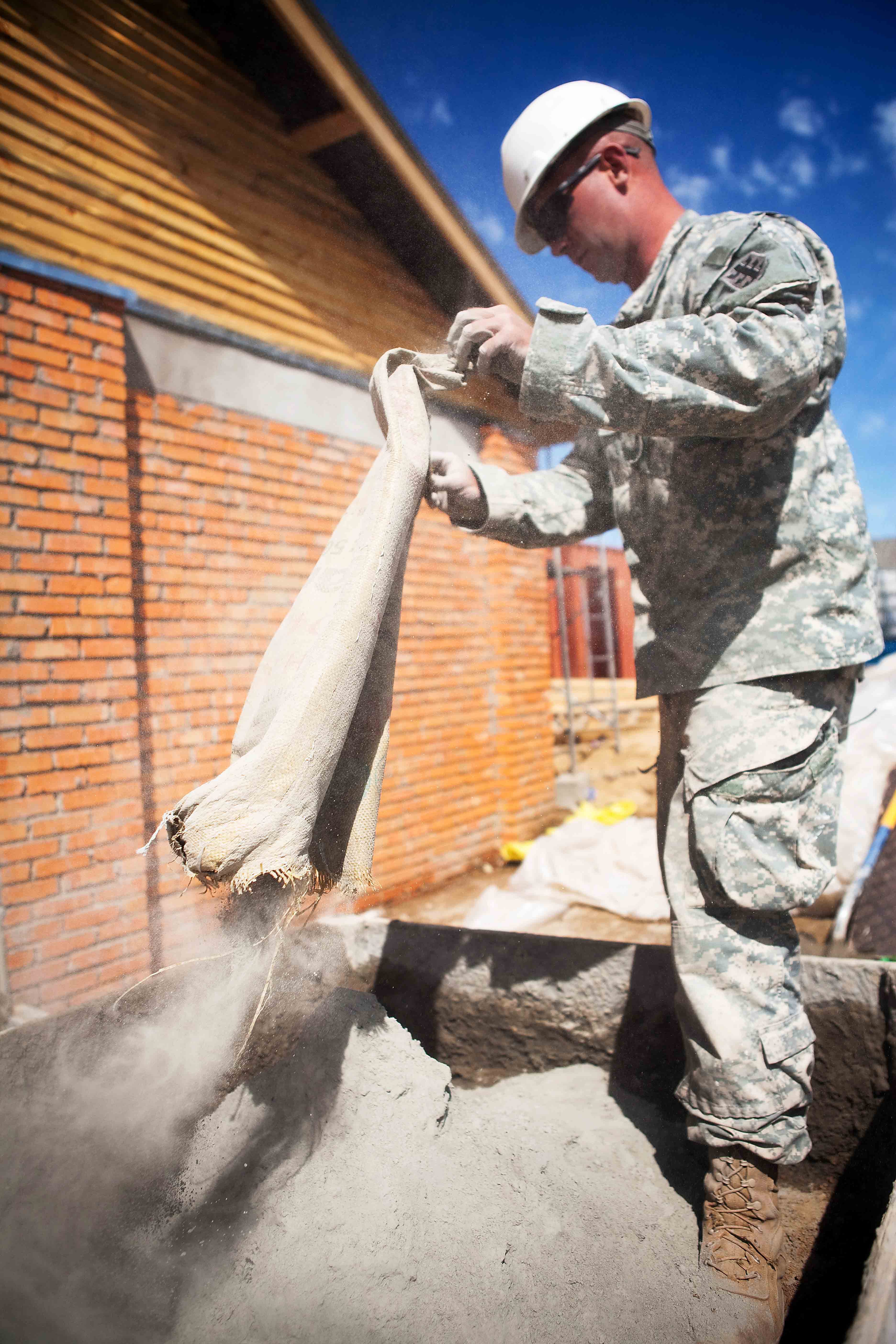
Cement's primary application is as a binder in concrete, the most widely used construction material globally. When mixed with aggregates (sand, gravel, crushed stone) and water, cement forms concrete, which is used for foundations, buildings, bridges, roads, dams, and countless other structures. It is also used in mortar to bind bricks and stones in masonry. Beyond structural applications, cement is used
Key Facts
- Category
- technology
- Type
- topic