
Contents
Overview
Catholic ecumenism refers to the efforts and initiatives undertaken by the Catholic Church to promote unity among all Christians. Historically, the Church viewed other Christian denominations as separated brethren, heretics, or schismatics. However, the landscape dramatically shifted with the Second Vatican Council (1962-1965), which formally embraced the modern ecumenical movement. This council produced key documents like the decree Unitatis Redintegratio and the declaration Dignitatis Humanae, fundamentally altering the Church's approach to inter-Christian relations. The establishment of the Pontifical Council for Promoting Christian Unity in 1960, prior to the council's conclusion, signaled a new institutional commitment. While significant progress has been made, particularly with Eastern Orthodox and Protestant communities, challenges and theological differences persist, making Catholic ecumenism a dynamic and ongoing endeavor.
🎵 Origins & History
The roots of Catholic engagement with Christian unity stretch back centuries, marked by periods of both separation and tentative dialogue. For much of its history, the Catholic Church maintained a stance of doctrinal exclusivity, viewing other Christian bodies as outside its salvific mission. The Great Schism of 1054, which formally divided the Eastern Orthodox Church from Rome, and the Protestant Reformation in the 16th century, created deep theological and ecclesiological divides. Early attempts at reconciliation, such as the Council of Florence (1439), ultimately failed to achieve lasting unity. The modern ecumenical movement, gaining momentum in the late 19th and early 20th centuries, initially saw limited Catholic participation. However, the election of Pope John XXIII in 1958, who convened the Second Vatican Council, marked a pivotal turning point. His vision for aggiornamento, or 'updating,' opened the door for a more inclusive and dialogical approach to other Christians, transforming centuries of established practice.
⚙️ How It Works
Catholic ecumenism operates through a multi-pronged strategy involving dialogue, shared prayer, and collaborative action. The Pontifical Council for Promoting Christian Unity serves as the primary Vatican office, coordinating official dialogues with various Christian communions. These dialogues involve theologians and scholars from both sides, meticulously examining doctrinal differences and seeking common ground on issues such as the nature of the Church, sacraments, and authority. Beyond formal theological discussions, local dioceses and parishes engage in ecumenical initiatives, including joint prayer services, shared social justice projects, and mutual support. The concept of 'separated brethren,' while still acknowledging doctrinal divergence, emphasizes the shared baptism and elements of sanctification found in other Christian communities, as articulated in Unitatis Redintegratio. This approach aims to foster mutual understanding and respect, paving the way for eventual visible unity.
📊 Key Facts & Numbers
The Catholic Church's engagement in ecumenism involves significant global reach and impact. Official dialogues have been established with numerous major Christian communions. Despite these efforts, full communion remains elusive with most denominations.
👥 Key People & Organizations
Several key figures and organizations have shaped the trajectory of Catholic ecumenism. Pope John XXIII (papacy 1958-1963) initiated the Second Vatican Council, setting the stage for modern ecumenical engagement. Pope Paul VI (papacy 1963-1978) continued this work. Pope John Paul II (papacy 1978-2005) was a tireless advocate for Christian unity, undertaking numerous ecumenical initiatives and publishing the encyclical Ut Unum Sint (1995), which called for renewed efforts toward unity. Cardinal Karl Lehmann, a prominent German theologian, played a significant role in dialogues with Protestant churches. The Pontifical Council for Promoting Christian Unity remains the central institutional body, working under the direction of its presidents, such as Cardinal Kurt Koch (appointed 2010). Organizations like the World Council of Churches also serve as crucial platforms for interdenominational cooperation.
🌍 Cultural Impact & Influence
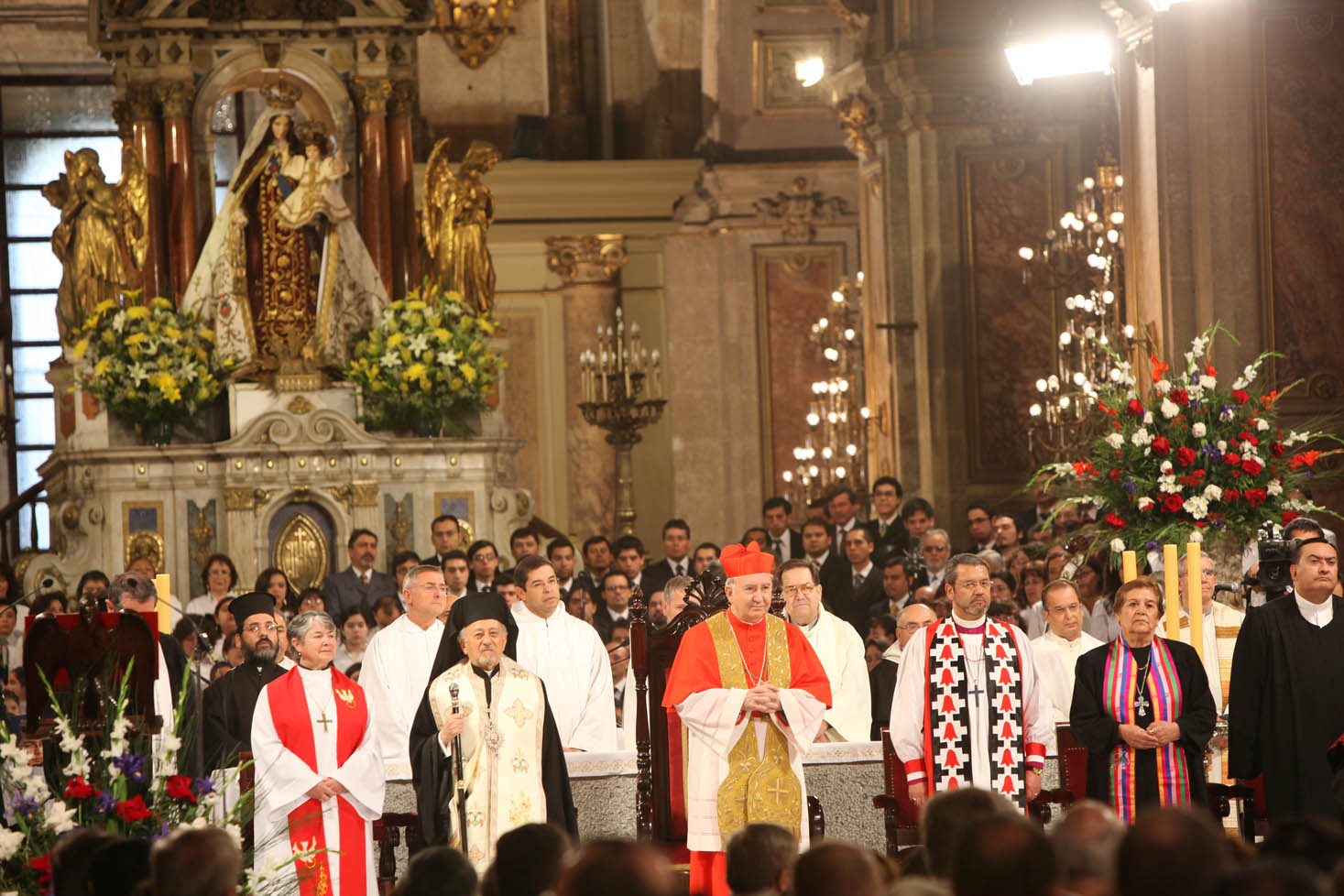
The impact of Catholic ecumenism extends far beyond theological circles, influencing global interfaith relations and societal perceptions of Christianity. The shift from condemnation to dialogue has fostered a more charitable and cooperative spirit among Christians, reducing historical animosities. This has translated into tangible benefits, such as joint humanitarian efforts by Catholic and Protestant organizations in regions affected by poverty and conflict. The ecumenical movement has also influenced the development of shared ethical frameworks on issues like social justice and religious freedom. For many individuals, ecumenism has led to personal friendships and a deeper appreciation for the faith traditions of others, breaking down long-standing prejudices. The visibility of Catholic leaders engaging with leaders from other denominations, such as Archbishops of Canterbury and Ecumenical Patriarchs, has normalized inter-Christian relations in the public sphere.
⚡ Current State & Latest Developments
In 2024 and beyond, Catholic ecumenism is navigating a complex global landscape. Recent dialogues have focused on shared challenges, including secularization, the role of faith in public life, and the persecution of Christians worldwide. The Catholic Church continues to engage in bilateral conversations with major communions, with ongoing discussions addressing ecclesiology, the Eucharist, and the nature of ministry. Pope Francis has consistently emphasized fraternity and dialogue, engaging in historic meetings with leaders from various Christian traditions, including the Eastern Orthodox Church and Anglican leaders. However, certain tensions persist, particularly concerning the Society of Saint Pius X (SSPX), a traditionalist group whose irregular canonical status presents ongoing ecumenical challenges. The ongoing efforts to bridge divides with Protestant denominations, particularly on issues of sacramental theology, remain a key focus.
🤔 Controversies & Debates
Catholic ecumenism is not without its controversies and debates. A significant point of contention historically has been the Catholic doctrine of papal primacy and infallibility, which remains a major obstacle to full communion with Eastern Orthodox and many Protestant churches. The status of the Society of Saint Pius X (SSPX), a traditionalist Catholic group excommunicated in 2009 and whose excommunications were lifted in 2009 but canonical status remains irregular, highlights internal Church divisions regarding ecumenical engagement. Some conservative Catholics express concern that ecumenical efforts may lead to a watering down of Catholic doctrine or compromise its unique claims. Conversely, some non-Catholic Christians view the Catholic Church's emphasis on its own unique role as a barrier to genuine equality in dialogue. The use of the term 'separated brethren,' while intended to be respectful, is still debated by some denominations who prefer to be recognized as fully constituted churches.
🔮 Future Outlook & Predictions
The future of Catholic ecumenism hinges on continued theological dialogue, mutual understanding, and a willingness to address deeply entrenched differences. Experts predict that dialogues will increasingly focus on practical cooperation in areas of shared concern, such as social justice, environmental stewardship, and interreligious dialogue. The role of lay peop
Key Facts
- Category
- movements
- Type
- topic