
Contents
- 🎵 Origins & Domestication
- ⚙️ Mechanisms of Behavior
- 📊 Key Behavioral Traits & Statistics
- 👥 Key Researchers & Organizations
- 🌍 Cultural Significance & Human Interaction
- ⚡ Modern Research & Trends
- 🤔 Controversies & Debates
- 🔮 Future of Canine Behavior Study
- 💡 Practical Applications
- 📚 Related Topics & Deeper Reading
- References
Overview
Canine behavior encompasses the complex spectrum of actions, reactions, and social interactions exhibited by domestic dogs (Canis lupus familiaris). Shaped over tens of thousands of years of co-evolution with humans, this behavior is a fascinating interplay of innate genetic predispositions and learned responses influenced by environment, training, and social context. Dogs possess remarkable social-cognitive abilities, enabling them to understand human cues and communicate effectively, a trait that underpins their status as 'man's best friend.' Understanding canine behavior is crucial for effective training, responsible pet ownership, and addressing behavioral issues that can impact both dog and human welfare. The field draws on ethology, comparative psychology, and neuroscience to unravel the motivations behind a wagging tail, a protective growl, or a playful pounce.
🎵 Origins & Domestication
Early humans likely benefited from these proto-dogs as hunting partners and guardians, fostering a symbiotic relationship that profoundly shaped canine behavior. The domestication process itself is a subject of ongoing debate, with theories ranging from self-domestication to active human intervention, each proposing different pathways for the behavioral divergence from wolves. The genetic underpinnings of these behavioral shifts, such as variations in genes related to neurotransmitter pathways like serotonin and dopamine, are actively being investigated by scientists at institutions like the max-planck-institute-for-evolutionary-anthropology.
⚙️ Mechanisms of Behavior
Canine behavior is driven by a complex interplay of physiological and neurological processes. Hormones like cortisol (stress) and oxytocin (bonding) play significant roles in a dog's emotional state and social interactions. The canine brain, while smaller than a human's, is highly attuned to social cues, with specialized areas processing auditory, olfactory, and visual information crucial for understanding their environment and social partners. For instance, their olfactory bulb is proportionally much larger than ours, enabling them to perceive the world through scent in ways we can barely comprehend, influencing behaviors like tracking and social recognition. Learning plays a critical role, with dogs exhibiting classical conditioning (associating stimuli, like a leash with a walk), operant conditioning (learning through consequences, such as receiving a treat for sitting), and observational learning. The hypothalamus and amygdala are key brain regions involved in regulating emotions, drives, and responses to stimuli, directly impacting behaviors from aggression to affection. Understanding these internal mechanisms is fundamental to interpreting why dogs act the way they do.
📊 Key Behavioral Traits & Statistics
The sheer diversity of canine behavior is staggering, with over 340 recognized breeds exhibiting distinct behavioral profiles. For example, border-collies are renowned for their intense herding drive, often exhibiting stalking and 'eye' behaviors even without livestock, while beagles are driven by their powerful scent-tracking instincts, leading to persistent baying and exploration. Social behaviors are paramount, with greetings often involving sniffing, tail wagging (with directionality indicating emotional valence), and body posture. Aggression, while often misunderstood, is a complex behavior with multiple triggers, including fear, resource guarding, and territoriality, and its prevalence varies significantly by breed and individual experience.
👥 Key Researchers & Organizations
The scientific study of canine behavior has been significantly advanced by numerous researchers and organizations. Dr. ian-d-dunbar, a veterinarian and animal behaviorist, pioneered positive reinforcement training methods, emphasizing early socialization and reward-based techniques. patricia-mccconnell, an ethologist and author, has made substantial contributions to understanding dog communication and behavior through her books and research. The American Kennel Club (AKC) and the The Kennel Club (UK) not only maintain breed standards but also fund research into canine health and behavior, often focusing on breed-specific traits. The Dog Behavior College and the Institute of Modern Dog Trainers (IMDT) are prominent educational institutions providing training and certification for professionals in the field. These entities collectively shape the understanding and application of canine behavior science, from academic research to practical training methodologies.
🌍 Cultural Significance & Human Interaction
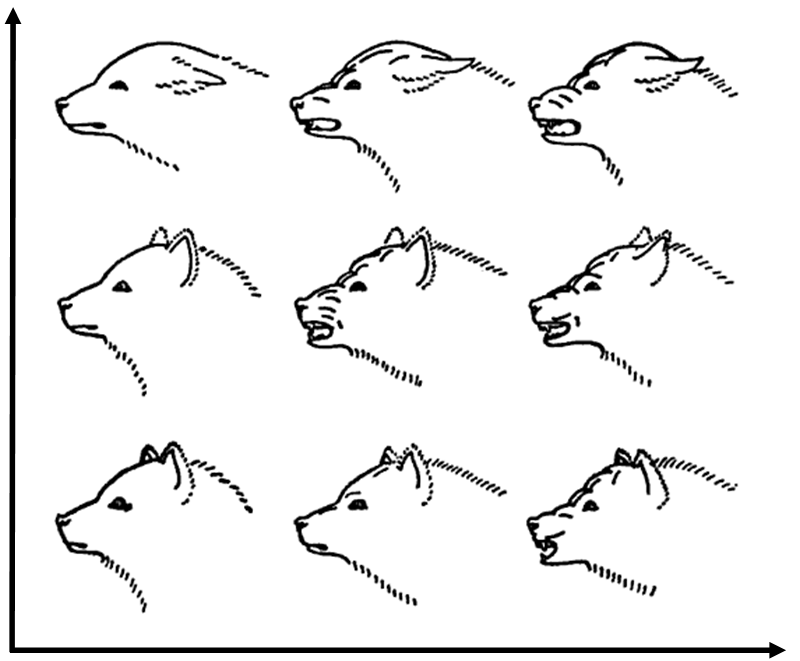
Canine behavior is inextricably linked to human culture and interaction, a bond forged over millennia. Dogs have been integrated into human societies in myriad roles: as working partners in herding, guarding, and hunting; as companions providing emotional support and reducing stress; and even as therapeutic agents in animal-assisted interventions. The human tendency to anthropomorphize dogs—attributing human emotions and intentions to them—profoundly influences how we interpret and respond to their behavior. This can lead to misunderstandings, such as punishing a dog for 'guilt' when it is actually displaying appeasement behaviors due to fear of punishment. Conversely, understanding canine communication, such as the subtle nuances of tail wags and ear positions, allows for deeper, more harmonious relationships. The rise of social media platforms like instagram-com and tiktok-com has further amplified the cultural presence of dogs, showcasing diverse behaviors and human-dog interactions to a global audience.
⚡ Modern Research & Trends
Contemporary research in canine behavior is pushing boundaries with advancements in technology and methodology. Duke University's Canine Cognition Center and similar institutions are employing sophisticated tools like eye-tracking and EEG to study canine perception, decision-making, and emotional states. Citizen science initiatives, where pet owners contribute behavioral data through apps like Dog Brain, are also providing unprecedented volumes of real-world information. There's a growing emphasis on understanding the impact of genetics on behavior, with ongoing genome-wide association studies (GWAS) identifying specific genetic markers linked to traits like fearfulness, aggression, and trainability. The application of artificial intelligence in analyzing vast datasets of video footage of dog behavior is also emerging, promising new insights into subtle patterns and correlations previously undetectable by human observers. The focus is increasingly shifting towards a more holistic understanding, integrating genetics, environment, and individual experience.
🤔 Controversies & Debates
The interpretation and management of canine behavior are rife with debate. One persistent controversy surrounds the efficacy and ethics of dominance-based training methods, often associated with figures like Cesar Millan, versus positive reinforcement approaches. Critics argue that dominance theory, largely debunked in ethological research, can lead to fear-based training and exacerbate behavioral problems, while proponents maintain it can be effective for certain issues. Another area of contention is the role of genetics versus environment in shaping behavior, particularly concerning breed-specific aggression. While breed predispositions are acknowledged, the extent to which they dictate individual behavior, versus factors like socialization, training, and owner handling, remains a point of discussion. The use of aversive tools, such as shock collars and prong collars, is also highly debated, with animal welfare organizations advocating for their ban due to potential physical and psychological harm, while some trainers argue for their judicious use in specific c
🔮 Future of Canine Behavior Study
The study of canine behavior is continually evolving, with future research likely to delve deeper into the neurobiological underpinnings of complex social cognition, the long-term effects of early life experiences on adult behavior, and the development of more sophisticated, non-invasive methods for assessing canine welfare and emotional states. Advances in genetic sequencing and epigenetics will undoubtedly shed more light on how environmental factors interact with inherited predispositions to shape individual behavioral profiles. The integration of machine learning and big data analytics will also play an increasingly significant role in identifying subtle behavioral patterns and predicting potential behavioral issues before they become problematic. Furthermore, a greater understanding of interspecies communication and the nuances of the human-animal bond will likely lead to more effective and empathetic human-dog interactions.
💡 Practical Applications
Understanding canine behavior has direct practical applications across various domains. For pet owners, knowledge of canine communication, learning theory, and breed-specific needs is essential for building strong relationships, implementing effective training, and ensuring the well-being of their pets. In professional dog training and behavior modification, evidence-based techniques derived from scientific research are crucial for addressing issues such as separation anxiety, aggression, and fearfulness. In animal shelters and rescue organizations, understanding behavior is vital for assessing adoptability, managing stress in kennels, and facilitating successful rehoming. Furthermore, the insights gained from studying canine behavior inform the design of animal-assisted therapy programs, guide the selection and training of assistance dogs, and contribute to conservation efforts for related wild canids. The field also plays a role in legal contexts, such as in assessing animal behavior for bite incidents or custody disputes.
Key Facts
- Category
- science
- Type
- topic