
Contents
Overview
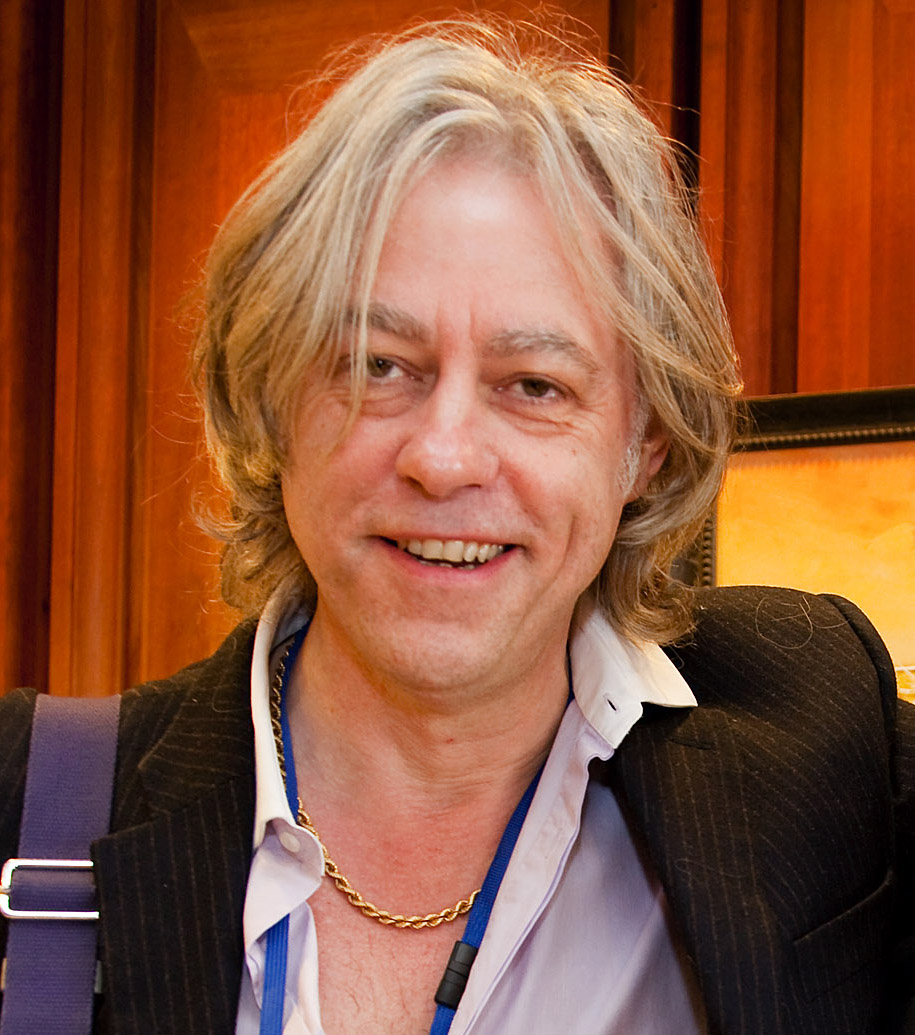
Bob Geldof is a figure who transcends mere musical stardom, embodying a potent blend of punk-infused rock and relentless humanitarian activism. As the charismatic frontman of The Boomtown Rats, he spearheaded a sound that captured the zeitgeist of late 1970s and early 1980s Britain, delivering anthems that were both commercially successful and socially charged. His iconic status, however, was cemented not just by hits like "I Don't Like Mondays" or "Rat Trap," but by his audacious and impactful foray into global charity, most notably through the creation of Live Aid and its predecessor, Band Aid. This dual identity—rock star and global crusader—has defined his public persona for decades, making him a polarizing yet undeniably influential force.
Geldof's career is a study in contrasts. He emerged from the Dublin music scene, bringing a raw, often confrontational energy to his performances, channeling the spirit of punk rock and new wave. Yet, he also possessed a keen knack for pop melody and storytelling, enabling The Boomtown Rats to achieve significant chart success. Post-Rats, his solo career has been more sporadic, often overshadowed by his monumental charitable endeavors. It's this latter aspect—the tireless organizer, the impassioned speaker, the man who famously told Margaret Thatcher "we won't be fobbed off"—that has solidified his place in the public consciousness, often eclipsing his musical contributions in broader discussions.
Early Life & Musical Beginnings
Born Robert Frederick Zenon Geldof on October 5, 1951, in Dún Laoghaire, County Dublin, Ireland, Bob Geldof's early life was marked by a working-class upbringing and a restless spirit. He was influenced by the raw energy of early rock and roll and the burgeoning sounds of glam rock and proto-punk bands like The Stooges and David Bowie. After a series of odd jobs and a brief stint in Canada, Geldof returned to the UK, immersing himself in the London music scene. He joined The Boomtown Rats in 1975, quickly becoming their focal point with his commanding stage presence and provocative lyrics, steering the band towards a sound that blended punk's aggression with new wave's melodic sensibilities.
The Boomtown Rats & Musical Career
The Boomtown Rats achieved considerable success in the late 1970s and early 1980s, releasing five studio albums and scoring several UK and international hits. Their 1978 single "Rat Trap" became the first 'new wave' single to top the UK charts, followed by the globally recognized "I Don't Like Mondays" in 1979, a poignant and controversial song inspired by a school shooting incident in San Diego. The band's discography includes albums like "The Boomtown Rats" (1977), "A Tonic for the Tears" (1978), "The Fine Art of Self-Destruction" (1980), and "In the Long Grass" (1982). After the band's dissolution in 1986, Geldof pursued a solo career, releasing albums such as "Deep in the Heart of Nowhere" (1986) and "The Vegetarians of Love" (1990), though these did not reach the commercial heights of his band's work.
Humanitarian Crusades: Band Aid & Live Aid
Bob Geldof's legacy is inextricably tied to his role as a global humanitarian. His most significant contributions lie in his pioneering efforts to raise awareness and funds for famine relief. In 1984, he co-wrote "Do They Know It's Christmas?" with Midge Ure, bringing together a supergroup of British and Irish artists under the name Band Aid to raise money for Ethiopian famine victims. This project's success was dwarfed by the colossal Live Aid concerts in 1985, a dual-venue global music festival that raised hundreds of millions of dollars and became a watershed moment in celebrity activism. Geldof continued his activism through subsequent Band Aid initiatives and his work with the ONE Campaign, cementing his reputation as a tireless advocate for global justice, though his methods and pronouncements have often courted controversy.
Beyond Music: Activism, Acting & Legacy
Beyond music and activism, Geldof has also ventured into acting, appearing in films like "The Wall" (1982) and "The Pope Must Die" (1991). His outspoken nature and willingness to confront political figures have made him a unique public personality. He has been awarded numerous honors, including a Nobel Peace Prize nomination for his humanitarian work, an honorary knighthood (KBE) from Queen Elizabeth II, and has been a vocal critic of government policies and international aid structures. His influence extends to how musicians engage with social and political issues, demonstrating that a platform built on popular culture can be a powerful tool for effecting real-world change, even if the path is fraught with debate and criticism.
Key Facts
- Year
- 1951
- Origin
- Dublin, Ireland
- Category
- music
- Type
- artist
Frequently Asked Questions
What is Bob Geldof most famous for?
Bob Geldof is most famous for being the lead singer of The Boomtown Rats and, more significantly, for co-organizing the Live Aid concerts in 1985. Live Aid was a massive global music event aimed at raising funds for famine relief in Ethiopia and is considered one of the most successful charitable endeavors in history.
What was the purpose of Live Aid?
The primary purpose of Live Aid was to raise funds and awareness for the devastating famine in Ethiopia. It aimed to provide immediate relief and also to pressure governments to address the underlying causes of poverty and food insecurity in developing nations. The event brought unprecedented global attention to the crisis.
Has Bob Geldof organized other major charity events?
Yes, Geldof has been involved in several other significant charity initiatives. He was instrumental in forming Band Aid in 1984 to record the charity single "Do They Know It's Christmas?" and later co-organized Live 8 in 2005, which aimed to raise awareness and pressure leaders on poverty issues ahead of the G8 summit.
What are some of the criticisms leveled against Bob Geldof?
Criticisms often focus on the effectiveness and allocation of funds from his charity events, with some questioning the long-term impact on poverty. His outspoken and sometimes confrontational style has also drawn criticism, with accusations of arrogance or a desire for personal recognition. Debates also exist regarding the complexity of international aid and whether celebrity-led initiatives are the most effective approach.
What is Bob Geldof's musical background?
Bob Geldof's musical career began with The Boomtown Rats, an Irish rock band that achieved considerable success in the late 1970s and early 1980s. He wrote many of their hit songs, including the controversial but impactful "I Don't Like Mondays." After the band, he pursued a solo career and continued to be involved in music alongside his activism.
Did Bob Geldof receive any official honors for his work?
Yes, Bob Geldof was made an honorary Knight Commander of the Order of the British Empire (KBE) by Queen Elizabeth II in 1986 for his humanitarian work. However, as he is not a British or Irish citizen, he cannot use the title 'Sir' and is referred to as 'Bob Geldof KBE'.