
Contents
Overview
The Arthurian legend, often referred to as the 'Matter of Britain,' didn't spring fully formed from a single source but rather coalesced over centuries, drawing from Welsh mythology, Irish sagas, and early historical accounts. Geoffrey of Monmouth's Historia Regum Britanniae was a pivotal work, popularizing the figure of Arthur as a powerful British king who defended his realm against Saxon invaders. Prior to Monmouth, Arthur existed more as a shadowy warrior figure in Welsh poetry, such as the Y Gododdin, and in tales like Culhwch and Olwen. The 12th century also saw the emergence of Chrétien de Troyes, whose romances like Erec and Enide and Lancelot, the Knight of the Cart introduced key characters and motifs, including the Holy Grail and the adulterous affair between Lancelot and Guinevere, which would become central to the legend. These early narratives laid the groundwork for the vast literary tradition that followed, solidifying Arthur's place in the Western canon.
⚙️ The Core Elements
At its heart, the Arthurian legend is a complex interplay of chivalry, magic, and human drama. The central narrative typically revolves around King Arthur and his court at Camelot, and the Knights of the Round Table, an order dedicated to justice and noble deeds. Central quests, most famously the search for the Holy Grail, drive much of the plot, testing the knights' virtue and courage. The figure of Merlin, the enigmatic sorcerer, provides magical guidance and often acts as a catalyst for events. Themes of loyalty, betrayal, love (often illicit, as in the case of Lancelot and Guinevere), and the struggle between good and evil are pervasive. The legend also grapples with the ephemeral nature of power and the inevitable decline of even the most glorious kingdoms, culminating in the tragic Battle of Camlann and Arthur's final journey to Avalon.
📊 Key Figures & Symbols
The Arthurian legend is populated by an iconic cast of characters and potent symbols. King Arthur himself embodies the ideal ruler, a figure of strength, justice, and nobility, though often flawed. His queen, Guinevere, is a figure of beauty and virtue, whose tragic affair with Lancelot precipitates the downfall of Camelot. Lancelot, the greatest knight, is torn between his loyalty to Arthur and his passionate love for Guinevere. Merlin, the wise and powerful enchanter, serves as Arthur's mentor and advisor, often operating from the shadows. Other key knights include the pure Galahad, the loyal Perceval, the tragic Tristan, and the treacherous Mordred. Symbols like the Round Table represent equality and fellowship, while the Holy Grail symbolizes spiritual perfection and divine grace. Arthur's sword, Excalibur, signifies his rightful authority and power.
🌍 Cultural Impact & Influence
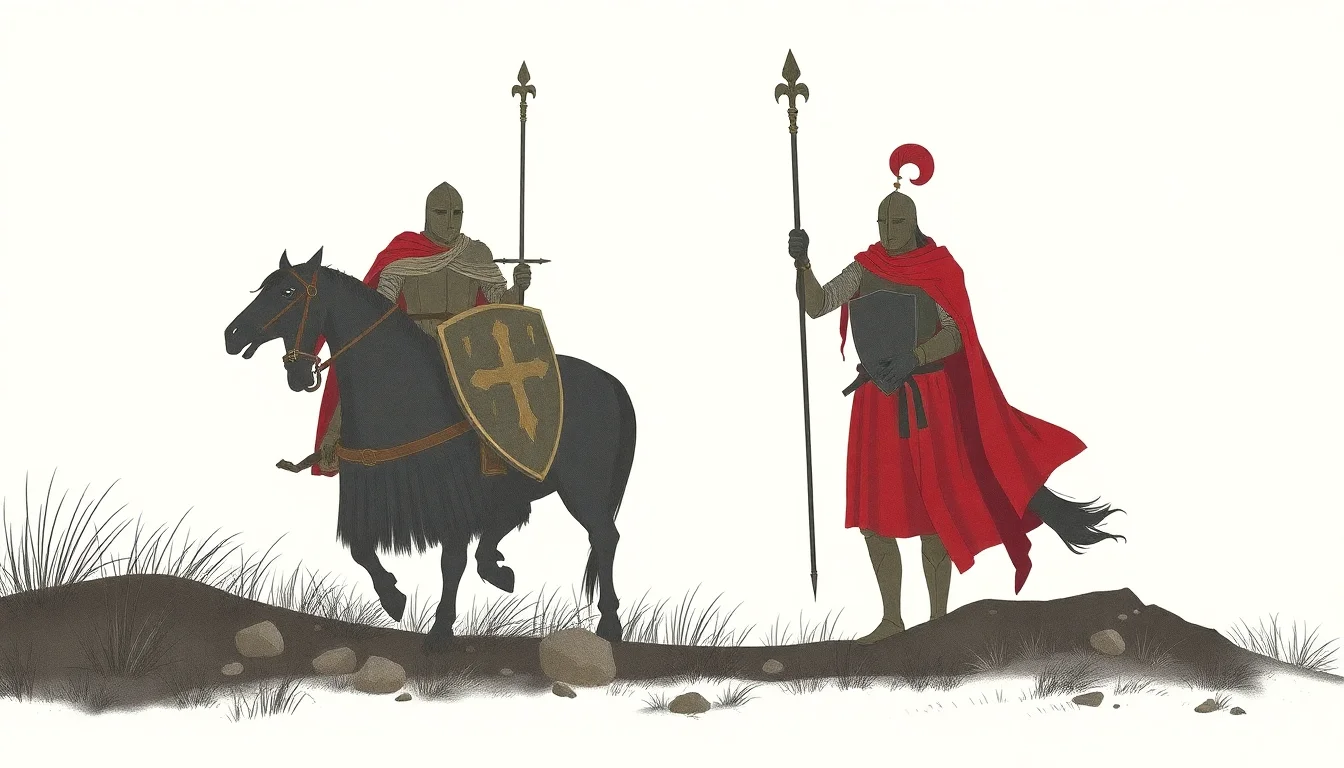
The Arthurian legend has exerted a profound and pervasive influence on Western culture, permeating literature, art, music, and popular media for over eight centuries. Its themes of chivalry, heroism, courtly love, and the quest for an ideal have inspired countless writers. Visually, the legend has been a rich source for painters, illustrators, and filmmakers, shaping our collective imagination of medieval knights and enchanted castles. The concept of the Round Table has become a metaphor for egalitarian decision-making, and the quest for the Holy Grail remains a potent symbol for any arduous, noble pursuit. Its enduring appeal lies in its exploration of timeless human desires and struggles.
⚡ Modern Adaptations & Evolution
In the 20th and 21st centuries, the Arthurian legend has seen continuous reinvention across diverse media. Films like John Boorman's Excalibur and Antoine Fuqua's King Arthur offer distinct visual interpretations, while television series such as Merlin and Cursed reimagine the narrative for contemporary audiences. Video games, including the Total War: Warhammer series and The Witcher franchise, frequently incorporate Arthurian motifs and characters. Contemporary novels, like T.H. White's The Once and Future King and Marion Zimmer Bradley's The Mists of Avalon, have offered feminist and revisionist perspectives, demonstrating the legend's adaptability. The 2023 film The Green Knight, starring Dev Patel, provided a stark, atmospheric take on the Gawain legend, highlighting the ongoing creative engagement with these ancient tales.
🤔 Historical Authenticity & Debate
The historical existence of King Arthur remains a subject of intense scholarly debate, with little concrete archaeological or contemporary textual evidence to confirm him as a historical figure. Most historians view Arthur as a legendary hero, possibly based on a composite of historical figures or a purely mythical creation. Skeptics point to the lack of reliable records from the 5th and 6th centuries, the period Arthur is often placed in, and the later embellishments by writers like Geoffrey of Monmouth. Proponents, however, argue that the persistence of the legend and certain place names suggest a historical kernel, perhaps a Romano-British leader who fought against the Anglo-Saxon invasions. The debate continues, fueled by the legend's deep roots in British identity and the enduring human desire for heroic origins.
🔮 Future Outlook
The future of the Arthurian legend appears as robust as its past. As technology advances, immersive virtual reality experiences and interactive digital narratives will likely offer new ways to explore Camelot and its surrounding realms. Expect further reinterpretations that challenge traditional gender roles, explore the perspectives of marginalized characters, and delve into the darker, more complex psychological aspects of the stories. The legend's inherent themes of leadership, justice, and the search for meaning are timeless, ensuring its continued relevance. As societies grapple with their own challenges, the archetypal figures and moral quandaries presented in Arthurian lore will undoubtedly continue to resonate and inspire new creative endeavors, perhaps even leading to a resurgence of interest in the historical context, however elusive it may be.
💡 Thematic Resonance
The enduring appeal of Arthurian legend lies in its profound thematic resonance, touching upon universal human experiences and aspirations. The quest for the Holy Grail serves as a powerful metaphor for the pursuit of spiritual enlightenment, personal perfection, or any seemingly unattainable ideal. The concept of the Round Table embodies the aspiration for a just and equitable society where all members are valued. Themes of loyalty and betrayal explore the complexities of human relationships and the consequences of moral compromise. The legend also grapples with the cyclical nature of history, the rise and fall of civilizations, and the enduring hope for renewal, often encapsulated in the idea of Arthur's eventual return. These archetypal narratives provide a framework for understanding our own struggles and ideals.
Key Facts
- Category
- culture
- Type
- topic