
Contents
Overview
African Diaspora Studies is a vibrant, interdisciplinary academic field dedicated to the scholarly examination of the history, culture, politics, and social structures of peoples of African descent scattered across the globe. It moves beyond a singular national focus, encompassing the experiences of African Americans, Afro-Caribbeans, Afro-Latinos, Black Europeans, and other Black communities worldwide, while also engaging with the history and politics of the African continent itself. Utilizing methodologies from the humanities and social sciences, scholars in this domain reconstruct suppressed histories, analyze contemporary challenges, and theorize the future trajectories of Black populations globally. Its emergence in the mid-20th century was a direct challenge to Eurocentric academic paradigms, demanding a more inclusive and accurate understanding of global history and human experience.
🎵 Origins & History
The intellectual roots of African Diaspora Studies can be traced back to the late 19th and early 20th centuries. The mid-20th century saw a surge in academic activism, particularly during the Civil Rights Movement in the United States, which pushed for the establishment of Black Studies programs in universities. Early scholars like John Henrik Clarke and Cheikh Anta Diop were instrumental in challenging colonial narratives and asserting the centrality of African history and civilizations. The field's scope broadened significantly from a primarily African American focus to encompass the wider diaspora, recognizing shared histories of oppression and resilience across continents.
⚙️ How It Works
African Diaspora Studies operates as an interdisciplinary field, drawing methodologies and theoretical frameworks from a wide array of academic disciplines. Scholars employ historical research methods, including archival work and oral history, to reconstruct narratives often marginalized in mainstream historical accounts. Sociological and anthropological approaches are used to analyze social structures, cultural practices, and community formations within diaspora populations. Literary criticism and cultural studies examine artistic expressions, from literature and music to visual arts and performance, as sites of resistance, identity formation, and cultural transmission. Political science and philosophy are crucial for understanding political movements, theories of liberation, and ethical considerations related to race, justice, and self-determination. The field also engages with psychology to explore the psychological impacts of racism and diaspora, and with religious studies to understand the syncretic spiritual traditions that emerged across the diaspora.
📊 Key Facts & Numbers
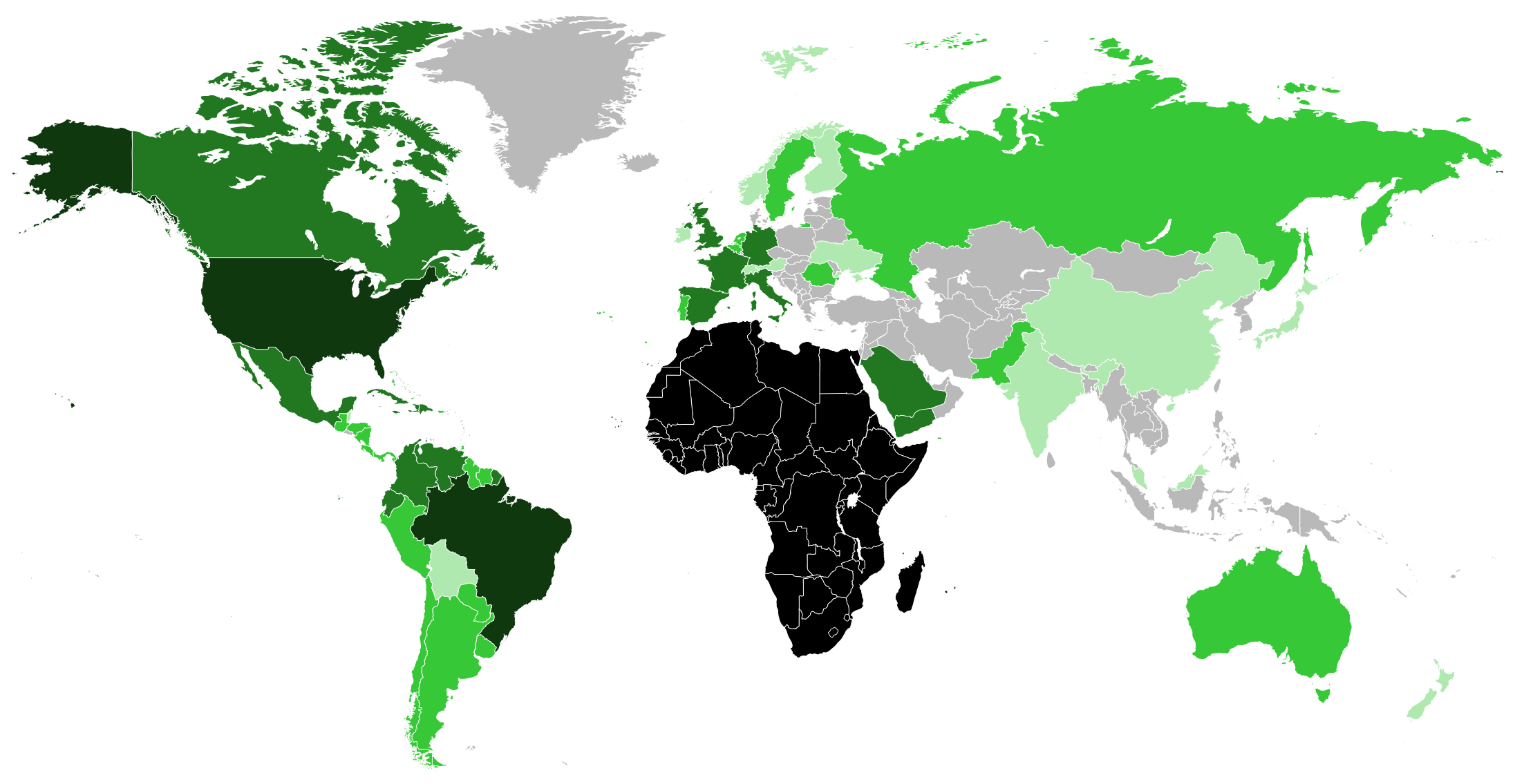
The United States has the largest population of African descent outside of Africa. Despite these numbers, systemic inequalities persist, with Black populations often facing disparities in income, education, and healthcare across various nations.
👥 Key People & Organizations
Key figures who shaped African Diaspora Studies include W. E. B. Du Bois, whose early scholarship laid groundwork for historical reconstruction. Maya Angelou's literary works powerfully articulated the experiences of Black Americans, contributing to cultural understanding. Frantz Fanon, a psychiatrist and philosopher, provided critical analyses of colonialism and its psychological effects in works like Black Skin, White Masks. Assata Shakur's activism and writings have been influential in radical Black political thought. Organizations like the Association for the Study of African American Life and History (ASALH), founded by Carter G. Woodson, have been crucial in promoting research and preservation of Black history. University departments, such as the Africana Studies and Research Center at Cornell University, serve as vital hubs for academic inquiry and community engagement.
🌍 Cultural Impact & Influence
The influence of African Diaspora Studies extends far beyond academia, profoundly shaping global culture and consciousness. It has been instrumental in validating and popularizing artistic forms born from diaspora experiences, such as jazz, hip-hop, reggae, and salsa music, as well as literary traditions from Langston Hughes to Toni Morrison. The ongoing scholarly work provides a crucial lens for understanding contemporary issues of racial injustice, systemic racism, and the ongoing quest for liberation and self-determination among Black communities globally.
⚡ Current State & Latest Developments
In 2024, African Diaspora Studies continues to evolve, grappling with new forms of migration, globalization, and digital connectivity. Scholars are increasingly focusing on the experiences of Black communities in Asia and Australia, expanding the traditional geographical scope. The rise of digital platforms has created new avenues for disseminating research and fostering dialogue, with online archives and virtual conferences becoming more prevalent. There's a growing emphasis on inter-diasporic connections, exploring how different Black communities across the Americas and Europe influence each other. Furthermore, the field is actively engaging with contemporary political movements, such as Black Lives Matter, analyzing their historical antecedents and theoretical underpinnings. The ongoing debates around reparations, decolonization, and cultural repatriation remain central to current scholarly and activist work.
🤔 Controversies & Debates
A significant controversy within African Diaspora Studies revolves around the definition and boundaries of the diaspora itself. Some scholars debate whether to include all individuals of African descent or to focus more narrowly on those whose experiences are directly shaped by the transatlantic slave trade and its aftermath. Another point of contention is the relationship between diaspora studies and African Studies; while interconnected, some argue for distinct disciplinary boundaries to maintain focus, while others advocate for a more unified approach that bridges the continent and its global descendants. Debates also persist regarding the role of activism within academic scholarship, with some advocating for a politically engaged scholarship that directly challenges injustice, while others emphasize a more detached, purely analytical approach. The interpretation of historical events, such as the legacy of colonialism, also sparks ongoing debate, with differing views on the extent of agency and resistance available to colonized peoples.
🔮 Future Outlook & Predictions
The future of African Diaspora Studies appears robust, driven by continued global migration and the increasing recognition of Black contributions to world history and culture. We can anticipate a greater focus on the digital diaspora, examining how onli
💡 Practical Applications
African Diaspora Studies offers practical applications in various sectors. In education, it informs curriculum development to provide more comprehensive and inclusive historical narratives. In cultural institutions like museums and archives, it guides the preservation and interpretation of Black heritage. In policy-making, its insights into systemic inequalities and social justice issues can inform efforts to address disparities in areas such as housing, employment, and criminal justice. Furthermore, the field's emphasis on cultural production and resilience can inspire community development initiatives and support artistic endeavors that celebrate and sustain diaspora cultures.
Key Facts
- Category
- culture
- Type
- topic