
Contents
Overview
The concept of Asgard, the divine realm of the Æsir, is deeply rooted in the Norse mythological tradition, primarily documented in the Poetic Edda and Prose Edda. These texts, themselves drawing from older oral traditions, describe Asgard as the celestial fortress of the primary Norse deities, including Odin, Thor, and Frigg. Its origins are not tied to a specific historical event or founder in the way mortal cities are, but rather emerge from the cosmogonic narratives of the ancient Germanic peoples. Unlike geographically fixed locations, Asgard's position is fluid, often described as being in the heavens or beyond the reach of mortal comprehension, accessible only through divine means or the Bifröst bridge, guarded by the god Heimdallr. This ethereal nature distinguishes it from earthly settlements and emphasizes its role as a spiritual and cosmic center.
⚙️ Cosmic Architecture
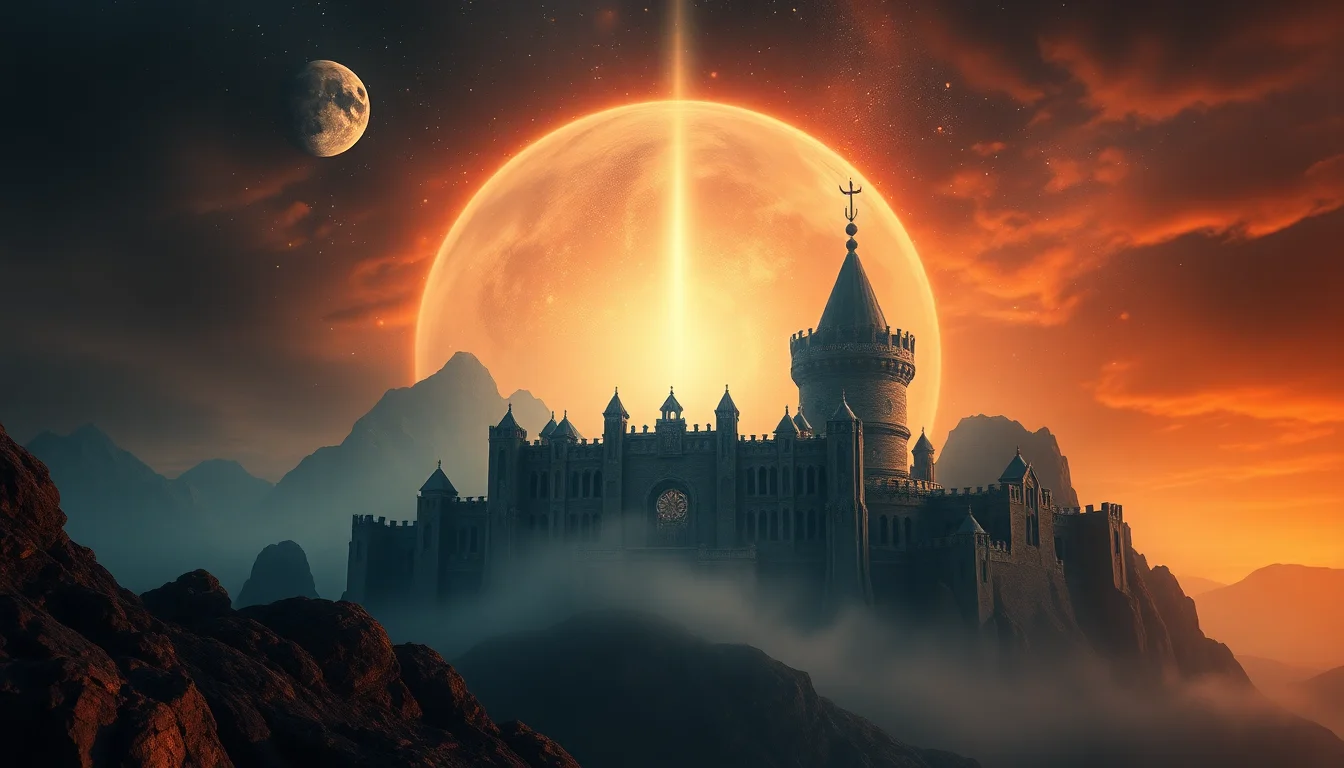
Asgard is envisioned as a place of unparalleled splendor and security, a testament to the divine craftsmanship of its inhabitants. Its walls are said to be impenetrable, a bulwark against the forces of chaos and giants. Within this celestial citadel are numerous halls and significant locations, each with its own purpose and lore. Valhalla, the grandest of these, serves as Odin's hall, where slain warriors, the einherjar, feast and prepare for Ragnarök. Iðavöllr is the central plain where the gods gather for council and judgment, and Hliðskjálf is Odin's throne, from which he can survey all the worlds. The pervasive imagery of gold and light associated with Asgard further solidifies its status as a realm of divine wealth and eternal radiance, a stark contrast to the often harsh realities of the mortal world.
📊 Mythological Significance
The significance of Asgard in Norse cosmology is profound, serving as the seat of divine power and order. It is the primary stage for many of the most critical events in Norse mythology, including the ongoing conflicts with the Jötnar (giants) and the foretold Ragnarök, the twilight of the gods. Asgard represents the ultimate bastion of the Æsir's authority and their struggle to maintain cosmic balance against the forces of destruction. Its existence is intrinsically linked to the fate of the other realms, including Midgard, the world of humans, and Helheim, the realm of the dead. The divine laws and decrees issued from Asgard shape the destiny of all beings, making it a pivotal element in the Norse worldview.
👥 Key Deities & Inhabitants
Asgard is primarily the domain of the Æsir, the principal pantheon of Norse gods. Odin, the Allfather, king of the Æsir, presides over Asgard from his throne Hliðskjálf, wielding immense wisdom and power. His wife, Frigg, is the queen of Asgard, known for her foresight and protective nature. Thor, the god of thunder and protector of mankind, is another prominent resident, often depicted defending Asgard from its enemies. Other key figures include Týr, the god of war and justice; Loki, the trickster god whose presence often brings both innovation and chaos; and Baldr, the beloved god of light and purity. These deities, along with their retinues, populate Asgard, engaging in divine politics, warfare, and the unfolding of cosmic destiny.
🌍 Cultural Resonance
The narrative of Asgard has permeated Western culture for centuries, influencing literature, art, and philosophy. Its depiction as a celestial city of gods has provided a rich wellspring of imagery and thematic material for countless works. From the epic poems of the Eddas to the romanticist paintings of the 19th century by artists like Peter Nicolai Arbo, Asgard has consistently captured the imagination. Its themes of divine power, cosmic struggle, and the eventual twilight of the gods resonate with fundamental human questions about existence, order, and fate, ensuring its enduring cultural relevance.
⚡ Modern Interpretations
In contemporary times, Asgard has found new life and widespread recognition through its prominent role in Marvel Comics' Thor franchise and the subsequent Marvel Cinematic Universe (MCU). Portrayed as a gleaming, technologically advanced city in the sky, this interpretation, while diverging from the starker, more primal imagery of the Eddas, has introduced Asgard to a global audience of billions. The MCU's Asgard, with its iconic architecture and vibrant depiction of its inhabitants like Odin, Thor, and Loki, has become a touchstone for modern fantasy and superhero narratives, demonstrating the adaptability of ancient myths to new media.
🤔 Mythological Debates
Scholarly debate continues regarding the precise nature and conception of Asgard in ancient Norse belief. While the Eddas provide detailed descriptions, their compilation centuries after the Viking Age leaves room for interpretation. Some scholars posit that Asgard may have evolved from earlier Germanic concepts of a divine dwelling or a sacred grove, later coalescing into the more defined 'city' imagery. The euhemeristic accounts, which attempt to rationalize Asgard as a historical place, are generally considered less representative of the original mythological conception than those that depict it as a non-geographical, celestial realm. The tension between Asgard as a literal place and a symbolic representation of divine order remains a key area of discussion.
🔮 Future of the Æsir's Realm
The future of Asgard, both in mythological narrative and cultural perception, remains dynamic. In the context of Norse mythology, the realm is destined to play a crucial role in Ragnarök, facing destruction and eventual rebirth. In popular culture, Asgard's presence is likely to persist, evolving with new adaptations and interpretations across various media. The success of the MCU suggests that audiences remain captivated by the concept of a divine realm, and future creators will undoubtedly continue to reimagine Asgard, perhaps drawing more directly from the original sagas or forging entirely new mythologies inspired by its core themes of divinity, power, and cosmic destiny.
💡 Symbolic Applications
Symbolically, Asgard represents the pinnacle of divine achievement, order, and protection. It serves as a metaphor for an ideal realm, a place of ultimate power and security, often contrasted with the chaotic or mundane realities of the mortal world. In psychological interpretations, Asgard can be seen as representing the collective unconscious's archetypal image of the divine, a source of inspiration, wisdom, and ultimate justice. Its recurring presence in art and literature as a utopian or celestial city highlights its enduring symbolic power as a representation of aspiration and the divine.
Key Facts
- Category
- mythology
- Type
- place